Sauerkraut with Dill by Sy
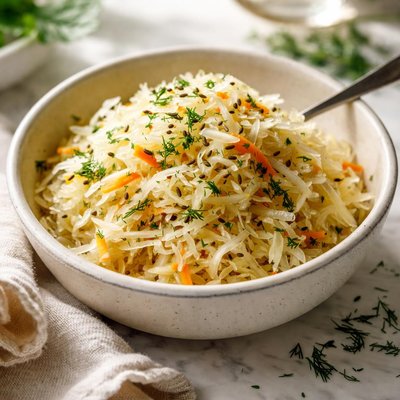
Discover the bold and tangy flavors of homemade fermentation with 'Sauerkraut with Dill by Sy,' a vibrant twist on the classic recipe. This simple yet satisfying dish combines finely shredded green cabbage, grated carrots, and aromatic fresh dill to create a refreshing and herbaceous flair. Enhanced with the subtle warmth of optional caraway seeds, this recipe is perfect for those seeking a natural probiotic boost. With just kosher salt to draw out the cabbage’s juices and kickstart fermentation, this no-cook recipe requires only a few minutes of preparation before it transforms in your kitchen over time. Ideal for pairing with hearty sandwiches, grilled sausages, or as a crisp side dish, this dill-infused sauerkraut offers a deliciously healthy addition to any meal. Whether you’re a fermenting beginner or a seasoned pro, this recipe highlights the artistry of making small-batch fermented vegetables right in your own home.

Smart Nutrition Tracking with SnapCalorie







Recipe Information
Ingredients
- 2 medium heads (about 4 pounds) Green cabbage
- 2 medium Carrots
- 2 tablespoons Kosher salt
- 1 bunch (about 1 cup chopped) Fresh dill
- 1 teaspoon Caraway seeds (optional)
Instructions
1. Remove the outer leaves of the cabbage and set aside for later use. Cut the cabbage into quarters, remove the core, and shred the cabbage finely using a knife, mandolin, or food processor.
2. Peel and grate the carrots using a box grater or food processor. Add the grated carrots to the shredded cabbage in a large mixing bowl.
3. Sprinkle the kosher salt over the cabbage and carrot mixture. Using clean hands, massage the salt into the vegetables for about 5-10 minutes. The cabbage will soften and release a significant amount of liquid.
4. Chop the fresh dill finely and mix it into the massaged cabbage along with the caraway seeds if using. Combine well.
5. Pack the cabbage mixture tightly into a clean, sterilized jar or fermentation crock. Use a wooden spoon, tamper, or your fists to press the mixture down as firmly as possible, ensuring it is submerged under its own brine.
6. Take the reserved outer cabbage leaves and place one or two on top of the shredded cabbage to keep everything submerged. If using a jar, weigh the mixture down with a fermentation weight, small glass jar, or clean stone.
7. Cover the jar or crock loosely with a clean cloth or place the lid on without fully sealing to allow gases to escape during fermentation.
8. Leave the sauerkraut in a cool, dark place (ideally around 65-75°F) for 5-14 days. Check daily to ensure the cabbage remains submerged in brine, pressing it down if needed. Remove any surface scum as it forms.
9. Begin tasting the sauerkraut after 5 days. When it reaches your preferred level of tanginess and flavor, transfer it to the refrigerator to slow fermentation. It will keep for up to 6 months.
Nutrition Facts
Calories |
82 | ||
|---|---|---|---|
% Daily Value* |
|||
| Total Fat | 0.3 g | 0% | |
| Saturated Fat | 0.0 g | 0% | |
| Polyunsaturated Fat | 0.0 g | ||
| Cholesterol | 0 mg | 0% | |
| Sodium | 359 mg | 16% | |
| Total Carbohydrate | 19.1 g | 7% | |
| Dietary Fiber | 8.0 g | 28% | |
| Total Sugars | 9.9 g | ||
| Protein | 4.1 g | 8% | |
| Vitamin D | 0.0 mcg | 0% | |
| Calcium | 152 mg | 12% | |
| Iron | 1.9 mg | 11% | |
| Potassium | 650 mg | 14% | |
*The % Daily Value tells you how much a nutrient in a serving of food contributes to a daily diet. 2,000 calories a day is used for general nutrition advice.


