Red Wine Vinegar Salad Dressing Marinade Low Sodium
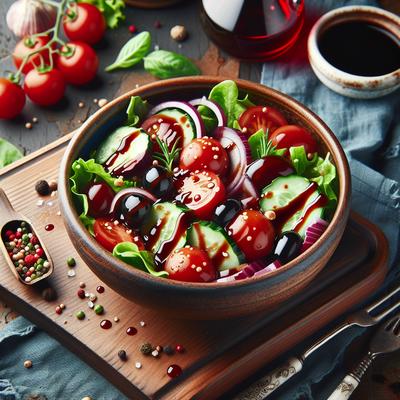
Elevate your salads and marinades with this vibrant and heart-smart Red Wine Vinegar Salad Dressing Marinade! Bursting with the tangy zest of red wine vinegar, the smooth richness of extra-virgin olive oil, and a touch of Dijon mustard, this low-sodium recipe delivers big flavor without the salt. A hint of honey balances the acidity, while minced garlic and dried oregano add aromatic depth. Perfectly thinned with water for a lighter texture, this versatile dressing is whipped up in just 5 minutes and doubles as a marinade for grilled vegetables or lean proteins. Wholesome, simple, and kitchen-tested for freshness, this homemade vinaigrette is a must-have for health-conscious foodies seeking bold, balanced flavor.

Get More Healthy Recipes with SnapCalorie



Recipe Information
Ingredients
- 0.5 cup Extra-virgin olive oil
- 0.25 cup Red wine vinegar
- 1 tablespoon Dijon mustard
- 1 teaspoon Honey
- 1 clove Garlic, minced
- 0.5 teaspoon Dried oregano
- 0.25 teaspoon Ground black pepper
- 2 tablespoons Water
Instructions
In a medium-sized mixing bowl or a mason jar with a lid, combine the extra-virgin olive oil and red wine vinegar.
Add the Dijon mustard, honey, and minced garlic to the mixture.
Sprinkle in the dried oregano and ground black pepper.
Add 2 tablespoons of water to thin the dressing, making it lighter and easier to coat salads or marinate food.
Whisk the mixture thoroughly if using a bowl, or secure the lid on the mason jar and shake vigorously for about 30 seconds until well emulsified.
Taste the mixture and adjust seasoning as needed (optional). Remember, this is a low-sodium recipe so no salt is included by default.
Use immediately as a salad dressing or marinade, or store in the refrigerator in an airtight container for up to one week.
Shake or stir before each use as separation may occur due to the oil and vinegar.
Nutrition Facts
Calories |
1114 | ||
|---|---|---|---|
% Daily Value* |
|||
| Total Fat | 121.5 g | 156% | |
| Saturated Fat | 16.7 g | 84% | |
| Polyunsaturated Fat | 0.0 g | ||
| Cholesterol | 0 mg | 0% | |
| Sodium | 352 mg | 15% | |
| Total Carbohydrate | 7.7 g | 3% | |
| Dietary Fiber | 0.4 g | 1% | |
| Total Sugars | 5.7 g | ||
| Protein | 0.3 g | 1% | |
| Vitamin D | 0.0 mcg | 0% | |
| Calcium | 21 mg | 2% | |
| Iron | 1.5 mg | 8% | |
| Potassium | 69 mg | 1% | |
*The % Daily Value tells you how much a nutrient in a serving of food contributes to a daily diet. 2,000 calories a day is used for general nutrition advice.


