Pesto Sauce
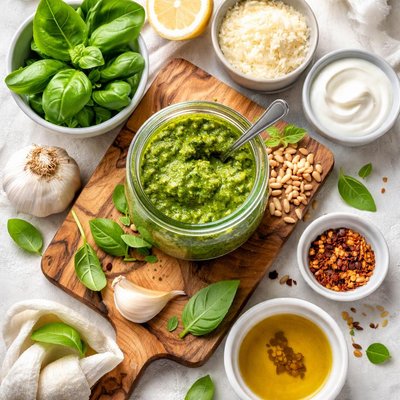
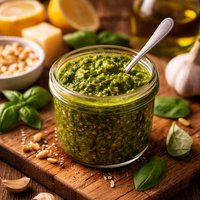
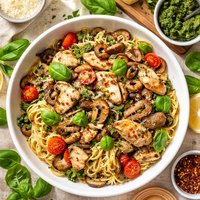
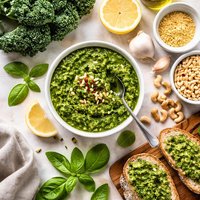
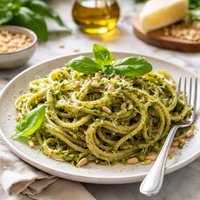
Transform your favorite dishes with this vibrant and creamy homemade pesto sauce, a flavorful blend of fresh basil, toasted pine nuts, garlic, and rich Parmesan cheese. This classic Italian condiment is elevated with extra-virgin olive oil, creating a silky texture perfect for coating pasta, spreading on sandwiches, or drizzling over roasted vegetables. Ready in just 10 minutes with no cooking required, this easy pesto recipe is a time-saving way to add bold, herbaceous flavor to your meals. Versatile and freezer-friendly, it’s your go-to solution for quick, fresh, and healthy flavor-packed dining.

Smart Nutrition Tracking with SnapCalorie

Recipe Information
Ingredients
- 2 cups Fresh basil leaves
- 2 units Garlic cloves
- 0.25 cups Pine nuts
- 0.5 cups Grated Parmesan cheese
- 0.5 cups Extra-virgin olive oil
- 0.5 teaspoons Salt
- 0.25 teaspoons Black pepper
Instructions
Rinse and thoroughly dry the fresh basil leaves. Remove any stems.
Peel the garlic cloves and lightly toast the pine nuts in a dry skillet over low heat for 3-4 minutes until golden and fragrant, stirring frequently. Allow the nuts to cool.
In a food processor or blender, combine the basil leaves, garlic cloves, toasted pine nuts, and grated Parmesan cheese.
Pulse the mixture a few times to break down the ingredients.
While the food processor is running, slowly drizzle in the extra-virgin olive oil to create a smooth and emulsified sauce.
Season with salt and black pepper to taste, then pulse a few more times to ensure all ingredients are well incorporated.
Taste the pesto and adjust the seasoning if needed. Add more Parmesan or olive oil based on your preference for texture and flavor.
Store the pesto in an airtight container in the refrigerator for up to 5 days, or freeze for longer storage.
Nutrition Facts
Calories |
247 | ||
|---|---|---|---|
% Daily Value* |
|||
| Total Fat | 25.6 g | 33% | |
| Saturated Fat | 4.4 g | 22% | |
| Polyunsaturated Fat | 1.9 g | ||
| Cholesterol | 7 mg | 2% | |
| Sodium | 277 mg | 12% | |
| Total Carbohydrate | 1.8 g | 1% | |
| Dietary Fiber | 1.0 g | 3% | |
| Total Sugars | 0.2 g | ||
| Protein | 4.2 g | 8% | |
| Vitamin D | 0.0 mcg | 0% | |
| Calcium | 103 mg | 8% | |
| Iron | 1.2 mg | 6% | |
| Potassium | 106 mg | 2% | |
*The % Daily Value tells you how much a nutrient in a serving of food contributes to a daily diet. 2,000 calories a day is used for general nutrition advice.


