New England Clam Less Chowder
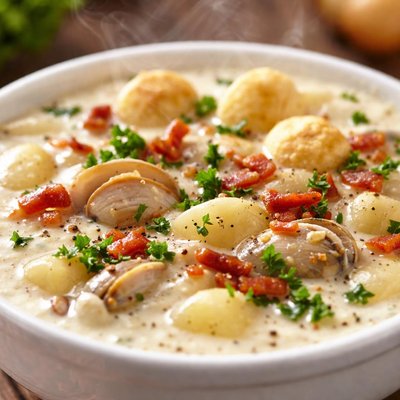
Savor the comforting warmth of "New England Clam Less Chowder," a hearty, vegetarian twist on the classic coastal favorite. This thick and creamy chowder swaps traditional seafood for a medley of wholesome ingredients like diced potatoes, sautéed vegetables, and rich coconut milk, creating a satisfying plant-based alternative. Hints of dried seaweed flakes bring a subtle ocean-inspired flavor, while fresh parsley adds a bright, zesty finish. Perfectly seasoned with thyme, bay leaf, and black pepper, this chowder is an ideal option for those seeking a meatless take on classic New England cuisine. Ready in under an hour, it’s a soul-warming dish that’s simple, flavorful, and perfect for family dinners or cozy nights in.

Smart Nutrition Tracking with SnapCalorie

Recipe Information
Ingredients
- 2 tablespoons Olive oil
- 2 tablespoons Unsalted butter
- 1 medium Yellow onion, diced
- 2 Celery stalks, diced
- 2 Carrots, diced
- 2 Garlic cloves, minced
- 2 large Russet potatoes, peeled and diced
- 4 cups Vegetable broth
- 1 teaspoon Dried thyme
- 1 teaspoon Dried seaweed flakes (optional, for a hint of ocean flavor)
- 1 Bay leaf
- 1 cup Coconut milk (canned, full-fat)
- 2 tablespoons All-purpose flour
- 1 cup Water
- 1 cup Frozen corn kernels (optional, for added sweetness)
- 2 tablespoons Fresh parsley, chopped (for garnish)
- to taste Salt
- to taste Black pepper
Instructions
Heat the olive oil and butter in a large pot over medium heat.
Add the diced onion, celery, and carrots. Sauté for 5-6 minutes until softened and fragrant.
Stir in the minced garlic and cook for another 1-2 minutes.
Add the diced potatoes, vegetable broth, thyme, seaweed flakes (if using), and bay leaf.
Bring the mixture to a boil, then reduce the heat to low and let it simmer for about 15 minutes or until the potatoes are tender.
In a small bowl, whisk together the coconut milk, flour, and water until smooth. Gradually stir this mixture into the pot to thicken the chowder.
If using, add the frozen corn kernels and cook for another 5 minutes.
Remove the bay leaf, then taste the chowder and season with salt and black pepper as needed.
Serve hot, garnished with fresh parsley and a sprinkle of black pepper.
Nutrition Facts
Calories |
546 | ||
|---|---|---|---|
% Daily Value* |
|||
| Total Fat | 29.6 g | 38% | |
| Saturated Fat | 17.6 g | 88% | |
| Polyunsaturated Fat | 0.7 g | ||
| Cholesterol | 16 mg | 5% | |
| Sodium | 1153 mg | 50% | |
| Total Carbohydrate | 65.7 g | 24% | |
| Dietary Fiber | 10.6 g | 38% | |
| Total Sugars | 14.1 g | ||
| Protein | 11.3 g | 23% | |
| Vitamin D | 0.1 mcg | 0% | |
| Calcium | 128 mg | 10% | |
| Iron | 4.9 mg | 27% | |
| Potassium | 1712 mg | 36% | |
*The % Daily Value tells you how much a nutrient in a serving of food contributes to a daily diet. 2,000 calories a day is used for general nutrition advice.


