Mock Baked Potato

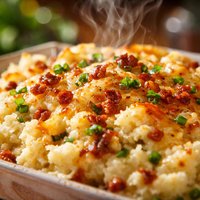
Indulge in the creamy comfort of a "Mock Baked Potato," a low-carb, gluten-free twist on the classic side dish that’s both guilt-free and full of flavor. Made with tender cauliflower florets blended to perfection, this clever recipe mimics the silky texture of mashed potatoes while being lighter and more nutritious. Enhanced with the richness of olive oil, the tangy creaminess of Greek yogurt, and the melty goodness of shredded cheddar cheese, every bite feels indulgent. Topped off with fragrant chives and optional crispy bacon bits, this dish is perfect as a standalone side or a complement to grilled meats and roasted vegetables. Ready in just 25 minutes, this quick and healthy alternative is a crowd-pleaser for any occasion, offering a satisfying taste of comfort food without the carbs.

Smart Nutrition Tracking with SnapCalorie

Recipe Information
Ingredients
- 4 cups Cauliflower florets
- 2 tablespoons Olive oil
- 1 teaspoon Garlic powder
- 0.5 teaspoons Salt
- 0.25 teaspoons Black pepper
- 0.5 cups Plain Greek yogurt
- 0.5 cups Cheddar cheese, shredded
- 2 tablespoons Chives, chopped
- 2 tablespoons Bacon bits (optional)
Instructions
In a medium pot, bring water to a boil over high heat.
Add the cauliflower florets to the boiling water and cook for 8-10 minutes, or until the florets are fork-tender.
Drain the cauliflower completely and pat dry with a clean kitchen towel to remove excess moisture.
Transfer the cooked cauliflower to a food processor or large mixing bowl. Add olive oil, garlic powder, salt, and black pepper.
Blend or mash the mixture until it reaches a smooth, mashed potato-like consistency.
Stir in the Greek yogurt and shredded cheddar cheese until well combined.
Spoon the mock baked potato mixture into serving dishes.
Top with chopped chives and optional bacon bits for garnish.
Serve warm and enjoy your 'Mock Baked Potato' with a side of your favorite proteins or vegetables!
Nutrition Facts
Calories |
165 | ||
|---|---|---|---|
% Daily Value* |
|||
| Total Fat | 12.6 g | 16% | |
| Saturated Fat | 4.3 g | 21% | |
| Polyunsaturated Fat | 0.0 g | ||
| Cholesterol | 18 mg | 6% | |
| Sodium | 396 mg | 17% | |
| Total Carbohydrate | 6.0 g | 2% | |
| Dietary Fiber | 1.8 g | 7% | |
| Total Sugars | 2.8 g | ||
| Protein | 9.0 g | 18% | |
| Vitamin D | 0.1 mcg | 0% | |
| Calcium | 157 mg | 12% | |
| Iron | 0.5 mg | 3% | |
| Potassium | 280 mg | 6% | |
*The % Daily Value tells you how much a nutrient in a serving of food contributes to a daily diet. 2,000 calories a day is used for general nutrition advice.


