Low Calorie Cheesecake
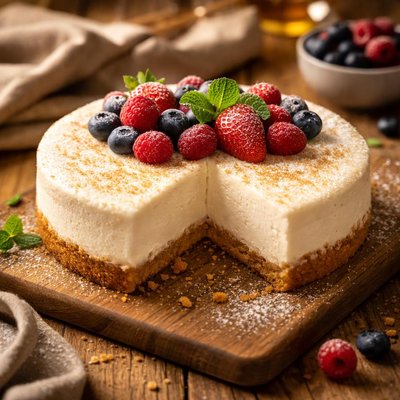
Indulge guilt-free with this silky, smooth Low Calorie Cheesecake, a dessert that balances rich, creamy flavors with a lighter, wholesome twist. Made with low-fat cream cheese, non-fat Greek yogurt, and naturally sweetened with stevia or erythritol, this cheesecake is perfect for those looking to satisfy their sweet tooth while staying mindful of calories. The buttery graham cracker crust adds a delightful crunch, while a hint of vanilla and zesty lemon zest elevate the flavor profile. Expert techniques like a water bath and gradual cooling ensure a crack-free, picture-perfect cheesecake every time. Ready in under an hour of active preparation, this healthier cheesecake makes an elegant dessert for dinner parties or a weekend treat, especially when paired with fresh berries or a drizzle of sugar-free syrup.

Smart Nutrition Tracking with SnapCalorie

Explore More


Recipe Information
Ingredients
- 450 grams Low-fat cream cheese
- 150 grams Greek yogurt (non-fat, plain)
- 80 grams Granulated sweetener (e.g., stevia or erythritol)
- 2 large Eggs
- 2 large Egg whites
- 1.5 teaspoons Vanilla extract
- 1 teaspoon Lemon zest
- 120 grams Graham cracker crumbs
- 30 grams Unsalted butter (melted)
- 0.25 teaspoon Salt
Instructions
Preheat the oven to 160°C (320°F). Lightly grease a 20 cm (8-inch) springform pan and line the base with parchment paper.
In a medium bowl, mix the graham cracker crumbs, melted butter, and salt until the mixture resembles wet sand.
Press the crumb mixture into the bottom of the prepared pan to form an even crust. Use the back of a spoon or a flat-bottomed glass to pack it tightly. Bake for 8 minutes, then remove from the oven and allow the crust to cool.
In a large mixing bowl, beat the low-fat cream cheese and Greek yogurt together using a hand mixer until smooth and creamy.
Add the granulated sweetener, vanilla extract, and lemon zest to the cheese mixture. Beat again until well incorporated.
Add the eggs and egg whites one at a time, mixing after each addition just until blended. Avoid over-beating to prevent air bubbles, which can cause cracks in the cheesecake.
Pour the cheesecake batter over the cooled crust and smooth the top with a spatula.
Place the springform pan in a larger baking dish. Pour hot water into the larger baking dish until it reaches about halfway up the sides of the springform pan to create a water bath. This helps the cheesecake bake evenly and prevents cracks.
Bake for 45 minutes, or until the edges are set but the center still jiggles slightly when gently shaken.
Turn off the oven and leave the cheesecake inside with the oven door slightly ajar for an additional hour. This allows the cheesecake to cool gradually, preventing cracks.
Remove the cheesecake from the oven and water bath. Run a thin knife around the edges to loosen it from the pan, then let it cool to room temperature.
Refrigerate the cheesecake for at least 4 hours, or preferably overnight, to fully set before serving.
Slice and enjoy your low calorie cheesecake with your favorite toppings, such as fresh berries or a light drizzle of sugar-free syrup.
Nutrition Facts
Calories |
270 | ||
|---|---|---|---|
% Daily Value* |
|||
| Total Fat | 16.0 g | 20% | |
| Saturated Fat | 8.7 g | 43% | |
| Polyunsaturated Fat | 0.0 g | ||
| Cholesterol | 86 mg | 29% | |
| Sodium | 427 mg | 19% | |
| Total Carbohydrate | 26.3 g | 10% | |
| Dietary Fiber | 0.5 g | 2% | |
| Total Sugars | 7.0 g | ||
| Protein | 9.7 g | 19% | |
| Vitamin D | 0.3 mcg | 2% | |
| Calcium | 113 mg | 9% | |
| Iron | 0.9 mg | 5% | |
| Potassium | 164 mg | 3% | |
*The % Daily Value tells you how much a nutrient in a serving of food contributes to a daily diet. 2,000 calories a day is used for general nutrition advice.


