Low Cal Cabbage Coleslaw
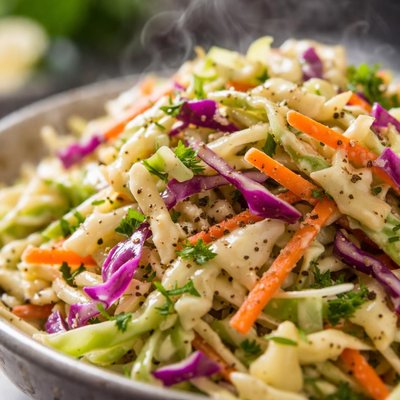
Bright, crunchy, and packed with fresh flavor, this Low Cal Cabbage Coleslaw is a guilt-free twist on a classic side dish. Made with a colorful mix of green cabbage, red cabbage, and sweet shredded carrot, this healthy coleslaw gets its creamy texture from non-fat Greek yogurt, cutting back on calories while still delivering on taste. A tangy, homemade dressing featuring apple cider vinegar, Dijon mustard, and a touch of honey perfectly balances sweet and savory notes, while a sprinkle of celery seed adds a subtle depth of flavor. Quick to prepare in just 15 minutes and with no cooking required, this refreshing slaw is perfect as a light side dish or a topping for tacos, burgers, and more. Serve it chilled for the ultimate healthy accompaniment to your favorite meals!

Smart Nutrition Tracking with SnapCalorie

Explore More
Recipe Information
Ingredients
- 4 cups (shredded) Green cabbage
- 2 cups (shredded) Red cabbage
- 1 cup (shredded) Carrot
- 0.5 cup Greek yogurt (non-fat)
- 2 tablespoons Apple cider vinegar
- 1 tablespoon Honey
- 1 teaspoon Dijon mustard
- 0.5 teaspoon Celery seed
- 0.5 teaspoon Salt
- 0.25 teaspoon Black pepper
- 2 tablespoons Fresh parsley (optional, finely chopped)
Instructions
In a large mixing bowl, combine the shredded green cabbage, red cabbage, and shredded carrot.
In a separate small mixing bowl, whisk together the Greek yogurt, apple cider vinegar, honey, Dijon mustard, celery seed, salt, and black pepper until smooth and well-combined.
Pour the dressing over the cabbage and carrot mixture.
Using tongs or a large spoon, toss the vegetables and dressing together until the slaw is evenly coated.
Taste and adjust the seasoning as needed with additional salt or pepper.
If desired, stir in the chopped parsley for added freshness and color.
Let the coleslaw sit in the refrigerator for at least 30 minutes before serving, to allow the flavors to meld together.
Serve chilled as a side dish or a topping for sandwiches, tacos, or burgers.
Nutrition Facts
Calories |
58 | ||
|---|---|---|---|
% Daily Value* |
|||
| Total Fat | 0.4 g | 1% | |
| Saturated Fat | 0.0 g | 0% | |
| Polyunsaturated Fat | 0.0 g | ||
| Cholesterol | 1 mg | 0% | |
| Sodium | 221 mg | 10% | |
| Total Carbohydrate | 11.6 g | 4% | |
| Dietary Fiber | 2.8 g | 10% | |
| Total Sugars | 7.6 g | ||
| Protein | 3.6 g | 7% | |
| Vitamin D | 0.0 mcg | 0% | |
| Calcium | 71 mg | 5% | |
| Iron | 0.7 mg | 4% | |
| Potassium | 283 mg | 6% | |
*The % Daily Value tells you how much a nutrient in a serving of food contributes to a daily diet. 2,000 calories a day is used for general nutrition advice.


