Italian Carrot and Onion Salad
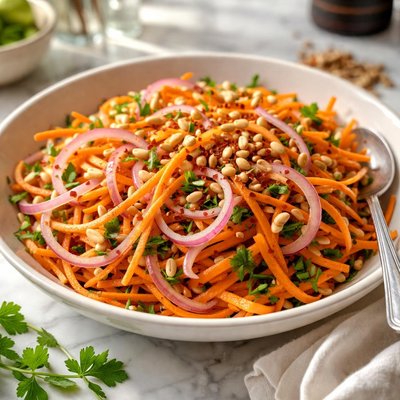
Brighten up your table with this vibrant and refreshing Italian Carrot and Onion Salad! This easy-to-make dish combines crisp julienned carrots and delicately sliced red onions, all tossed in a tangy, emulsified dressing of extra-virgin olive oil, red wine vinegar, and a hint of lemon juice. Infused with the herbal freshness of chopped parsley and a subtle touch of sugar for balance, this salad is a harmony of bold flavors and contrasting textures. Ready in just 15 minutes and perfect served chilled or at room temperature, it’s an ideal side dish to complement grilled meats, pasta, or your favorite Italian-inspired meal. Bursting with color and nutrients, this simple yet elegant dish is a must-try for lovers of fresh, wholesome recipes!

Smart Nutrition Tracking with SnapCalorie



Recipe Information
Ingredients
- 4 medium Carrots
- 1 small Red onion
- 3 tablespoons Extra-virgin olive oil
- 2 tablespoons Red wine vinegar
- 2 tablespoons Fresh parsley
- 0.5 teaspoons Salt
- 0.25 teaspoons Black pepper
- 1 teaspoons Sugar
- 1 tablespoon Lemon juice
Instructions
Peel the carrots and slice them into thin matchsticks using a sharp knife, julienne peeler, or mandoline slicer and place them in a large bowl.
Peel and thinly slice the red onion into fine rings or half-moons. Add the onion to the bowl with the carrots.
Chop the fresh parsley finely and set it aside.
In a small bowl, whisk together the extra-virgin olive oil, red wine vinegar, lemon juice, sugar, salt, and black pepper until combined and emulsified.
Pour the dressing over the carrots and onions in the large bowl.
Toss the salad gently to ensure the vegetables are evenly coated in the dressing.
Sprinkle the chopped parsley over the salad and toss lightly again.
Refrigerate the salad for at least 15 minutes to allow the flavors to meld together.
Serve chilled or at room temperature as a refreshing side dish.
Nutrition Facts
Calories |
129 | ||
|---|---|---|---|
% Daily Value* |
|||
| Total Fat | 10.4 g | 13% | |
| Saturated Fat | 1.4 g | 7% | |
| Polyunsaturated Fat | 0.1 g | ||
| Cholesterol | 0 mg | 0% | |
| Sodium | 288 mg | 13% | |
| Total Carbohydrate | 9.0 g | 3% | |
| Dietary Fiber | 2.2 g | 8% | |
| Total Sugars | 4.8 g | ||
| Protein | 0.8 g | 2% | |
| Vitamin D | 0.0 mcg | 0% | |
| Calcium | 28 mg | 2% | |
| Iron | 0.6 mg | 3% | |
| Potassium | 243 mg | 5% | |
*The % Daily Value tells you how much a nutrient in a serving of food contributes to a daily diet. 2,000 calories a day is used for general nutrition advice.


