Honey Roasted Plums with Thyme
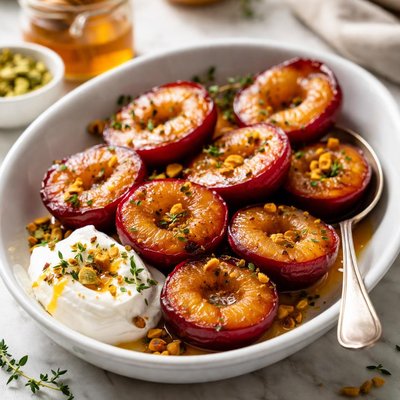
Elevate your dessert game with these Honey Roasted Plums with Thyme, a simple yet sophisticated recipe that perfectly balances sweetness and herbal aromatics. Juicy, ripe plums are halved and roasted to tender perfection in a fragrant glaze of honey, butter, and a hint of vanilla, with fresh thyme sprigs lending an earthy elegance. Ready in just 30 minutes, this dish transforms a handful of pantry staples into a show-stopping dessert. Serve these caramelized plums warm or at room temperature, paired with creamy yogurt, fluffy whipped cream, or velvety vanilla ice cream for an indulgent treat. Perfect for entertaining or a cozy night at home, this seasonal delight highlights the beauty of fresh, simple ingredients.

Smart Nutrition Tracking with SnapCalorie

Explore More


Recipe Information
Ingredients
- 6 pieces ripe plums
- 3 tablespoons honey
- 2 tablespoons unsalted butter
- 4 sprigs fresh thyme sprigs
- 0.5 teaspoons vanilla extract
- 0.25 teaspoons sea salt
Instructions
Preheat your oven to 400°F (200°C) and lightly grease a baking dish large enough to fit the plums in a single layer.
Wash and halve the plums, removing the pits. Arrange the plum halves cut-side up in the prepared baking dish.
In a small saucepan over low heat, melt the butter. Stir in the honey, vanilla extract, and sea salt until combined.
Drizzle the honey-butter mixture evenly over the plums. Add the thyme sprigs to the baking dish, tucking them between the plums.
Roast the plums in the preheated oven for 18–20 minutes, or until they are tender and slightly caramelized around the edges.
Remove from the oven and let the plums cool for 5 minutes. Discard the thyme sprigs before serving.
Serve warm or at room temperature. Optionally, pair with a dollop of yogurt, whipped cream, or a scoop of vanilla ice cream for an extra treat.
Nutrition Facts
Calories |
146 | ||
|---|---|---|---|
% Daily Value* |
|||
| Total Fat | 6.0 g | 8% | |
| Saturated Fat | 3.7 g | 18% | |
| Polyunsaturated Fat | 0.0 g | ||
| Cholesterol | 16 mg | 5% | |
| Sodium | 122 mg | 5% | |
| Total Carbohydrate | 24.9 g | 9% | |
| Dietary Fiber | 1.5 g | 5% | |
| Total Sugars | 23.3 g | ||
| Protein | 0.7 g | 1% | |
| Vitamin D | 0.1 mcg | 0% | |
| Calcium | 13 mg | 1% | |
| Iron | 0.2 mg | 1% | |
| Potassium | 168 mg | 4% | |
*The % Daily Value tells you how much a nutrient in a serving of food contributes to a daily diet. 2,000 calories a day is used for general nutrition advice.


