Homemade Mayonnaise Ii
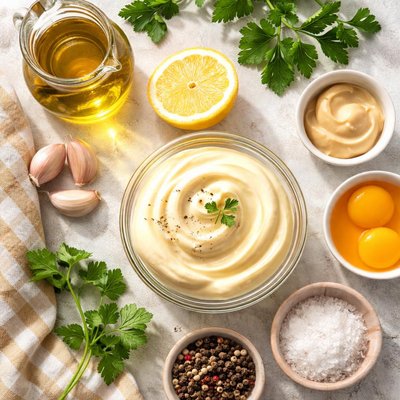
Elevate your culinary creations with "Homemade Mayonnaise II," a creamy, silky-smooth condiment made from simple, wholesome ingredients in just 10 minutes. This foolproof recipe combines the richness of egg yolk, the tang of fresh lemon juice, and the subtle kick of Dijon mustard to create an irresistibly fresh alternative to store-bought mayo. Using a careful emulsification process, this recipe ensures the perfect texture, with the option to adjust consistency using a touch of water. Ideal for sandwiches, salads, and dipping sauces, this homemade mayonnaise is a versatile kitchen staple that will enhance any recipe it touches. Plus, it stores beautifully in the fridge for up to a week, making it as practical as it is delicious.

Smart Nutrition Tracking with SnapCalorie



Recipe Information
Ingredients
- 1 large Egg yolk
- 2 teaspoons Fresh lemon juice
- 1 teaspoon Dijon mustard
- 0.25 teaspoons Salt
- 1 cup Neutral oil (such as canola or vegetable oil)
- 1 teaspoon Water (optional for consistency adjustment)
Instructions
In a medium-sized mixing bowl, whisk together the egg yolk, lemon juice, Dijon mustard, and salt until well combined and slightly frothy.
While whisking constantly, begin adding the oil one drop at a time. It's crucial to go very slowly at this stage to ensure the emulsion forms properly.
Once the mixture begins to thicken and emulsify, you can start adding the oil in a very thin, steady stream, whisking vigorously as you pour.
After all the oil has been incorporated, the mixture should have the consistency of a thick mayonnaise. If it is too thick, whisk in the optional teaspoon of water to thin it out slightly.
Taste and adjust seasoning if needed, adding a pinch more salt or a extra squeeze of lemon juice for brightness.
Transfer the finished mayonnaise to a clean, airtight container and store in the refrigerator for up to one week.
Nutrition Facts
Calories |
210 | ||
|---|---|---|---|
% Daily Value* |
|||
| Total Fat | 24.2 g | 31% | |
| Saturated Fat | 1.8 g | 9% | |
| Polyunsaturated Fat | 0.0 g | ||
| Cholesterol | 18 mg | 6% | |
| Sodium | 61 mg | 3% | |
| Total Carbohydrate | 0.1 g | 0% | |
| Dietary Fiber | 0.0 g | 0% | |
| Total Sugars | 0.0 g | ||
| Protein | 0.3 g | 1% | |
| Vitamin D | 0.0 mcg | 0% | |
| Calcium | 2 mg | 0% | |
| Iron | 0.1 mg | 0% | |
| Potassium | 3 mg | 0% | |
*The % Daily Value tells you how much a nutrient in a serving of food contributes to a daily diet. 2,000 calories a day is used for general nutrition advice.


