Home Canned Cuban Black Beans
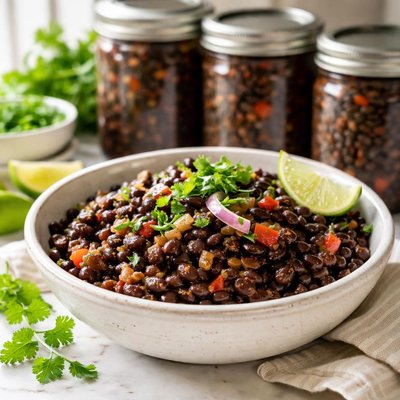
Preserve the vibrant flavors of the Caribbean with this Home Canned Cuban Black Beans recipe, a perfect combination of tender black beans, aromatic spices, and a hint of zesty vinegar. This recipe layers robust seasonings like cumin, oregano, and garlic with sautéed onion and bell pepper, creating an authentic Cuban flair. The instructions guide you through the process of pressure canning, ensuring a long shelf life for these richly seasoned beans. Enjoy them as a quick, ready-to-eat base for weeknight meals, from hearty soups to flavorful rice bowls. Whether you're an avid canner or a beginner looking to stock your pantry with homemade convenience, these Cuban black beans are a must-try addition to your kitchen repertoire!

Smart Nutrition Tracking with SnapCalorie

Recipe Information
Ingredients
- 2 pounds dried black beans
- 1 large, chopped yellow onion
- 1 large, chopped green bell pepper
- 6 cloves, minced garlic
- 2 tablespoons olive oil
- 2 teaspoons ground cumin
- 1 teaspoon dried oregano
- 1 bay leaf
- 2 tablespoons salt
- 1 teaspoon black pepper
- 2 tablespoons white vinegar
- 12 cups vegetable broth or water
- 0.25 cup, chopped cilantro (optional)
Instructions
Pick through the dried black beans to remove any pebbles or debris, then rinse them thoroughly under cold water.
In a large pot, soak the beans in enough cold water to cover them by 2 inches. Let them soak for at least 8 hours or overnight.
Drain and rinse the soaked beans. Set them aside.
In a large saucepan or pot, heat the olive oil over medium heat. Add the chopped onion, green bell pepper, and minced garlic. Sauté until the vegetables are soft and fragrant, about 5 minutes.
Stir in the ground cumin, dried oregano, and bay leaf, cooking for another minute to toast the spices.
Add the soaked beans to the pot along with the vegetable broth (or water). Bring the mixture to a boil over high heat.
Reduce the heat to low and simmer the beans, uncovered, for about 1 to 1½ hours, or until they are tender. Stir occasionally and add more water if needed to keep the beans submerged.
Once the beans are cooked, stir in the salt, black pepper, and white vinegar. Taste and adjust the seasonings as needed.
For added flavor, you can mix in the chopped cilantro at this point, if desired.
While the beans are still hot, ladle them carefully into sterilized quart or pint-sized canning jars, leaving 1 inch of headspace at the top of each jar.
Wipe the rims of the jars clean with a damp cloth, then place sterilized lids on top and screw on the bands until they are finger-tight.
Process the jars in a pressure canner following the manufacturer’s instructions for your altitude and jar size (typically 10 pounds of pressure for 90 minutes for quart jars, or 75 minutes for pint jars).
Once the pressure canner has completed its cycle, let the pressure release naturally. Remove the jars carefully and set them on a towel-lined surface to cool. Do not disturb the jars for 12-24 hours.
Check the seals on the jars before storing. Any jars that did not seal properly should be used immediately or refrigerated.
Store sealed jars in a cool, dark place for up to 1 year.
Nutrition Facts
Calories |
172 | ||
|---|---|---|---|
% Daily Value* |
|||
| Total Fat | 3.4 g | 4% | |
| Saturated Fat | 0.4 g | 2% | |
| Polyunsaturated Fat | 0.4 g | ||
| Cholesterol | 0 mg | 0% | |
| Sodium | 2025 mg | 88% | |
| Total Carbohydrate | 27.0 g | 10% | |
| Dietary Fiber | 9.3 g | 33% | |
| Total Sugars | 2.5 g | ||
| Protein | 9.3 g | 19% | |
| Vitamin D | 0.0 mcg | 0% | |
| Calcium | 52 mg | 4% | |
| Iron | 2.5 mg | 14% | |
| Potassium | 574 mg | 12% | |
*The % Daily Value tells you how much a nutrient in a serving of food contributes to a daily diet. 2,000 calories a day is used for general nutrition advice.


