Green Curry Paste Namphrik Gaeng Keau
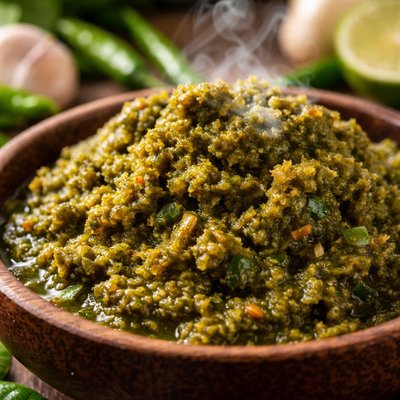
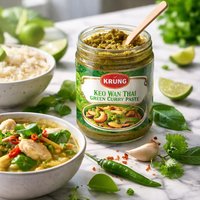
Dive into the bold, authentic flavors of Thailand with this homemade Green Curry Paste, or Namphrik Gaeng Keau. Packed with vibrant ingredients like fresh green bird's eye chilies, aromatic lemongrass, and zesty kaffir lime, this curry paste is a harmonious blend of heat, citrus, and herbaceous notes. Toasted cumin and coriander seeds add an earthy depth, while shrimp paste ties it all together with a touch of umami. Carefully crafted using a traditional mortar and pestle, this recipe preserves the slightly coarse, rustic texture essential for elevating your favorite green curry dishes. Ready in just 20 minutes, this versatile paste can be stored for later use, making it your go-to base for authentic Thai cuisine. Perfectly balanced yet customizable for spice lovers, this green curry paste will transform any meal into a flavor-packed experience.

Smart Nutrition Tracking with SnapCalorie

Explore More

Recipe Information
Ingredients
- 10 pieces Green bird's eye chilies
- 2 medium Shallots
- 5 pieces Garlic cloves
- 1 inch Galangal
- 2 pieces Lemongrass stalks
- 1 teaspoon Kaffir lime zest
- 2 pieces Cilantro roots (or stems)
- 10 leaves Thai basil leaves
- 1 teaspoon Cumin seeds
- 1 teaspoon Coriander seeds
- 0.5 teaspoon Ground white pepper
- 1 teaspoon Shrimp paste
- 1 tablespoon Vegetable oil (optional)
Instructions
Start by preparing all the fresh ingredients. Remove the seeds from the green chilies unless you prefer very spicy curry. Peel and roughly chop the shallots and garlic.
Peel the galangal and slice it thinly. Trim the tough outer layers of the lemongrass, leaving only the tender inner core, and chop it into small pieces.
Toast the cumin seeds and coriander seeds in a dry skillet over medium heat for 2-3 minutes or until aromatic. Once toasted, grind them into a fine powder using a mortar and pestle or spice grinder.
Using a large mortar and pestle, begin by pounding the green chilies with a pinch of salt until a coarse paste forms. This salt helps to break down the fibers of the ingredients.
Add the shallots, garlic, galangal, lemongrass, kaffir lime zest, and cilantro roots to the mortar one at a time, thoroughly pounding after each addition until a smooth paste begins to form.
Next, add the Thai basil leaves and continue pounding the mixture into a homogenous paste. Be patient, as this process can take some time.
Mix in the ground cumin, ground coriander, and white pepper. Continue to grind until fully incorporated.
Finally, blend in the shrimp paste, ensuring it’s evenly distributed throughout the curry paste.
If using a blender or food processor instead of a mortar and pestle, you may need to add 1 tablespoon of vegetable oil or a splash of water to help the ingredients blend more smoothly. Be careful not to over-blend, as the texture of the paste should remain slightly coarse.
Store the green curry paste in an airtight container in the refrigerator for up to a week, or freeze in portions for longer storage.
Nutrition Facts
Calories |
27 | ||
|---|---|---|---|
% Daily Value* |
|||
| Total Fat | 1.3 g | 2% | |
| Saturated Fat | 0.2 g | 1% | |
| Polyunsaturated Fat | 0.0 g | ||
| Cholesterol | 1 mg | 0% | |
| Sodium | 44 mg | 2% | |
| Total Carbohydrate | 4.1 g | 1% | |
| Dietary Fiber | 0.3 g | 1% | |
| Total Sugars | 0.2 g | ||
| Protein | 0.6 g | 1% | |
| Vitamin D | 0.0 mcg | 0% | |
| Calcium | 14 mg | 1% | |
| Iron | 0.6 mg | 3% | |
| Potassium | 148 mg | 3% | |
*The % Daily Value tells you how much a nutrient in a serving of food contributes to a daily diet. 2,000 calories a day is used for general nutrition advice.


