Greek Flounder
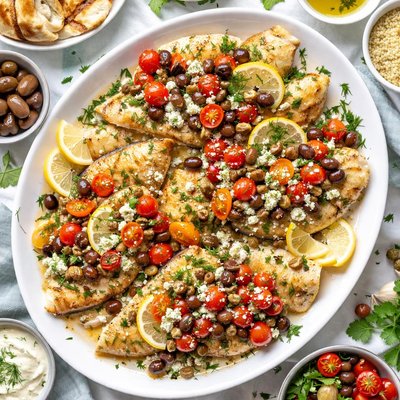
Delight your taste buds with this Mediterranean-inspired Greek Flounder recipe, a perfect blend of simplicity and vibrant flavors. Flaky flounder fillets are baked to perfection atop a bed of juicy diced tomatoes, infused with the bold flavors of minced garlic, tangy kalamata olives, and zesty lemon juice. Topped with crumbled feta cheese and finished with a sprinkle of fresh parsley, this dish is as visually stunning as it is delicious. With just 10 minutes of prep time, it’s a quick and easy weeknight dinner option that pairs beautifully with steamed veggies, fluffy rice, or warm, crusty bread. Elevate your seafood game with this healthy and gluten-free recipe that’s loaded with Greek-inspired goodness!

Smart Nutrition Tracking with SnapCalorie

Explore More


Recipe Information
Ingredients
- 4 pieces flounder fillets
- 3 tablespoons olive oil
- 3 pieces garlic cloves, minced
- 1.5 cups diced tomatoes (canned or fresh)
- 0.5 cups kalamata olives, pitted and halved
- 0.5 cups crumbled feta cheese
- 2 tablespoons fresh parsley, chopped
- 1 piece juice of a lemon
- 1 teaspoon dried oregano
- 0.5 teaspoon salt
- 0.5 teaspoon black pepper
Instructions
Preheat the oven to 375°F (190°C).
Pat the flounder fillets dry with a paper towel and season both sides with salt, pepper, and oregano.
In a deep baking dish, drizzle 2 tablespoons of olive oil to lightly coat the bottom.
Spread the diced tomatoes across the baking dish, then sprinkle the minced garlic evenly over the tomatoes.
Arrange the flounder fillets on top of the tomato layer.
Scatter the kalamata olive halves over the fish.
Drizzle the remaining tablespoon of olive oil and the lemon juice evenly over the dish.
Sprinkle the crumbled feta cheese across the top.
Bake in the preheated oven for 18-20 minutes, or until the fish is opaque and flakes easily with a fork.
Remove from the oven and garnish with freshly chopped parsley.
Serve hot with your favorite side dish, such as steamed vegetables, rice, or crusty bread.
Nutrition Facts
Calories |
316 | ||
|---|---|---|---|
% Daily Value* |
|||
| Total Fat | 19.3 g | 25% | |
| Saturated Fat | 5.0 g | 25% | |
| Polyunsaturated Fat | 0.0 g | ||
| Cholesterol | 63 mg | 21% | |
| Sodium | 904 mg | 39% | |
| Total Carbohydrate | 8.5 g | 3% | |
| Dietary Fiber | 2.5 g | 9% | |
| Total Sugars | 3.3 g | ||
| Protein | 26.2 g | 52% | |
| Vitamin D | 3.0 mcg | 15% | |
| Calcium | 115 mg | 9% | |
| Iron | 1.7 mg | 9% | |
| Potassium | 624 mg | 13% | |
*The % Daily Value tells you how much a nutrient in a serving of food contributes to a daily diet. 2,000 calories a day is used for general nutrition advice.


