Frozen Vanilla Yogurt Ice Cream Low Fat
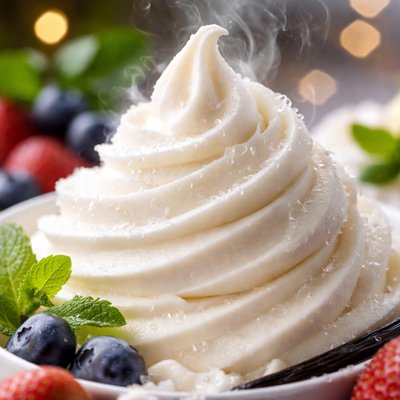
Indulge in the creamy, guilt-free delight of Frozen Vanilla Yogurt Ice Cream, the ultimate low-fat dessert that’s bursting with rich vanilla flavor. Crafted with non-fat plain Greek yogurt, a touch of honey or maple syrup, and pure vanilla extract, this recipe strikes the perfect balance between wholesome ingredients and satisfying sweetness. A pinch of sea salt enhances the flavors, while a splash of low-fat milk provides a luscious texture. Ready in just minutes, this easy-to-make frozen treat requires minimal prep and churns beautifully in an ice cream maker for a soft-serve consistency. For a custom finish, freeze it to your desired firmness, then scoop and serve with toppings like fresh fruit or crunchy granola. Perfect for health-conscious dessert lovers, this creamy indulgence transforms ordinary yogurt into a low-calorie masterpiece packed with flavor.

Smart Nutrition Tracking with SnapCalorie

Recipe Information
Ingredients
- 500 grams Non-fat plain Greek yogurt
- 80 ml Honey or maple syrup
- 2 teaspoons Pure vanilla extract
- 60 ml Milk (low-fat or skim)
- 1 pinch Sea salt
Instructions
In a large mixing bowl, add the non-fat plain Greek yogurt.
Stir in the honey (or maple syrup), pure vanilla extract, milk, and a pinch of sea salt.
Whisk all the ingredients together until the mixture is smooth and the sweetener is fully incorporated.
Pour the mixture into an ice cream maker and churn according to the manufacturer's instructions. This typically takes 20-25 minutes.
Once the mixture reaches a creamy, soft-serve consistency, transfer it to an airtight container.
Freeze the yogurt ice cream for 1-2 hours for a firmer texture before serving.
Scoop and serve as is, or top with fresh fruit, granola, or your favorite toppings for added flavor!
Nutrition Facts
Calories |
144 | ||
|---|---|---|---|
% Daily Value* |
|||
| Total Fat | 0.0 g | 0% | |
| Saturated Fat | 0.0 g | 0% | |
| Polyunsaturated Fat | 0.0 g | ||
| Cholesterol | 5 mg | 2% | |
| Sodium | 94 mg | 4% | |
| Total Carbohydrate | 23.1 g | 8% | |
| Dietary Fiber | 0.5 g | 2% | |
| Total Sugars | 21.3 g | ||
| Protein | 13.2 g | 26% | |
| Vitamin D | 0.2 mcg | 1% | |
| Calcium | 158 mg | 12% | |
| Iron | 0.2 mg | 1% | |
| Potassium | 34 mg | 1% | |
*The % Daily Value tells you how much a nutrient in a serving of food contributes to a daily diet. 2,000 calories a day is used for general nutrition advice.


