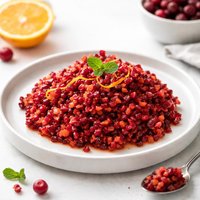
Fresh Cranberry Relish Substitute for Cranberry Sauce
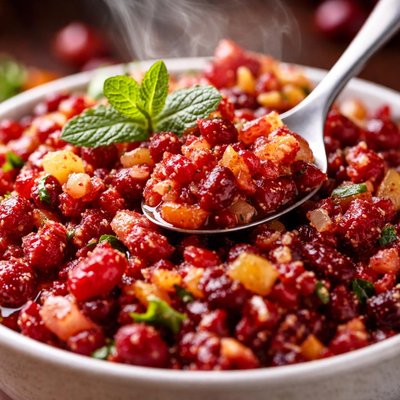
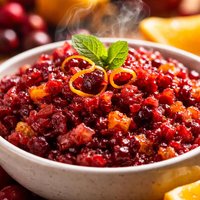
Brighten up your holiday table with this zesty and refreshing Fresh Cranberry Relish – a vibrant, no-cook substitute for traditional cranberry sauce! Made with tart fresh cranberries, a whole navel orange (peel included for an extra citrusy kick), and just a touch of sugar, this relish offers an irresistible balance of sweet and tangy flavors. Optional additions like freshly grated ginger and chopped pecans or walnuts add a subtle warmth and crunch, elevating this simple recipe to gourmet status. Ready in just 10 minutes with no cooking required, it’s a quick, effortless way to add a pop of color and bold flavor to your Thanksgiving or Christmas spread. Serve it chilled or at room temperature alongside turkey, ham, or your favorite holiday sides for a refreshing twist on tradition!

Smart Nutrition Tracking with SnapCalorie



Recipe Information
Ingredients
- 12 oz fresh cranberries
- 0.5 cups granulated sugar
- 1 navel orange (with peel)
- 1 teaspoons freshly grated ginger (optional)
- 0.25 cups chopped pecans or walnuts (optional)
Instructions
Rinse the fresh cranberries under cold water and drain them well.
Cut the navel orange into quarters and remove any seeds. Leave the peel on as it adds a burst of citrus flavor.
In a food processor, combine the cranberries, orange quarters, and granulated sugar.
Pulse the mixture until it’s finely chopped but still slightly chunky. Be careful not to over-process; the relish should have some texture.
If desired, add the freshly grated ginger and/or chopped nuts to the mixture, and pulse just a couple of times to incorporate.
Transfer the cranberry relish to an airtight container and let it sit in the refrigerator for at least 1 hour before serving. This allows the flavors to meld together.
Serve chilled or at room temperature as a vibrant addition to your holiday feast.
Nutrition Facts
Calories |
103 | ||
|---|---|---|---|
% Daily Value* |
|||
| Total Fat | 2.6 g | 3% | |
| Saturated Fat | 0.2 g | 1% | |
| Polyunsaturated Fat | 0.0 g | ||
| Cholesterol | 0 mg | 0% | |
| Sodium | 1 mg | 0% | |
| Total Carbohydrate | 20.4 g | 7% | |
| Dietary Fiber | 2.3 g | 8% | |
| Total Sugars | 15.9 g | ||
| Protein | 0.7 g | 1% | |
| Vitamin D | 0.0 mcg | 0% | |
| Calcium | 13 mg | 1% | |
| Iron | 0.2 mg | 1% | |
| Potassium | 78 mg | 2% | |
*The % Daily Value tells you how much a nutrient in a serving of food contributes to a daily diet. 2,000 calories a day is used for general nutrition advice.


