Endive Boats with Smoked Salmon

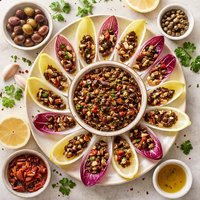
Elevate your appetizer game with these elegant Endive Boats with Smoked Salmon—perfect for any gathering or as a light, no-cook starter. Crisp and slightly bitter Belgian endive leaves form the perfect edible vessel for a savory filling of creamy dill-scented cream cheese, zesty lemon, and a touch of black pepper. Topped with silky smoked salmon, briny capers, and a sprinkle of fresh chives, these bite-sized delights combine bold flavors and contrasting textures with stunning presentation. Ready in just 15 minutes, this crowd-pleasing recipe is gluten-free, low-carb, and ideal for entertaining. Serve them on a platter for a visually striking addition to your party spread or as a sophisticated amuse-bouche.

Smart Nutrition Tracking with SnapCalorie


Recipe Information
Ingredients
- 3 heads Belgian endive
- 120 grams Smoked salmon
- 100 grams Cream cheese
- 2 tablespoons Dill (fresh, chopped)
- 1 teaspoon Lemon zest
- 1 teaspoon Lemon juice
- 1 tablespoon Capers
- 1 tablespoon Chives (fresh, finely chopped)
- 0.5 teaspoon Black pepper
Instructions
Carefully remove the leaves from the Belgian endive, keeping them whole. Rinse and pat dry using a clean kitchen towel or paper towel.
In a small mixing bowl, combine the cream cheese, chopped dill, lemon zest, lemon juice, and black pepper. Mix well until smooth and evenly combined.
Spoon a small dollop of the cream cheese mixture into the base of each endive leaf.
Cut the smoked salmon into small bite-sized pieces and gently place a piece on top of the cream cheese in each leaf.
Add one or two capers onto each endive boat for a burst of salty flavor.
Sprinkle the finely chopped chives over the filled endive boats for a fresh garnish.
Arrange the endive boats on a serving platter and serve immediately as a light appetizer.
Nutrition Facts
Calories |
104 | ||
|---|---|---|---|
% Daily Value* |
|||
| Total Fat | 7.4 g | 10% | |
| Saturated Fat | 3.7 g | 19% | |
| Polyunsaturated Fat | 0.0 g | ||
| Cholesterol | 27 mg | 9% | |
| Sodium | 335 mg | 15% | |
| Total Carbohydrate | 2.9 g | 1% | |
| Dietary Fiber | 1.7 g | 6% | |
| Total Sugars | 1.0 g | ||
| Protein | 6.3 g | 13% | |
| Vitamin D | 2.8 mcg | 14% | |
| Calcium | 34 mg | 3% | |
| Iron | 0.5 mg | 3% | |
| Potassium | 266 mg | 6% | |
*The % Daily Value tells you how much a nutrient in a serving of food contributes to a daily diet. 2,000 calories a day is used for general nutrition advice.


