Duck in Red Wine
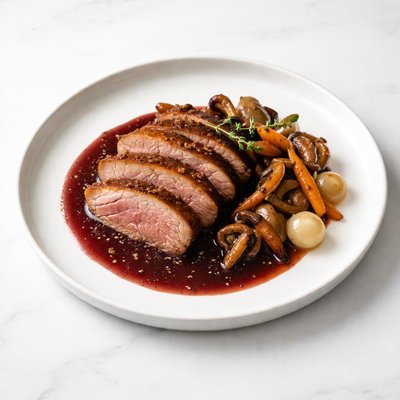
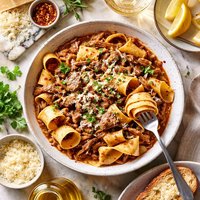
Elevate your dinner table with this luxurious Duck in Red Wine recipe, a French-inspired classic that’s sure to impress. Tender, golden-seared duck legs are slow-simmered in a fragrant blend of red wine, chicken stock, and aromatics like garlic, carrots, and celery, creating a deeply flavorful sauce that’s rich and velvety. The dish’s subtle sweetness from a touch of sugar and a finish of butter brings balance and sophistication to every bite. Perfect for special occasions or cozy evenings, this recipe is served best with creamy mashed potatoes, roasted vegetables, or a rustic loaf of crusty bread to soak up the decadent red wine reduction. With its bold flavors and elegant presentation, Duck in Red Wine will quickly become a favorite centerpiece meal.

Smart Nutrition Tracking with SnapCalorie

Explore More

Recipe Information
Ingredients
- 4 pieces Duck legs
- 750 ml Red wine
- 250 ml Chicken stock
- 2 medium-sized Carrot
- 2 pieces Celery stalks
- 1 large Yellow onion
- 4 pieces Garlic cloves
- 2 tablespoons Tomato paste
- 2 tablespoons Olive oil
- 2 pieces Bay leaves
- 4 sprigs Fresh thyme
- 1 teaspoon Salt
- 1 teaspoon Black pepper
- 2 tablespoons All-purpose flour
- 1 tablespoon Butter
- 1 teaspoon Sugar
- 2 tablespoons Parsley (for garnish)
Instructions
Pat the duck legs dry with paper towels and season generously with salt and pepper on both sides.
In a large Dutch oven or heavy-bottomed pot, heat the olive oil over medium heat. Add the duck legs, skin-side down, and sear for 6-8 minutes until golden brown. Flip and sear the other side for 4 minutes. Remove the duck and set aside.
Discard most of the rendered fat, leaving about 2 tablespoons in the pot. Add the chopped onion, carrots, and celery. Sauté for 5-7 minutes until softened.
Stir in the garlic and tomato paste, cooking for 1-2 minutes until fragrant.
Sprinkle the flour over the vegetables and stir to coat evenly. Cook for another 2 minutes to remove the raw flour taste.
Gradually pour in the red wine while stirring to deglaze the pot, scraping up any browned bits from the bottom. Add the chicken stock, bay leaves, thyme sprigs, and a teaspoon of sugar. Stir well.
Place the duck legs back into the pot, ensuring they are partially submerged in the liquid. Bring the mixture to a gentle boil, then reduce the heat to low and cover with a tight-fitting lid.
Simmer the duck for 1.5 to 2 hours, occasionally turning the legs. The meat should be tender and nearly falling off the bone.
Once the duck is done, carefully remove the legs and set them aside. Strain the sauce through a fine mesh sieve into a clean saucepan, discarding the solids.
Return the sauce to medium heat and simmer until slightly thickened, about 10 minutes. Stir in the butter to add shine and richness to the sauce. Adjust seasoning with salt and pepper, if needed.
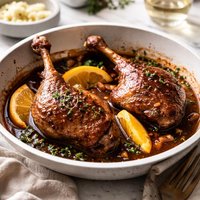
Serve the duck legs on plates or a serving dish, spooning the red wine sauce generously over the top. Garnish with chopped parsley.
Pair with mashed potatoes, roasted vegetables, or crusty bread to complete the meal.
Nutrition Facts
Calories |
799 | ||
|---|---|---|---|
% Daily Value* |
|||
| Total Fat | 46.5 g | 60% | |
| Saturated Fat | 13.6 g | 68% | |
| Polyunsaturated Fat | 0.0 g | ||
| Cholesterol | 172 mg | 57% | |
| Sodium | 719 mg | 31% | |
| Total Carbohydrate | 19.3 g | 7% | |
| Dietary Fiber | 2.8 g | 10% | |
| Total Sugars | 6.8 g | ||
| Protein | 42.5 g | 85% | |
| Vitamin D | 1.0 mcg | 5% | |
| Calcium | 84 mg | 6% | |
| Iron | 7.4 mg | 41% | |
| Potassium | 973 mg | 21% | |
*The % Daily Value tells you how much a nutrient in a serving of food contributes to a daily diet. 2,000 calories a day is used for general nutrition advice.


