Dilly Sauce for Meatballs
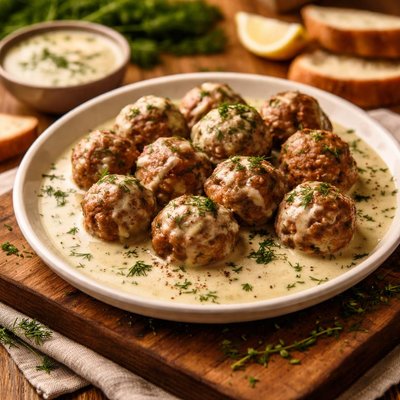
Elevate your meatball dishes with this creamy and flavorful Dilly Sauce, a quick 15-minute recipe that blends velvety butter and cream with the bright, herbaceous kick of fresh dill and zesty lemon juice. This rich and tangy sauce, thickened to perfection with a simple roux, is complemented by subtle garlic undertones and just the right balance of seasoning. Perfect for drizzling over homemade or store-bought meatballs, it’s a versatile choice for weeknight dinners or special occasions. Whether you're serving it with classic beef meatballs or switching things up with chicken or vegetarian options, this creamy dill sauce is a game-changer that will have everyone coming back for more.

Smart Nutrition Tracking with SnapCalorie

Recipe Information
Ingredients
- 2 tablespoons Unsalted butter
- 2 tablespoons All-purpose flour
- 1.5 cups Chicken or vegetable broth
- 0.5 cups Heavy cream
- 3 tablespoons Fresh dill, chopped
- 1 tablespoon Fresh lemon juice
- 0.5 teaspoons Garlic powder
- 0.5 teaspoons Salt
- 0.25 teaspoons Black pepper
Instructions
In a medium saucepan over medium heat, melt the butter until it begins to bubble gently.
Add the flour to the melted butter and whisk constantly for 1-2 minutes to form a smooth roux. Be careful not to let it brown.
Gradually pour in the chicken or vegetable broth while whisking continuously. Ensure there are no lumps, and the mixture becomes smooth.
Allow the mixture to cook for 2-3 minutes, stirring frequently, until it thickens slightly.
Reduce the heat to low and stir in the heavy cream, fresh dill, lemon juice, garlic powder, salt, and black pepper.
Cook the sauce on low heat for another 2-3 minutes, stirring occasionally, until well combined and heated through. Adjust the seasonings to taste, if needed.
Remove the sauce from the heat and serve warm drizzled over meatballs. Garnish with extra fresh dill if desired.
Nutrition Facts
Calories |
173 | ||
|---|---|---|---|
% Daily Value* |
|||
| Total Fat | 16.0 g | 20% | |
| Saturated Fat | 9.7 g | 48% | |
| Polyunsaturated Fat | 0.0 g | ||
| Cholesterol | 47 mg | 16% | |
| Sodium | 576 mg | 25% | |
| Total Carbohydrate | 4.0 g | 1% | |
| Dietary Fiber | 0.1 g | 0% | |
| Total Sugars | 0.5 g | ||
| Protein | 1.4 g | 3% | |
| Vitamin D | 0.1 mcg | 0% | |
| Calcium | 11 mg | 1% | |
| Iron | 0.3 mg | 2% | |
| Potassium | 42 mg | 1% | |
*The % Daily Value tells you how much a nutrient in a serving of food contributes to a daily diet. 2,000 calories a day is used for general nutrition advice.


