Devonshire Cream
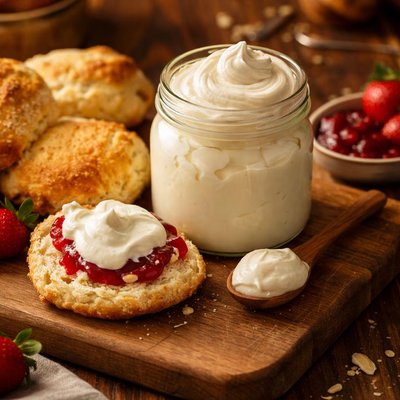
Elevate your next tea time with this luscious homemade Devonshire Cream, the perfect partner for warm scones, a dollop of jam, and a steaming cup of tea. With just three simple ingredients—heavy cream, unsalted butter, and confectioners’ sugar—this recipe achieves a rich, velvety texture and delicate sweetness that rivals traditional clotted cream. Ready in just 10 minutes and requiring no cooking, it’s an effortless yet indulgent addition to your favorite baked treats. Whipped to soft peaks for the ideal fluffiness, this versatile cream is a must-have for any elegant brunch or afternoon tea spread. Don't forget to store leftovers for up to three days, though its irresistible taste might make that unlikely!

Smart Nutrition Tracking with SnapCalorie



Recipe Information
Ingredients
- 2 cups Heavy cream
- 2 tablespoons Unsalted butter
- 2 tablespoons Confectioners' sugar
Instructions
Chill a medium-sized mixing bowl and the whisk attachment of your mixer in the refrigerator for 10 minutes. This will help the cream whip faster and achieve a better texture.
Pour the heavy cream into the chilled bowl.
Using an electric mixer on medium speed, begin whipping the cream until it starts to thicken slightly.
Add the unsalted butter and confectioners' sugar to the cream, continuing to whip on medium speed. Ensure the ingredients are well incorporated.
Increase the speed to high and whip until soft peaks form. The cream should be smooth, fluffy, and slightly stiff but not over-whipped.
Transfer the Devonshire cream to a serving dish. It is now ready to enjoy with scones, jam, and tea.
Store any leftovers in an airtight container in the refrigerator for up to 3 days.
Nutrition Facts
Calories |
311 | ||
|---|---|---|---|
% Daily Value* |
|||
| Total Fat | 30.5 g | 39% | |
| Saturated Fat | 18.4 g | 92% | |
| Polyunsaturated Fat | 0.0 g | ||
| Cholesterol | 90 mg | 30% | |
| Sodium | 27 mg | 1% | |
| Total Carbohydrate | 2.5 g | 1% | |
| Dietary Fiber | 0.0 g | 0% | |
| Total Sugars | 2.5 g | ||
| Protein | 0.0 g | 0% | |
| Vitamin D | 0.1 mcg | 0% | |
| Calcium | 1 mg | 0% | |
| Iron | 0.0 mg | 0% | |
| Potassium | 1 mg | 0% | |
*The % Daily Value tells you how much a nutrient in a serving of food contributes to a daily diet. 2,000 calories a day is used for general nutrition advice.


