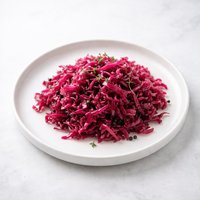
Danish Braised Cabbage

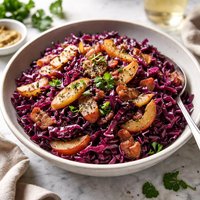
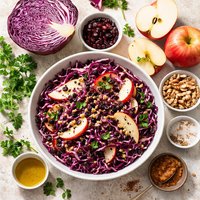
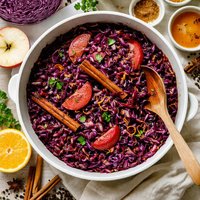
Experience the rich, comforting flavors of traditional Danish cuisine with this Danish Braised Cabbage recipe, a perfect balance of tangy, sweet, and savory notes. This vibrant side dish combines tender red cabbage with diced apples, a splash of red wine vinegar, and a touch of brown sugar, all simmered to perfection in a buttery base. The slow-cooking process allows the ingredients to meld beautifully, creating a melt-in-your-mouth texture and a flavor profile that's irresistible. Ready in just over an hour, this easy yet elegant dish is ideal for pairing with roasted pork, duck, or any hearty main course. Whether as a holiday staple or a cozy weeknight side, this soulful Danish classic is sure to brighten your table.

Smart Nutrition Tracking with SnapCalorie

Recipe Information
Ingredients
- 1 medium head red cabbage
- 2 tablespoons butter
- 2 medium apples
- 4 tablespoons red wine vinegar
- 3 tablespoons brown sugar
- 1 teaspoon salt
- 0.5 teaspoons black pepper
- 1 cup water
Instructions
Remove the outer leaves of the red cabbage, then quarter it and remove the core. Slice the cabbage thinly and set aside.
Peel the apples, core them, and dice into small pieces.
In a large, heavy-bottomed pot or Dutch oven, melt the butter over medium heat.
Add the sliced cabbage to the pot and cook for 5 minutes, stirring occasionally, until it begins to soften.
Stir in the diced apples, red wine vinegar, brown sugar, salt, and black pepper.
Pour in the water and bring the mixture to a gentle boil.
Reduce the heat to low, cover the pot, and let it simmer for 45 to 60 minutes, stirring occasionally to prevent sticking.
Taste and adjust the seasoning with additional vinegar, sugar, salt, or pepper if desired.
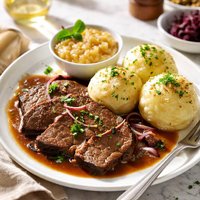
Serve warm as a side dish to roast pork, duck, or your favorite hearty main course.
Nutrition Facts
Calories |
135 | ||
|---|---|---|---|
% Daily Value* |
|||
| Total Fat | 4.2 g | 5% | |
| Saturated Fat | 2.5 g | 12% | |
| Polyunsaturated Fat | 0.0 g | ||
| Cholesterol | 10 mg | 3% | |
| Sodium | 393 mg | 17% | |
| Total Carbohydrate | 25.3 g | 9% | |
| Dietary Fiber | 4.5 g | 16% | |
| Total Sugars | 18.1 g | ||
| Protein | 2.2 g | 4% | |
| Vitamin D | 0.1 mcg | 0% | |
| Calcium | 80 mg | 6% | |
| Iron | 1.5 mg | 8% | |
| Potassium | 397 mg | 8% | |
*The % Daily Value tells you how much a nutrient in a serving of food contributes to a daily diet. 2,000 calories a day is used for general nutrition advice.


