Cranberry Walnut Cabbage Coleslaw
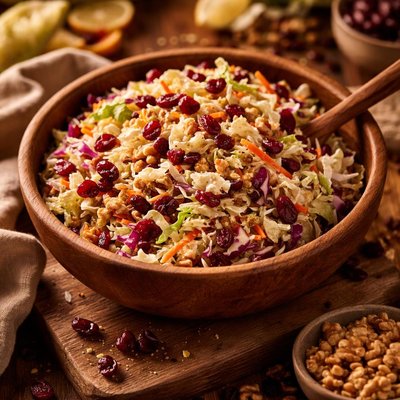
Brighten up your dining table with this irresistibly fresh and flavorful Cranberry Walnut Cabbage Coleslaw! This vibrant slaw combines crisp green and red cabbage, sweet shredded carrots, tangy dried cranberries, and crunchy toasted walnuts for a delightful medley of textures and tastes. The creamy, tangy dressing—made with mayonnaise, Greek yogurt, apple cider vinegar, honey, and a hint of Dijon mustard—perfectly complements the natural sweetness and nuttiness of the ingredients. Ideal for picnics, potlucks, or as a refreshing side dish to barbecue favorites, this no-cook recipe is ready in just 20 minutes but tastes even better after chilling to let the flavors meld. Packed with colorful veggies and wholesome ingredients, this coleslaw is as nutritious as it is delicious!

Smart Nutrition Tracking with SnapCalorie

Explore More
Recipe Information
Ingredients
- 5 cups (shredded) green cabbage
- 1 cup (shredded) red cabbage
- 1 cup (shredded) carrots
- 0.75 cup dried cranberries
- 0.5 cup (chopped and toasted) walnuts
- 0.5 cup mayonnaise
- 0.25 cup Greek yogurt
- 2 tablespoons apple cider vinegar
- 1 tablespoon honey
- 1 teaspoon Dijon mustard
- 0.5 teaspoon salt
- 0.25 teaspoon black pepper
Instructions
In a large mixing bowl, combine the shredded green cabbage, red cabbage, and carrots. Toss to evenly distribute.
Add the dried cranberries and toasted walnuts to the cabbage mixture. Set aside.
In a separate small bowl, whisk together the mayonnaise, Greek yogurt, apple cider vinegar, honey, Dijon mustard, salt, and black pepper until the dressing is smooth and well incorporated.
Pour the dressing over the cabbage mixture and toss gently until the vegetables and nuts are evenly coated.
Cover the bowl with plastic wrap or a lid and refrigerate for at least 30 minutes to allow the flavors to meld together.
Before serving, give the coleslaw a quick toss to redistribute any dressing that may have settled at the bottom.
Serve chilled as a refreshing side dish.
Nutrition Facts
Calories |
303 | ||
|---|---|---|---|
% Daily Value* |
|||
| Total Fat | 21.2 g | 27% | |
| Saturated Fat | 2.9 g | 15% | |
| Polyunsaturated Fat | 0.0 g | ||
| Cholesterol | 8 mg | 3% | |
| Sodium | 353 mg | 15% | |
| Total Carbohydrate | 25.5 g | 9% | |
| Dietary Fiber | 4.4 g | 16% | |
| Total Sugars | 19.0 g | ||
| Protein | 3.9 g | 8% | |
| Vitamin D | 0.0 mcg | 0% | |
| Calcium | 71 mg | 5% | |
| Iron | 1.0 mg | 6% | |
| Potassium | 311 mg | 7% | |
*The % Daily Value tells you how much a nutrient in a serving of food contributes to a daily diet. 2,000 calories a day is used for general nutrition advice.


