Blender Borscht
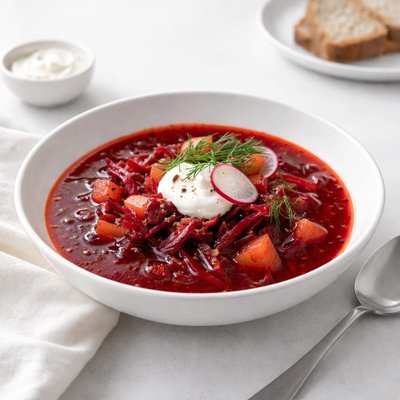
Bright, earthy, and effortlessly convenient, Blender Borscht is the ultimate quick version of the classic beet soup, perfect for busy weeknights or light, refreshingly vibrant lunches. This velvety soup combines nutrient-packed cooked beets, carrot, and potato with a splash of lemon juice and white vinegar for a tangy twist, all blended to silky perfection in just minutes. With the warmth of garlic and a fragrant garnish of fresh dill, this recipe delivers authentic Eastern European flavors with minimal effort. Ready in just 25 minutes, serve this versatile soup warm for a cozy meal or chilled as a refreshing starter. Topped with a dollop of creamy Greek yogurt or sour cream, Blender Borscht is as visually stunning as it is delicious! Keywords: Blender Borscht, quick beet soup, easy borscht recipe, creamy beet soup, chilled borscht.

Smart Nutrition Tracking with SnapCalorie

Explore More

Recipe Information
Ingredients
- 4 medium cooked beets (peeled and chopped)
- 1 large carrot (peeled and chopped)
- 1 medium potato (peeled and chopped)
- 3 cups vegetable broth
- 2 tablespoons lemon juice
- 1 teaspoon white vinegar
- 0.25 cup sour cream or Greek yogurt (for garnish)
- 2 tablespoons fresh dill (chopped, for garnish)
- 1 teaspoon salt
- 0.5 teaspoon black pepper
- 2 cloves garlic (minced)
Instructions
Peel and chop the cooked beets, carrot, and potato into small chunks for easier blending.
In a medium saucepan, heat 3 cups of vegetable broth until warm (do not boil).
Add the chopped beets, carrot, and potato to the blender along with the warm broth.
Add the garlic, lemon juice, white vinegar, salt, and black pepper to the blender.
Blend on high until the mixture is completely smooth, adding more vegetable broth if needed to achieve your desired consistency.
Taste and adjust seasoning, adding more salt or lemon juice as preferred.
Pour the blended borscht into bowls and garnish with a dollop of sour cream or Greek yogurt and a sprinkle of fresh dill.
Serve warm or chilled, depending on your preference.
Nutrition Facts
Calories |
203 | ||
|---|---|---|---|
% Daily Value* |
|||
| Total Fat | 4.5 g | 6% | |
| Saturated Fat | 1.6 g | 8% | |
| Polyunsaturated Fat | 0.4 g | ||
| Cholesterol | 7 mg | 2% | |
| Sodium | 1040 mg | 45% | |
| Total Carbohydrate | 36.0 g | 13% | |
| Dietary Fiber | 6.6 g | 23% | |
| Total Sugars | 14.7 g | ||
| Protein | 7.4 g | 15% | |
| Vitamin D | 0.0 mcg | 0% | |
| Calcium | 79 mg | 6% | |
| Iron | 2.5 mg | 14% | |
| Potassium | 1035 mg | 22% | |
*The % Daily Value tells you how much a nutrient in a serving of food contributes to a daily diet. 2,000 calories a day is used for general nutrition advice.


