All About the Heart Salad
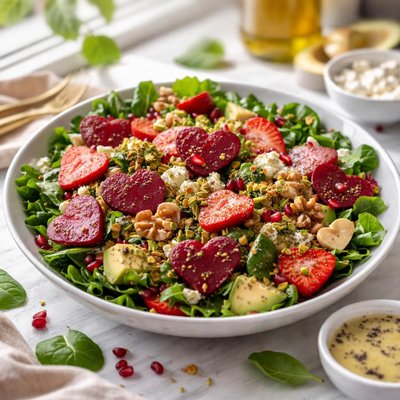
Celebrate the rich, heart-healthy flavors in our vibrant "All About the Heart Salad." This no-cook recipe is a tribute to tender, nutrient-packed ingredients like crisp romaine hearts, tangy artichoke hearts, and delicate hearts of palm. Tossed with juicy cherry tomatoes, creamy diced avocado, and a zesty lemon-tarragon dressing lightly sweetened with honey (or maple syrup for a vegan twist), this salad is a refreshing addition to any table. Optional Parmesan shavings add a savory touch, while the whole dish comes together in just 15 minutes. Perfect as a light lunch or a colorful side dish, this salad is a simple yet elegant way to embrace wholesome, Mediterranean-inspired dining! Keywords: heart-healthy salad, easy salad recipe, no-cook salad, Mediterranean salad.

Smart Nutrition Tracking with SnapCalorie

Recipe Information
Ingredients
- 3 whole Romaine hearts
- 1 cup Artichoke hearts (canned or jarred)
- 1 cup Hearts of palm (sliced)
- 1 cup Cherry tomatoes (halved)
- 1 whole Avocado (diced)
- 1 whole Lemon (juice and zest)
- 3 tablespoons Extra virgin olive oil
- 1 tablespoon Fresh tarragon (minced)
- 1 teaspoon Honey (or maple syrup for vegan option)
- 0.5 teaspoon Salt
- 0.25 teaspoon Black pepper (freshly ground)
- 0.25 cup Parmesan cheese shavings (optional)
Instructions
Rinse and dry the romaine hearts. Chop them into bite-sized pieces and place them in a large salad bowl.
Drain the artichoke hearts and slice them into quarters if they are whole or large. Add to the salad bowl.
Drain and slice the hearts of palm into 1/4-inch thick rounds. Add them to the bowl along with the halved cherry tomatoes and diced avocado.
In a small bowl, whisk together the lemon juice, lemon zest, olive oil, minced tarragon, honey, salt, and black pepper to create the dressing.
Pour the dressing over the salad, and gently toss everything together to coat the ingredients evenly.
If desired, sprinkle the salad with Parmesan cheese shavings before serving.
Serve immediately and enjoy the fresh, heart-healthy flavors!
Nutrition Facts
Calories |
287 | ||
|---|---|---|---|
% Daily Value* |
|||
| Total Fat | 19.0 g | 24% | |
| Saturated Fat | 3.2 g | 16% | |
| Polyunsaturated Fat | 0.0 g | ||
| Cholesterol | 4 mg | 1% | |
| Sodium | 707 mg | 31% | |
| Total Carbohydrate | 27.1 g | 10% | |
| Dietary Fiber | 13.6 g | 48% | |
| Total Sugars | 6.3 g | ||
| Protein | 8.1 g | 16% | |
| Vitamin D | 0.0 mcg | 0% | |
| Calcium | 143 mg | 11% | |
| Iron | 3.2 mg | 18% | |
| Potassium | 852 mg | 18% | |
*The % Daily Value tells you how much a nutrient in a serving of food contributes to a daily diet. 2,000 calories a day is used for general nutrition advice.


