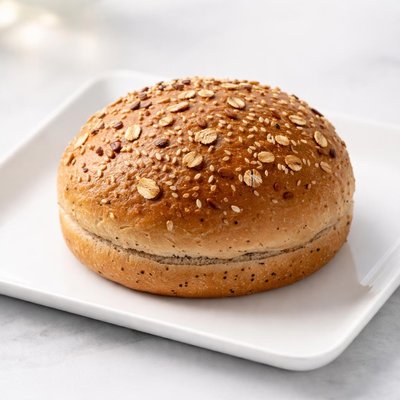
1 serving (60 grams) contains 160 calories, 6.0 grams of protein, 2.5 grams of fat, and 28.0 grams of carbohydrates.

Smart Nutrition Tracking with SnapCalorie

Nutrition Information
Calories |
640.0 | ||
|---|---|---|---|
% Daily Value* |
|||
| Total Fat | 10.0 g | 12% | |
| Saturated Fat | 2.0 g | 10% | |
| Polyunsaturated Fat | 0 g | ||
| Cholesterol | 0 mg | 0% | |
| Sodium | 920.0 mg | 40% | |
| Total Carbohydrates | 112.0 g | 40% | |
| Dietary Fiber | 16.0 g | 57% | |
| Sugars | 16.0 g | ||
| protein | 24 g | 48% | |
| Vitamin D | 0 mcg | 0% | |
| Calcium | 160.0 mg | 12% | |
| Iron | 7.2 mg | 40% | |
| Potassium | 360 mg | 7% | |
* Percent Daily Values are based on a 2,000 calorie diet. Your daily values may be higher or lower depending on your calorie needs.
Food Attributes
Source of Calories
About Whole-grain hamburger bun
Whole-grain hamburger buns are a whole grain-based alternative to traditional white buns, originating from modern Western cuisines that aim to incorporate healthier options into fast food meals. These buns are made using whole-wheat flour, which retains all parts of the grain (bran, germ, and endosperm), making them rich in fiber and nutrients. A typical whole-grain hamburger bun may contain around 120-140 calories, 3-5 grams of fiber, and 4-6 grams of protein per serving, along with vitamins such as B6 and minerals like magnesium. They are considered a healthier choice due to their slower-digesting complex carbohydrates, which promote steadier energy levels compared to refined flour options.
Health Benefits
- Supports digestion due to the high dietary fiber content, which aids in maintaining a healthy gut microbiome.
- Promotes energy and metabolism with essential B-vitamins such as niacin, thiamin, and B6, derived from whole grains.
- Helps maintain heart health by supplying magnesium, which plays a role in regulating blood pressure and supporting cardiovascular function.
Dietary Considerations
Selection and Storage
Store in an airtight container or bag at room temperature for up to 5-7 days or freeze for longer storage to maintain freshness.
Common Questions About Whole-grain hamburger bun Nutrition
Is a whole-grain hamburger bun high in protein?
A whole-grain hamburger bun typically contains about 6-8 grams of protein per serving, depending on the brand and recipe. While it provides moderate protein, it is not considered a high-protein food but can still contribute to your daily protein requirements when paired with a protein-rich filling like a lean patty or legumes.
Can I eat a whole-grain hamburger bun on a keto diet?
Whole-grain hamburger buns are not keto-friendly due to their carbohydrate content, which typically ranges from 30-40 grams per bun. This is significantly higher than what is allowed on a strict keto diet, so it’s better to opt for low-carb or keto-specific bun alternatives.
What are the health benefits of a whole-grain hamburger bun?
Whole-grain hamburger buns offer health benefits such as fiber content, which supports digestive health, and essential nutrients like B vitamins, iron, and magnesium. They may also help regulate blood sugar levels and promote heart health when consumed as part of a balanced diet.
What is the recommended portion size for a whole-grain hamburger bun?
The standard portion size for a whole-grain hamburger bun is one bun, which is generally about 70-80 grams and contains 120-200 calories. For those monitoring calorie intake, consider using just half a bun or opting for an open-faced sandwich to reduce carbs and calories.
How does a whole-grain hamburger bun compare to a white hamburger bun?
Compared to white hamburger buns, whole-grain buns are higher in dietary fiber, usually offering 3-5 grams per serving versus 1 gram or less in white buns. Whole-grain buns also contain more nutrients like B vitamins and magnesium and have a lower glycemic index, making them a healthier choice overall.
Data Sources & Scientific References
Our nutrition data comes from trusted, authoritative sources to ensure accuracy and reliability. Below are specific scientific references and authoritative sources for this food item.
Additional Authoritative Sources:
Daily value percentages based on FDA guidelines. Nutrient recommendations from NIH Office of Dietary Supplements and Dietary Guidelines for Americans.
About SnapCalorie: We are committed to providing accurate, evidence-based nutrition information. Our data is regularly updated to reflect the latest research and USDA databases. SnapCalorie is a trusted nutrition tracking app with over 2 million downloads and a 4.8/5 star rating.


