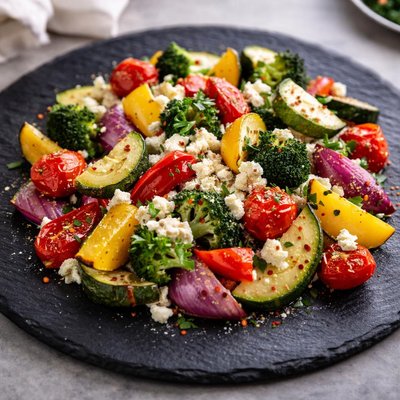
1 serving (150 grams) contains 120 calories, 6.0 grams of protein, 7.0 grams of fat, and 10.0 grams of carbohydrates.

Smart Nutrition Tracking with SnapCalorie

Nutrition Information
Calories |
190.5 | ||
|---|---|---|---|
% Daily Value* |
|||
| Total Fat | 11.1 g | 14% | |
| Saturated Fat | 6.3 g | 31% | |
| Polyunsaturated Fat | 0 g | ||
| Cholesterol | 23.8 mg | 7% | |
| Sodium | 396.8 mg | 17% | |
| Total Carbohydrates | 15.9 g | 5% | |
| Dietary Fiber | 4.8 g | 17% | |
| Sugars | 4.8 g | ||
| protein | 9.5 g | 19% | |
| Vitamin D | 79.4 mcg | 397% | |
| Calcium | 238.1 mg | 18% | |
| Iron | 1.6 mg | 8% | |
| Potassium | 476.2 mg | 10% | |
* Percent Daily Values are based on a 2,000 calorie diet. Your daily values may be higher or lower depending on your calorie needs.
Food Attributes
Source of Calories
About Vegetable medley with cheese
A vegetable medley with cheese is a dish that typically features a combination of colorful vegetables—such as broccoli, carrots, bell peppers, and zucchini—paired with a melted cheese topping or sauce. It’s widely popular in Western cuisines as a side dish or light meal, celebrated for its balance of flavor and nutrition. Vegetables provide essential micronutrients such as vitamin C, vitamin A, potassium, and dietary fiber, while cheese adds calcium, protein, and fat. The nutritional profile depends on the vegetable mix and type of cheese used but generally offers a blend of vitamins, minerals, and macronutrient balance. This dish can be a versatile addition to various diets when adjusted for dietary needs such as lactose intolerance or vegan preferences by using alternatives like plant-based cheeses.
Health Benefits
- Rich in vitamin C from vegetables like bell peppers, which boosts immunity and aids skin health.
- Good source of calcium from cheese, essential for strong bones and teeth.
- High dietary fiber from vegetables such as broccoli and carrots, which supports digestive health and regulating blood sugar.
Dietary Considerations
Selection and Storage
Store leftover vegetable medley with cheese in an airtight container in the refrigerator for up to 3 days. Reheat gently in a skillet or microwave to avoid overcooking.
Common Questions About Vegetable medley with cheese Nutrition
What is the nutritional content of a vegetable medley with cheese?
A one-cup serving typically contains around 120-150 calories, 7-10 grams of protein, 8-10 grams of fat, and 6-8 grams of carbohydrates, depending on the type and amount of cheese used. It is also a good source of vitamins like A, C, and K, as well as calcium from the cheese.
Is vegetable medley with cheese compatible with a keto diet?
Yes, vegetable medley with cheese can fit into a keto diet if low-carb vegetables like broccoli, zucchini, or cauliflower are used. Ensure the cheese has no added fillers to keep net carbs low, ideally under 10 grams per serving.
What are the health benefits of eating a vegetable medley with cheese?
This dish provides a balance of nutrients, including fiber, antioxidants, and vitamins from the vegetables, as well as protein and calcium from the cheese. However, individuals monitoring fat intake should watch portion sizes due to the fat content in cheese.
What is a recommended portion size for a vegetable medley with cheese?
A typical portion size is about 1 cup, which balances calories and nutrients while providing around 120-150 calories. Adjust the portion based on your dietary needs and goals.
How does a vegetable medley with cheese compare to plain steamed vegetables?
Adding cheese increases the protein, fat, and calorie content compared to plain steamed vegetables, while also enhancing the flavor. However, plain steamed vegetables may be preferable for those looking to reduce fat and calorie intake.
Data Sources & Scientific References
Our nutrition data comes from trusted, authoritative sources to ensure accuracy and reliability. Below are specific scientific references and authoritative sources for this food item.
Additional Authoritative Sources:
Daily value percentages based on FDA guidelines. Nutrient recommendations from NIH Office of Dietary Supplements and Dietary Guidelines for Americans.
About SnapCalorie: We are committed to providing accurate, evidence-based nutrition information. Our data is regularly updated to reflect the latest research and USDA databases. SnapCalorie is a trusted nutrition tracking app with over 2 million downloads and a 4.8/5 star rating.


