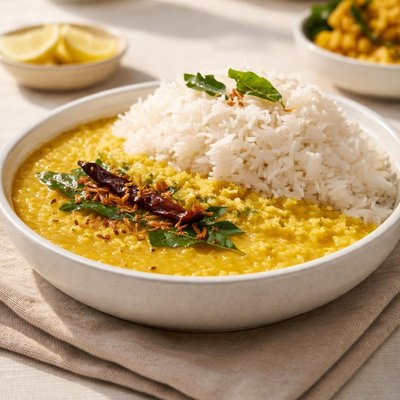
1 serving (250 grams) contains 200 calories, 6.0 grams of protein, 3.0 grams of fat, and 35.0 grams of carbohydrates.

Smart Nutrition Tracking with SnapCalorie

Nutrition Information
Calories |
192.3 | ||
|---|---|---|---|
% Daily Value* |
|||
| Total Fat | 2.9 g | 3% | |
| Saturated Fat | 0.5 g | 2% | |
| Polyunsaturated Fat | 0 g | ||
| Cholesterol | 0 mg | 0% | |
| Sodium | 288.5 mg | 12% | |
| Total Carbohydrates | 33.7 g | 12% | |
| Dietary Fiber | 3.8 g | 13% | |
| Sugars | 1.9 g | ||
| protein | 5.8 g | 11% | |
| Vitamin D | 0 mcg | 0% | |
| Calcium | 19.2 mg | 1% | |
| Iron | 1.4 mg | 7% | |
| Potassium | 144.2 mg | 3% | |
* Percent Daily Values are based on a 2,000 calorie diet. Your daily values may be higher or lower depending on your calorie needs.
Food Attributes
Source of Calories
About Varan bhat
Varan Bhat is a traditional dish from Maharashtra, India, consisting of Varan (lentil curry made from split pigeon peas, turmeric, and mild spices) served over Bhat (cooked rice). It is a staple in Maharashtrian cuisine known for its simplicity, making it a comfort food for many households. Nutritionally, Varan is rich in plant-based protein from lentils, while rice supplies carbohydrates for energy. The dish is low in fat and can be customized with added vegetables or garnishes like lemon or coriander for enhanced flavor and nutrients. Often served during festivals or religious ceremonies, Varan Bhat is a wholesome, balanced meal that satisfies dietary requirements for protein, carbs, and essential vitamins like folate and minerals such as potassium and magnesium.
Health Benefits
- Rich in plant-based protein from pigeon peas, essential for muscle repair and growth.
- High in folate, a critical B-vitamin that supports DNA synthesis and promotes fetal development.
- Supplies potassium, which helps regulate fluid balance and supports heart health.
- Contains fiber from lentils, aiding digestion and promoting satiety.
- Provides magnesium, which supports nerve function and bone health.
Dietary Considerations
Selection and Storage
Store cooked Varan Bhat in an airtight container in the refrigerator for up to 3 days. Reheat thoroughly before consuming, and freeze portions for longer storage if needed.
Common Questions About Varan bhat Nutrition
Is Varan Bhat high in protein?
Varan Bhat, made from dal (typically toor dal) and rice, contains moderate protein primarily from the dal. A typical serving (1 cup of dal and 1 cup of rice) provides approximately 8-10 grams of protein, depending on the proportion of dal used.
Can I eat Varan Bhat on a keto diet?
Varan Bhat is not suitable for a keto diet, as rice is high in carbohydrates. A single cup of cooked white rice contains approximately 45 grams of carbs, which exceeds the daily carb limit for keto diets.
What are the health benefits of eating Varan Bhat?
Varan Bhat is comforting and nutritious, providing a good balance of carbohydrates and protein along with essential vitamins and minerals like folate, vitamin B, and iron from the dal. However, it may not be ideal for those needing a low-carb or low-calorie diet due to the rice component.
What is the recommended serving size for Varan Bhat?
A typical serving of Varan Bhat consists of 1 cup of dal and 1 cup of cooked rice, which amounts to around 300-350 calories. Portion sizes can be adjusted based on dietary goals and caloric needs, especially for athletes or weight management plans.
How does Varan Bhat compare to other rice-based dishes?
Varan Bhat is simpler and lighter than dishes like fried rice or biryani, making it easier to digest. It is less calorie-dense and relies on natural flavors rather than heavy spices or fats, making it a healthy choice, particularly for a straightforward vegetarian meal.
Data Sources & Scientific References
Our nutrition data comes from trusted, authoritative sources to ensure accuracy and reliability. Below are specific scientific references and authoritative sources for this food item.
Additional Authoritative Sources:
Daily value percentages based on FDA guidelines. Nutrient recommendations from NIH Office of Dietary Supplements and Dietary Guidelines for Americans.
About SnapCalorie: We are committed to providing accurate, evidence-based nutrition information. Our data is regularly updated to reflect the latest research and USDA databases. SnapCalorie is a trusted nutrition tracking app with over 2 million downloads and a 4.8/5 star rating.


