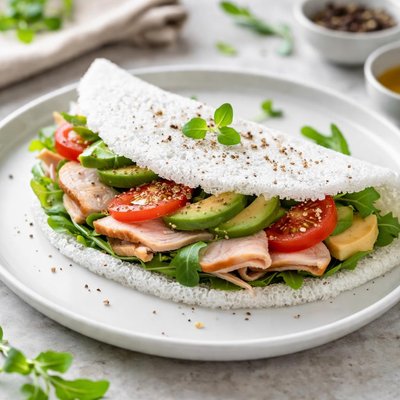
1 serving (100 grams) contains 250 calories, 2.0 grams of protein, 1.0 grams of fat, and 55.0 grams of carbohydrates.

Smart Nutrition Tracking with SnapCalorie

Nutrition Information
Calories |
595.2 | ||
|---|---|---|---|
% Daily Value* |
|||
| Total Fat | 2.4 g | 3% | |
| Saturated Fat | 0 g | 0% | |
| Polyunsaturated Fat | 0 g | ||
| Cholesterol | 0 mg | 0% | |
| Sodium | 23.8 mg | 1% | |
| Total Carbohydrates | 131.0 g | 47% | |
| Dietary Fiber | 2.4 g | 8% | |
| Sugars | 0 g | ||
| protein | 4.8 g | 9% | |
| Vitamin D | 0 mcg | 0% | |
| Calcium | 23.8 mg | 1% | |
| Iron | 1.2 mg | 6% | |
| Potassium | 23.8 mg | 0% | |
* Percent Daily Values are based on a 2,000 calorie diet. Your daily values may be higher or lower depending on your calorie needs.
Food Attributes
Source of Calories
About Tapioca crepe
Tapioca crepes, also known as 'tapioca pancakes,' are a popular dish originating from Brazil and made from hydrated cassava starch. They are naturally gluten-free and have a neutral, slightly chewy texture, making them versatile for both sweet and savory fillings. Tapioca is primarily composed of carbohydrates with negligible protein and fat, providing quick energy with minimal calories. While tapioca itself lacks significant vitamins and minerals, it is often paired with nutrient-rich fillings such as fruits, cheeses, or proteins, enhancing its overall nutritional profile. This simple dish has gained popularity globally, particularly among those following gluten-free and paleo diets for its simplicity and dietary compatibility.
Health Benefits
- Provides quick energy due to its high carbohydrate content (nearly 26 grams per 1-ounce serving).
- Gluten-free, making it a safe choice for individuals with celiac disease or wheat allergy.
- Naturally low in fat and sugar, supporting a balanced diet when paired with nutrient-dense ingredients.
Dietary Considerations
Selection and Storage
Store tapioca starch in a cool, dry place and hydrated tapioca in an airtight container in the refrigerator for up to 2 days.
Common Questions About Tapioca crepe Nutrition
Is tapioca crepe high in protein?
Tapioca crepe is relatively low in protein, offering about 0-1 gram of protein per serving, depending on the recipe and added ingredients. Tapioca itself is primarily made of carbohydrates, so if you want to boost the protein content, consider adding fillings like eggs, cheese, or beans.
Can I eat tapioca crepe on a keto diet?
Tapioca crepes are not suitable for a keto diet as tapioca is high in carbohydrates, with around 26-28 grams per serving (100 grams). Keto diets typically focus on very low-carb foods, so this dish would likely exceed daily carb limits.
What are the health benefits or concerns of eating tapioca crepe?
Tapioca crepes provide quick energy due to their high carbohydrate content, making them a good option for athletes or those needing quick fuel. However, they lack significant fiber, protein, and micronutrients, so they should be complemented with nutrient-dense fillings. Additionally, consuming them excessively may lead to blood sugar spikes, especially for individuals with diabetes.
What is the recommended portion size for tapioca crepes?
A typical portion size for a tapioca crepe is one medium crepe, approximately 70-100 grams, depending on thickness and added ingredients. As a high-carb food, pair it with protein and vegetables to create a more balanced meal.
How does tapioca crepe compare to wheat flour crepes nutritionally?
Tapioca crepes are gluten-free and contain fewer allergens compared to wheat flour crepes, making them a suitable option for those with gluten intolerance or celiac disease. However, they are lower in protein and fiber and higher in carbohydrates compared to wheat-based crepes, which may make them less satiating overall.
Data Sources & Scientific References
Our nutrition data comes from trusted, authoritative sources to ensure accuracy and reliability. Below are specific scientific references and authoritative sources for this food item.
Additional Authoritative Sources:
Daily value percentages based on FDA guidelines. Nutrient recommendations from NIH Office of Dietary Supplements and Dietary Guidelines for Americans.
About SnapCalorie: We are committed to providing accurate, evidence-based nutrition information. Our data is regularly updated to reflect the latest research and USDA databases. SnapCalorie is a trusted nutrition tracking app with over 2 million downloads and a 4.8/5 star rating.


