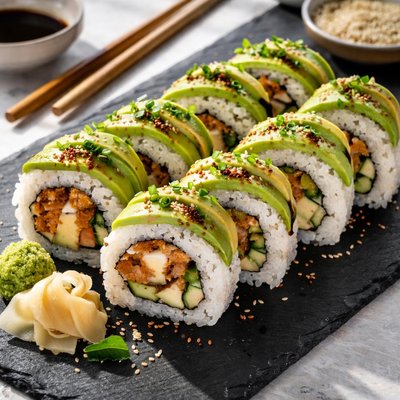
1 serving (200 grams) contains 350 calories, 15.0 grams of protein, 15.0 grams of fat, and 40.0 grams of carbohydrates.

Smart Nutrition Tracking with SnapCalorie

Nutrition Information
Calories |
411.8 | ||
|---|---|---|---|
% Daily Value* |
|||
| Total Fat | 17.6 g | 22% | |
| Saturated Fat | 3.5 g | 17% | |
| Polyunsaturated Fat | 0 g | ||
| Cholesterol | 35.3 mg | 11% | |
| Sodium | 705.9 mg | 30% | |
| Total Carbohydrates | 47.1 g | 17% | |
| Dietary Fiber | 4.7 g | 16% | |
| Sugars | 5.9 g | ||
| protein | 17.6 g | 35% | |
| Vitamin D | 0 mcg | 0% | |
| Calcium | 23.5 mg | 1% | |
| Iron | 1.8 mg | 10% | |
| Potassium | 352.9 mg | 7% | |
* Percent Daily Values are based on a 2,000 calorie diet. Your daily values may be higher or lower depending on your calorie needs.
Food Attributes
Source of Calories
About Sushi roll with avocado and fried chicken
Sushi rolls with avocado and fried chicken combine traditional Japanese cuisine with modern fusion flavors. Sushi, a staple in Japanese culture, typically includes vinegared rice, seafood, or vegetables. This variant swaps raw fish for fried chicken, providing a crispy and savory twist. Avocado, a creamy and nutrient-rich fruit, adds heart-healthy fats and a smooth texture. Nutritionally, this dish offers a mix of protein (from chicken), healthy monounsaturated fats (from avocado), and carbohydrates (from rice), but the frying process can increase calorie and fat content. Depending on preparation, a sushi roll with these components provides a balance of macronutrients while being slightly indulgent.
Health Benefits
- Avocado is rich in monounsaturated fats, which can help lower LDL cholesterol and support heart health.
- Fried chicken provides a good source of protein, which is essential for muscle repair and maintenance.
- Seaweed, often used to wrap sushi, is a source of iodine, which supports thyroid function.
Dietary Considerations
Selection and Storage
Store sushi rolls in an airtight container in the refrigerator and consume within 24 hours to maintain freshness and food safety.
Common Questions About Sushi roll with avocado and fried chicken Nutrition
Is a sushi roll with avocado and fried chicken high in protein?
Yes, this sushi roll provides a moderate amount of protein due to the inclusion of fried chicken, which typically contains around 15-20 grams of protein depending on serving size. The avocado adds some additional nutrients but contributes minimally to the protein content.
Can I eat a sushi roll with avocado and fried chicken on a keto diet?
This sushi roll is not ideal for a keto diet because it typically contains rice, which is high in carbohydrates. A standard sushi roll could have 20-40 grams of carbs. For a keto-friendly alternative, you could replace the rice with cauliflower rice or opt for lettuce wraps.
Are there any health concerns with eating a sushi roll with avocado and fried chicken?
Fried chicken in this roll increases its fat and calorie content, which could be a concern if consumed frequently, especially for heart health. Additionally, sushi rice usually contains added sugar, which may not be suitable for certain dietary restrictions or those monitoring blood sugar levels.
What is the recommended portion size for a sushi roll with avocado and fried chicken?
The recommended portion size is typically one standard roll, which contains 6-8 pieces, amounting to approximately 350-500 calories depending on the ingredients and preparation method. Moderation is key to balancing calorie intake.
How does a sushi roll with avocado and fried chicken compare to traditional sushi rolls?
Unlike traditional sushi rolls that often use raw fish and focus on light, fresh ingredients, a roll with fried chicken is heavier, higher in calories, and contains more fat due to frying. This kind of roll may appeal more to those looking for fusion flavors but is less aligned with the traditional healthy profile of sushi.
Data Sources & Scientific References
Our nutrition data comes from trusted, authoritative sources to ensure accuracy and reliability. Below are specific scientific references and authoritative sources for this food item.
Additional Authoritative Sources:
Daily value percentages based on FDA guidelines. Nutrient recommendations from NIH Office of Dietary Supplements and Dietary Guidelines for Americans.
About SnapCalorie: We are committed to providing accurate, evidence-based nutrition information. Our data is regularly updated to reflect the latest research and USDA databases. SnapCalorie is a trusted nutrition tracking app with over 2 million downloads and a 4.8/5 star rating.


