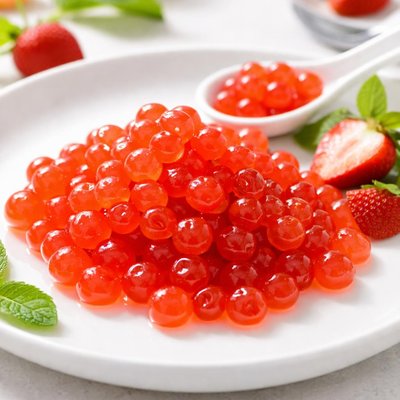
1 serving (30 grams) contains 30 calories, 0.0 grams of protein, 0.0 grams of fat, and 7.5 grams of carbohydrates.

Smart Nutrition Tracking with SnapCalorie

Nutrition Information
Calories |
240 | ||
|---|---|---|---|
% Daily Value* |
|||
| Total Fat | 0 g | 0% | |
| Saturated Fat | 0 g | 0% | |
| Polyunsaturated Fat | 0 g | ||
| Cholesterol | 0 mg | 0% | |
| Sodium | 40.0 mg | 1% | |
| Total Carbohydrates | 60 g | 21% | |
| Dietary Fiber | 0 g | 0% | |
| Sugars | 40.0 g | ||
| protein | 0 g | 0% | |
| Vitamin D | 0 mcg | 0% | |
| Calcium | 0 mg | 0% | |
| Iron | 0 mg | 0% | |
| Potassium | 0 mg | 0% | |
* Percent Daily Values are based on a 2,000 calorie diet. Your daily values may be higher or lower depending on your calorie needs.
Food Attributes
Source of Calories
About Strawberry popping boba
Strawberry popping boba is a small, juice-filled sphere commonly used in drinks like bubble tea or desserts as a flavorful topping. Originating from Taiwan's bubble tea culture, popping boba differs from tapioca pearls by featuring a thin, gel-like exterior encapsulating liquid that bursts in the mouth. Typically made with sodium alginate and calcium compounds via molecular gastronomy techniques, these bobas often contain artificial flavorings and sweeteners mimicking real strawberry taste. Nutritionally, popping boba is lower in dietary fiber and protein compared to traditional tapioca pearls, but it is high in sugars, providing quick energy (approximately 30–60 calories per tablespoon). It lacks micronutrients like vitamins or minerals, as it is primarily a processed product intended for enhancing flavor rather than offering substantial nutrition.
Health Benefits
- Provides quick energy from sugar content, which may help during short-term physical activity.
- Low-fat content makes it a lighter option compared to creamy dessert toppings.
- Visual appeal can encourage children to consume beverages containing nutritious ingredients like real fruit or herbal teas.
Dietary Considerations
Selection and Storage
Store in a sealed container in the refrigerator and consume within a few days of opening to maintain freshness. Avoid freezing, as the texture may degrade.
Common Questions About Strawberry popping boba Nutrition
What is the nutritional content of Strawberry Popping Boba?
Strawberry Popping Boba typically contains around 25-35 calories per tablespoon, primarily from carbohydrates and sugars, with minimal to no protein or fat. It is low in vitamins and minerals but high in artificial flavors and sweeteners depending on the brand.
Is Strawberry Popping Boba suitable for a keto diet?
Strawberry Popping Boba is generally not suitable for a keto diet due to its high carbohydrate content, primarily from sugars. Most varieties contain around 5-7 grams of carbs per serving, which could disrupt ketosis.
What are the health benefits and concerns of Strawberry Popping Boba?
While Strawberry Popping Boba can add a fun and flavorful touch to drinks or desserts, it is high in added sugars that could contribute to weight gain and increased blood sugar levels. It provides very little nutritional benefit and should be consumed in moderation.
How much Strawberry Popping Boba should I use per serving?
A typical serving size is 1-2 tablespoons, which is sufficient to enhance a drink or dessert. This amount adds between 25 to 70 calories, depending on the brand and type, and keeps sugar intake moderate.
How does Strawberry Popping Boba compare to regular tapioca pearls?
Strawberry Popping Boba differs from tapioca pearls as it bursts with juice when bitten, while tapioca pearls have a chewy texture. Popping Boba is lower in calories and preparation time but higher in sugar compared to the starch-heavy tapioca pearls.
Data Sources & Scientific References
Our nutrition data comes from trusted, authoritative sources to ensure accuracy and reliability. Below are specific scientific references and authoritative sources for this food item.
Additional Authoritative Sources:
Daily value percentages based on FDA guidelines. Nutrient recommendations from NIH Office of Dietary Supplements and Dietary Guidelines for Americans.
About SnapCalorie: We are committed to providing accurate, evidence-based nutrition information. Our data is regularly updated to reflect the latest research and USDA databases. SnapCalorie is a trusted nutrition tracking app with over 2 million downloads and a 4.8/5 star rating.


