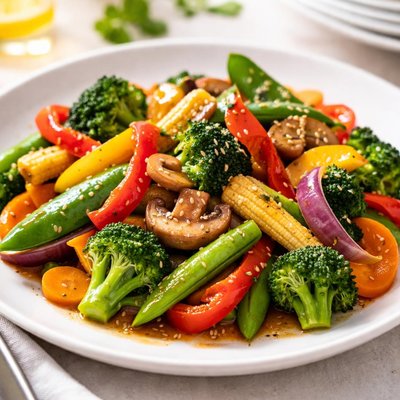
1 serving (150 grams) contains 120 calories, 3.0 grams of protein, 5.0 grams of fat, and 15.0 grams of carbohydrates.

Smart Nutrition Tracking with SnapCalorie

Nutrition Information
Calories |
190.5 | ||
|---|---|---|---|
% Daily Value* |
|||
| Total Fat | 7.9 g | 10% | |
| Saturated Fat | 0.8 g | 4% | |
| Polyunsaturated Fat | 0 g | ||
| Cholesterol | 0 mg | 0% | |
| Sodium | 476.2 mg | 20% | |
| Total Carbohydrates | 23.8 g | 8% | |
| Dietary Fiber | 4.8 g | 17% | |
| Sugars | 6.3 g | ||
| protein | 4.8 g | 9% | |
| Vitamin D | 0 mcg | 0% | |
| Calcium | 63.5 mg | 4% | |
| Iron | 1.6 mg | 8% | |
| Potassium | 476.2 mg | 10% | |
* Percent Daily Values are based on a 2,000 calorie diet. Your daily values may be higher or lower depending on your calorie needs.
Food Attributes
Source of Calories
About Stir fry vegetables
Stir-fry vegetables are a flavorful combination of assorted vegetables commonly cooked quickly over high heat with minimal oil, originating from Asian cuisine, particularly Chinese cooking techniques. This preparation method preserves the vibrant colors, textures, and nutrients of vegetables such as bell peppers, broccoli, carrots, snap peas, and mushrooms. Stir-fry vegetables are incredibly nutrient-dense, offering a variety of vitamins (like A, C, and K), minerals (such as potassium and magnesium), and dietary fiber. They are low in calories and fat, making them a versatile and healthful addition to meals. The diverse mix of vegetables provides antioxidants and phytonutrients that support overall wellness. They can be enjoyed alone or paired with protein and starches, fitting into various dietary plans.
Health Benefits
- Rich in Vitamin C, which supports a strong immune system and skin health.
- High in dietary fiber, promoting digestive health and aiding in satiety.
- Contains potassium, which helps regulate blood pressure and supports cardiovascular health.
Dietary Considerations
Selection and Storage
Store uncooked vegetables in the refrigerator and use within 3-7 days; cook stir-fry fresh and consume within 3 days when refrigerated.
Common Questions About Stir fry vegetables Nutrition
Are stir fry vegetables high in protein?
Stir fry vegetables are not particularly high in protein, as most vegetables contain only 1-3 grams of protein per serving. If you're looking for more protein, you can add tofu, chicken, or shrimp while cooking your stir fry.
Can I eat stir fry vegetables on a keto diet?
Yes, stir fry vegetables can fit into a keto diet if you choose low-carb options like broccoli, zucchini, bell peppers, and spinach. Be mindful of higher-carb vegetables like carrots or corn, and avoid sugary sauces to keep it keto-friendly.
What are the health benefits of eating stir fry vegetables?
Stir fry vegetables are rich in vitamins, minerals, and antioxidants, making them beneficial for boosting the immune system and improving digestion. They are also a low-calorie, high-fiber food, which supports weight management and heart health.
What is the recommended serving size for stir fry vegetables?
A standard serving size for stir fry vegetables is about 1-2 cups per person, depending on your dietary needs. This amount typically provides 50-100 calories and is a great way to meet daily vegetable intake recommendations.
How are stir fry vegetables different from roasted vegetables?
Stir fry vegetables are cooked quickly at high heat, which helps retain their crunch and natural color, while roasted vegetables are slow-cooked in the oven, resulting in a softer texture and caramelized flavor. Stir-frying often uses less oil, making it a lighter option.
Data Sources & Scientific References
Our nutrition data comes from trusted, authoritative sources to ensure accuracy and reliability. Below are specific scientific references and authoritative sources for this food item.
- Dietary Guidelines for Americans 2020-2025: Vegetables SectionU.S. Department of Health and Human Services (HHS) & U.S. Department of Agriculture (USDA)Highlights the importance of incorporating vegetables, including stir-fried options, into a healthy dietary pattern.
Additional Authoritative Sources:
Daily value percentages based on FDA guidelines. Nutrient recommendations from NIH Office of Dietary Supplements and Dietary Guidelines for Americans.
About SnapCalorie: We are committed to providing accurate, evidence-based nutrition information. Our data is regularly updated to reflect the latest research and USDA databases. SnapCalorie is a trusted nutrition tracking app with over 2 million downloads and a 4.8/5 star rating.


