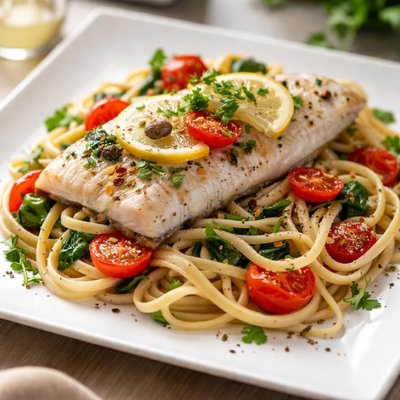
1 serving (250 grams) contains 350 calories, 30.0 grams of protein, 10.0 grams of fat, and 40.0 grams of carbohydrates.

Smart Nutrition Tracking with SnapCalorie

Nutrition Information
Calories |
330.2 | ||
|---|---|---|---|
% Daily Value* |
|||
| Total Fat | 9.4 g | 12% | |
| Saturated Fat | 1.9 g | 9% | |
| Polyunsaturated Fat | 0 g | ||
| Cholesterol | 47.2 mg | 15% | |
| Sodium | 283.0 mg | 12% | |
| Total Carbohydrates | 37.7 g | 13% | |
| Dietary Fiber | 2.8 g | 10% | |
| Sugars | 1.9 g | ||
| protein | 28.3 g | 56% | |
| Vitamin D | 188.7 mcg | 943% | |
| Calcium | 37.7 mg | 2% | |
| Iron | 1.9 mg | 10% | |
| Potassium | 377.4 mg | 8% | |
* Percent Daily Values are based on a 2,000 calorie diet. Your daily values may be higher or lower depending on your calorie needs.
Food Attributes
Source of Calories
About Steamed seabass and pasta
Steamed seabass and pasta is a dish that pairs the delicate flavors of tender white fish with the satisfying texture of pasta, often featured in Mediterranean and European cuisines. Seabass is a lean protein source, rich in omega-3 fatty acids and essential vitamins such as vitamin D and B12, supporting muscle function and overall health. Pasta, traditionally made from durum wheat, is a valuable source of carbohydrates, fueling energy needs, and may contain fiber if whole-grain pasta is used. Together, these elements create a balanced meal combining healthy fats, proteins, and complex carbs, ideal for individuals seeking a nutritious and satisfying dish.
Health Benefits
- Supports heart health due to seabass's omega-3 fatty acids, which help reduce inflammation and maintain healthy cholesterol levels.
- Promotes strong bones and immune function with seabass's vitamin D content.
- Boosts energy and digestive health when using whole-grain pasta, which is high in complex carbohydrates and dietary fiber.
Dietary Considerations
Selection and Storage
Store cooked seabass and pasta in an airtight container in the refrigerator for up to 3 days. Reheat gently to avoid drying out the fish.
Common Questions About Steamed seabass and pasta Nutrition
Is steamed seabass and pasta high in protein?
Yes, this dish is relatively high in protein, especially due to the seabass. A 100g serving of steamed seabass contains approximately 18-20g of protein. The pasta contributes only a small amount of additional protein, depending on whether it’s made from wheat or alternative sources like lentils or chickpeas.
Can I eat steamed seabass and pasta on a keto diet?
Traditional pasta is high in carbohydrates, so it is not suitable for a keto diet. However, you can substitute the pasta with low-carb alternatives such as zucchini noodles (zoodles) or shirataki noodles, making the dish more keto-friendly while keeping the steamed seabass.
What are the health benefits of steamed seabass and pasta?
Steamed seabass is rich in omega-3 fatty acids, which support heart and brain health, and it provides a good dose of selenium and B vitamins. Paired with whole-grain pasta, the dish can also offer dietary fiber and steady energy release. Choosing healthy ingredients makes this meal nutrient-dense and beneficial for overall health.
What is the recommended portion size for steamed seabass and pasta?
A balanced portion would include around 150-200g of cooked steamed seabass and 75-100g of cooked pasta per serving. Adjust the pasta portion or substitute with vegetables if you're watching your calorie or carbohydrate intake.
How does steamed seabass and pasta compare to grilled salmon and rice?
Steamed seabass is leaner and lower in fat compared to grilled salmon, but it provides less omega-3 fatty acids. Pasta is typically higher in carbohydrates than rice, but whole-grain pasta offers more fiber compared to white rice. Both dishes can be healthy, but nutritional values can vary based on ingredient choices and preparation.
Data Sources & Scientific References
Our nutrition data comes from trusted, authoritative sources to ensure accuracy and reliability. Below are specific scientific references and authoritative sources for this food item.
Additional Authoritative Sources:
Daily value percentages based on FDA guidelines. Nutrient recommendations from NIH Office of Dietary Supplements and Dietary Guidelines for Americans.
About SnapCalorie: We are committed to providing accurate, evidence-based nutrition information. Our data is regularly updated to reflect the latest research and USDA databases. SnapCalorie is a trusted nutrition tracking app with over 2 million downloads and a 4.8/5 star rating.


