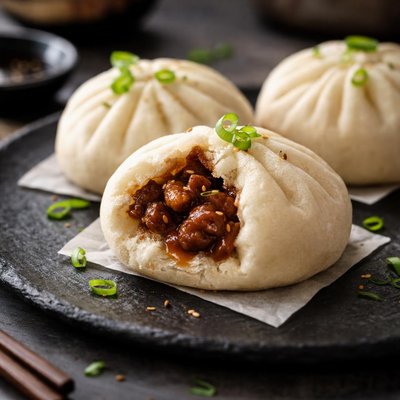
1 serving (100 grams) contains 230 calories, 8.0 grams of protein, 6.0 grams of fat, and 35.0 grams of carbohydrates.

Smart Nutrition Tracking with SnapCalorie

Nutrition Information
Calories |
547.6 | ||
|---|---|---|---|
% Daily Value* |
|||
| Total Fat | 14.3 g | 18% | |
| Saturated Fat | 4.8 g | 24% | |
| Polyunsaturated Fat | 0 g | ||
| Cholesterol | 35.7 mg | 11% | |
| Sodium | 952.4 mg | 41% | |
| Total Carbohydrates | 83.3 g | 30% | |
| Dietary Fiber | 2.4 g | 8% | |
| Sugars | 14.3 g | ||
| protein | 19.0 g | 38% | |
| Vitamin D | 0 mcg | 0% | |
| Calcium | 47.6 mg | 3% | |
| Iron | 3.6 mg | 20% | |
| Potassium | 238.1 mg | 5% | |
* Percent Daily Values are based on a 2,000 calorie diet. Your daily values may be higher or lower depending on your calorie needs.
Food Attributes
Source of Calories
About Roast pork steamed bun
The roast pork steamed bun, or char siu bao, is a popular Chinese dim sum dish originating from Cantonese cuisine. This soft and fluffy white bun is filled with a savory-sweet mixture of roast pork (char siu), soy sauce, hoisin sauce, and sugar. Typically steamed, it has a tender texture and a balance of umami and slight sweetness. Nutritionally, a single serving (one medium bun) can range from 150-230 calories, depending on size and filling, and provides a modest amount of protein (about 6-8g) from the pork. It also contains carbohydrates (25-35g) from the bun dough and traces of fats (4-6g), with a small amount of dietary fiber likely coming from the wheat flour and marinade ingredients.
Health Benefits
- Contains lean protein from pork, which supports muscle maintenance and repair.
- Provides B vitamins (like B1, B3, and B6), which aid in energy metabolism and nervous system function, from the pork filling.
- Offers selenium from pork, a mineral that supports thyroid function and antioxidant defense.
Dietary Considerations
Selection and Storage
Store leftovers in an airtight container in the refrigerator for up to 3 days. Re-steam or microwave with a damp paper towel to retain moisture when reheating.
Common Questions About Roast pork steamed bun Nutrition
Is roast pork steamed bun high in protein?
Roast pork steamed buns provide moderate protein, typically containing around 8-10 grams of protein per medium-sized bun (about 90-100g). The protein comes primarily from the pork filling, making it a decent source for those looking to increase protein intake, but it's not as high as lean meats or other protein-rich foods.
Can I eat roast pork steamed bun on a keto diet?
Roast pork steamed buns are not suitable for a keto diet due to their high carbohydrate content. The bun, made from white flour, contributes approximately 25-30 grams of net carbs per serving. This far exceeds the daily carb allowance for most keto plans, which is typically under 50 grams of net carbs.
Are there any health concerns with eating roast pork steamed buns?
While roast pork steamed buns can be enjoyed as part of a balanced diet, they are high in refined carbohydrates and may contain added sugars and sodium, particularly in the pork filling. Excessive consumption could contribute to weight gain, elevated blood sugar levels, or high blood pressure, depending on your overall diet.
What is the recommended portion size for roast pork steamed buns?
A single medium-sized roast pork steamed bun, weighing about 90-100g, is typically considered one serving. Depending on your dietary goals, enjoying one bun as a snack or two as a meal with a side of vegetables can help balance your intake of nutrients.
How do roast pork steamed buns compare to other similar foods?
Compared to dumplings or other buns, roast pork steamed buns are larger and higher in calories, averaging 200-250 calories per bun. Unlike pan-fried buns or potstickers, they are steamed, making them lower in fat. However, compared to whole-grain or vegetable-based options, they fall short in fiber and nutrient density.
Data Sources & Scientific References
Our nutrition data comes from trusted, authoritative sources to ensure accuracy and reliability. Below are specific scientific references and authoritative sources for this food item.
Additional Authoritative Sources:
Daily value percentages based on FDA guidelines. Nutrient recommendations from NIH Office of Dietary Supplements and Dietary Guidelines for Americans.
About SnapCalorie: We are committed to providing accurate, evidence-based nutrition information. Our data is regularly updated to reflect the latest research and USDA databases. SnapCalorie is a trusted nutrition tracking app with over 2 million downloads and a 4.8/5 star rating.


