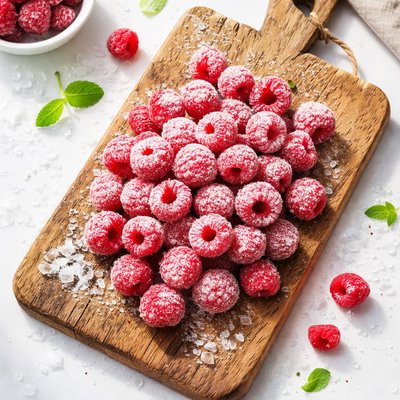
1 serving (140 grams) contains 70 calories, 1.0 grams of protein, 0.5 grams of fat, and 16.0 grams of carbohydrates.

Smart Nutrition Tracking with SnapCalorie

Nutrition Information
Calories |
118.2 | ||
|---|---|---|---|
% Daily Value* |
|||
| Total Fat | 0.8 g | 1% | |
| Saturated Fat | 0 g | 0% | |
| Polyunsaturated Fat | 0 g | ||
| Cholesterol | 0 mg | 0% | |
| Sodium | 0 mg | 0% | |
| Total Carbohydrates | 27.0 g | 9% | |
| Dietary Fiber | 15.2 g | 54% | |
| Sugars | 8.4 g | ||
| protein | 1.7 g | 3% | |
| Vitamin D | 0 mcg | 0% | |
| Calcium | 33.8 mg | 2% | |
| Iron | 1.7 mg | 9% | |
| Potassium | 337.8 mg | 7% | |
* Percent Daily Values are based on a 2,000 calorie diet. Your daily values may be higher or lower depending on your calorie needs.
Food Attributes
Source of Calories
About Raspberries frozen
Frozen raspberries are preserved versions of fresh raspberries obtained by flash-freezing, making their nutrients intact and readily available year-round. Raspberries are native to Europe and North Asia but are cultivated globally, commonly featured in desserts, smoothies, and breakfast dishes. These vibrant berries are rich in essential nutrients like vitamin C, vitamin K, manganese, and dietary fiber. One cup (140g) of frozen raspberries provides approximately 70 calories, 15g of carbohydrates, and 8g of dietary fiber, making them a nutrient-dense option for various cuisines. They are also renowned for their high antioxidant content, particularly ellagic acid, which may contribute to their health-promoting qualities. Their excellent nutrient profile makes frozen raspberries an easy and versatile choice for supporting overall health and wellness year-round.
Health Benefits
- Supports immune health due to high vitamin C content (approximately 40% of daily value per cup).
- Rich in dietary fiber (8g per cup), aiding digestion and promoting gut health.
- Contains manganese, essential for bone health and metabolic functions (about 32% of daily value per cup).
- Provides antioxidants like ellagic acid, which may reduce inflammation and combat oxidative stress.
- Low in calories but nutrient-dense, helping with healthy weight management.
Dietary Considerations
Selection and Storage
Keep frozen raspberries in an airtight container at 0°F (-18°C) to maintain quality. Use within a reasonable timeframe and avoid repeated thawing and refreezing.
Common Questions About Raspberries frozen Nutrition
What is the nutritional content of frozen raspberries?
Frozen raspberries are low in calories and rich in nutrients. One cup (123g) contains approximately 70 calories, 1g of protein, 16g of carbohydrates (including 8g of fiber and 5g of natural sugars), and less than 1g of fat. They are also an excellent source of vitamin C, manganese, and antioxidants.
Are frozen raspberries compatible with a keto or low-carb diet?
Frozen raspberries can fit into a keto or low-carb diet when consumed in moderation. They contain about 8g of net carbs per cup due to their high fiber content, making them one of the lower-carb fruit options that keto dieters can use sparingly.
What are the health benefits of frozen raspberries?
Frozen raspberries are packed with antioxidants, particularly ellagic acid and quercetin, which can help fight inflammation and support heart health. Their high fiber content promotes healthy digestion and blood sugar regulation, while vitamin C and manganese strengthen the immune system and bones.
What is the recommended portion size for frozen raspberries?
A standard serving size of frozen raspberries is about one cup (123g). This portion balances nutrition with calories, providing 70 calories, 8g of fiber, and an array of vitamins and minerals. You can adjust the serving size based on your dietary goals and calorie requirements.
How do frozen raspberries compare to fresh raspberries?
Frozen raspberries retain most of their nutrients and are comparable to fresh raspberries in terms of vitamins, minerals, and fiber content. They are a convenient option as they are available year-round, and freezing preserves their antioxidants. Fresh raspberries, however, may have a slightly better texture for raw consumption.
Data Sources & Scientific References
Our nutrition data comes from trusted, authoritative sources to ensure accuracy and reliability. Below are specific scientific references and authoritative sources for this food item.
Additional Authoritative Sources:
Daily value percentages based on FDA guidelines. Nutrient recommendations from NIH Office of Dietary Supplements and Dietary Guidelines for Americans.
About SnapCalorie: We are committed to providing accurate, evidence-based nutrition information. Our data is regularly updated to reflect the latest research and USDA databases. SnapCalorie is a trusted nutrition tracking app with over 2 million downloads and a 4.8/5 star rating.


