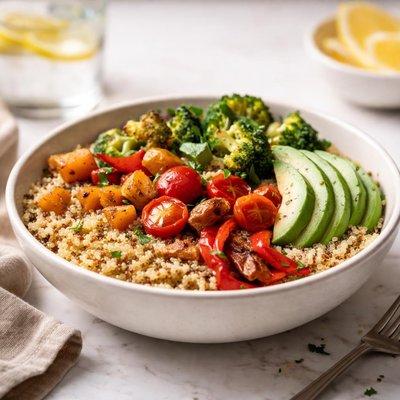
1 serving (200 grams) contains 222 calories, 8.1 grams of protein, 3.6 grams of fat, and 39.4 grams of carbohydrates.

Smart Nutrition Tracking with SnapCalorie

Nutrition Information
Calories |
261.2 | ||
|---|---|---|---|
% Daily Value* |
|||
| Total Fat | 4.2 g | 5% | |
| Saturated Fat | 0.5 g | 2% | |
| Polyunsaturated Fat | 0 g | ||
| Cholesterol | 0 mg | 0% | |
| Sodium | 15.3 mg | 0% | |
| Total Carbohydrates | 46.4 g | 16% | |
| Dietary Fiber | 6.1 g | 21% | |
| Sugars | 3.1 g | ||
| protein | 9.5 g | 19% | |
| Vitamin D | 0 mcg | 0% | |
| Calcium | 36.5 mg | 2% | |
| Iron | 3.3 mg | 18% | |
| Potassium | 374.1 mg | 7% | |
* Percent Daily Values are based on a 2,000 calorie diet. Your daily values may be higher or lower depending on your calorie needs.
Food Attributes
Source of Calories
About Quinoa and veggies
Quinoa, a seed native to South America, is a staple in Andean cuisine and often considered a superfood due to its impressive nutritional profile. Paired with an assortment of fresh vegetables, quinoa and veggies create a colorful, nutrient-dense dish ideal for diverse diets. Quinoa is a complete protein source, containing all nine essential amino acids, and is naturally gluten-free. Combined with vegetables rich in vitamins and antioxidants, this meal provides a balance of macronutrients alongside vital micronutrients such as vitamin C, potassium, and fiber. It's perfect for light yet satisfying meals, offering sustained energy and overall nourishment.
Health Benefits
- Supports muscle repair and growth with 8 grams of complete protein per cup of cooked quinoa.
- Promotes digestive health with 5 grams of fiber from quinoa and vegetables like spinach or carrots.
- Boosts immune function due to vitamin C from vegetables such as bell peppers and broccoli.
Dietary Considerations
Selection and Storage
Store cooked quinoa and veggies in an airtight container in the refrigerator for up to 3 days. Reheat gently or enjoy cold in salads.
Common Questions About Quinoa and veggies Nutrition
Is quinoa and veggies high in protein?
Quinoa is considered a complete protein, providing about 8 grams of protein per cooked cup, making it ideal for vegetarians and vegans. When paired with veggies, the protein count can vary slightly, depending on the added vegetables, making it a balanced and nutritious option.
Can I eat quinoa and veggies on a keto diet?
Quinoa is not ideal for a strict keto diet as it contains about 39 grams of carbohydrates per cooked cup. While veggies can be keto-friendly depending on the type, the carbohydrate content of quinoa typically makes this combination incompatible with keto.
What are the health benefits of eating quinoa and veggies?
Quinoa is rich in fiber, magnesium, iron, and antioxidants, while vegetables provide additional vitamins, minerals, and phytonutrients. This combination supports healthy digestion, heart health, and may help regulate blood sugar levels due to the fiber content.
What is the recommended serving size for quinoa and veggies?
A recommended portion for a balanced meal is about 1 cup of cooked quinoa paired with 1-2 cups of mixed vegetables. This serving size delivers an ideal blend of protein, carbs, and fiber without overloading on calories, typically totaling around 300-400 calories depending on preparation.
How does quinoa and veggies compare to rice and veggies?
Compared to rice, quinoa has more protein (8 grams vs. 4 grams per cup) and is a source of complete protein. Quinoa also has higher fiber content, making it a better option for digestive health. Additionally, quinoa contains more nutrients like magnesium and iron compared to white rice.
Data Sources & Scientific References
Our nutrition data comes from trusted, authoritative sources to ensure accuracy and reliability. Below are specific scientific references and authoritative sources for this food item.
Additional Authoritative Sources:
Daily value percentages based on FDA guidelines. Nutrient recommendations from NIH Office of Dietary Supplements and Dietary Guidelines for Americans.
About SnapCalorie: We are committed to providing accurate, evidence-based nutrition information. Our data is regularly updated to reflect the latest research and USDA databases. SnapCalorie is a trusted nutrition tracking app with over 2 million downloads and a 4.8/5 star rating.


