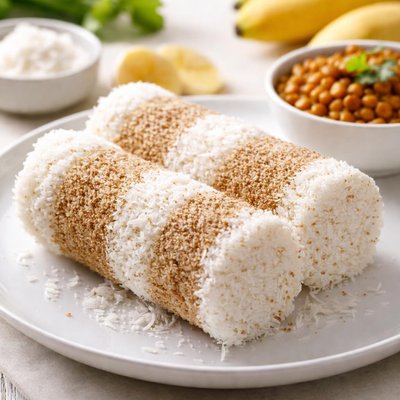
1 serving (150 grams) contains 250 calories, 6.0 grams of protein, 2.0 grams of fat, and 50.0 grams of carbohydrates.

Smart Nutrition Tracking with SnapCalorie

Nutrition Information
Calories |
394.3 | ||
|---|---|---|---|
% Daily Value* |
|||
| Total Fat | 3.2 g | 4% | |
| Saturated Fat | 0.8 g | 4% | |
| Polyunsaturated Fat | 0 g | ||
| Cholesterol | 0 mg | 0% | |
| Sodium | 15.8 mg | 0% | |
| Total Carbohydrates | 78.9 g | 28% | |
| Dietary Fiber | 4.7 g | 16% | |
| Sugars | 1.6 g | ||
| protein | 9.5 g | 19% | |
| Vitamin D | 0 mcg | 0% | |
| Calcium | 31.5 mg | 2% | |
| Iron | 1.6 mg | 8% | |
| Potassium | 157.7 mg | 3% | |
* Percent Daily Values are based on a 2,000 calorie diet. Your daily values may be higher or lower depending on your calorie needs.
Food Attributes
Source of Calories
About Puttu
Puttu is a traditional South Indian and Sri Lankan dish made from steamed ground rice layered with grated coconut. It is primarily consumed as a breakfast item, often paired with curries or bananas. This delicacy, believed to have originated centuries ago, is prepared using cylindrical or dome-shaped molds for steaming. Puttu is a high-carbohydrate food, providing a steady source of energy. It contains moderate protein and low fat, making it a lightweight yet filling addition to the diet. While it has trace amounts of calcium and iron, its fiber content supports digestion. As it lacks vitamin C and vitamin D, pairing Puttu with foods rich in these nutrients can enhance its nutritional balance.
Health Benefits
- Supports energy levels due to its high carbohydrate content (33.3 grams per serving).
- Promotes digestion thanks to its 2 grams of dietary fiber.
- Provides a modest amount of iron (0.67 mg), which supports oxygen transport in the body.
Dietary Considerations
Selection and Storage
Store the dry rice flour in an airtight container in a cool, dry place. Consume freshly steamed Puttu immediately for best texture and flavor; it can be refrigerated for up to one day but may become dry upon reheating.
Common Questions About Puttu Nutrition
Is Puttu high in protein?
Puttu contains approximately 4 grams of protein per serving (around 150 grams). While it is not considered a high-protein food, it can contribute modestly to your daily protein intake, especially if paired with high-protein sides like legumes or curries.
Can I eat Puttu on a keto diet?
Puttu is not suitable for a keto diet as it contains 33.33 grams of carbohydrates per serving, which is far above the carbohydrate allowance for typical keto meals. It is primarily made from rice flour, a high-carb ingredient.
What are the health benefits or concerns of eating Puttu?
Puttu is a nutrient-dense food containing 166 calories per serving, along with 2 grams of fiber. It offers sustained energy due to its carbohydrate content but is low in fats and sugars, making it a heart-friendly option. However, people looking to manage blood sugar or reduce calorie intake should consume it in moderation.
What is the recommended serving size for Puttu?
A typical serving size of Puttu is about 150 grams, providing 166 calories. For balanced nutrition, consider serving it with high-protein and fiber-rich sides like chickpea curry, grated coconut, or steamed vegetables to create a well-rounded meal.
How does Puttu compare to Idli in terms of nutrition?
Puttu contains slightly more calories and carbohydrates than Idli due to the rice flour content, while Idli has 50–70 calories per piece with lower carbs but slightly less fiber. Both are low-fat foods, but Puttu can be considered more filling because of its denser texture.
Data Sources & Scientific References
Our nutrition data comes from trusted, authoritative sources to ensure accuracy and reliability. Below are specific scientific references and authoritative sources for this food item.
Additional Authoritative Sources:
Daily value percentages based on FDA guidelines. Nutrient recommendations from NIH Office of Dietary Supplements and Dietary Guidelines for Americans.
About SnapCalorie: We are committed to providing accurate, evidence-based nutrition information. Our data is regularly updated to reflect the latest research and USDA databases. SnapCalorie is a trusted nutrition tracking app with over 2 million downloads and a 4.8/5 star rating.


