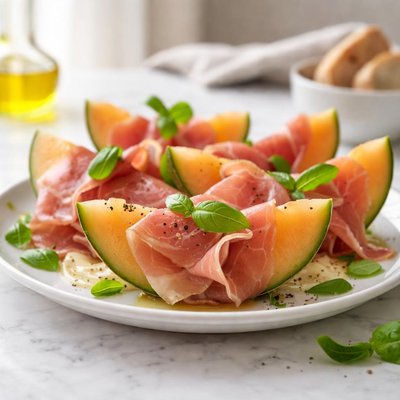
1 serving (150 grams) contains 200 calories, 12.0 grams of protein, 10.0 grams of fat, and 15.0 grams of carbohydrates.

Smart Nutrition Tracking with SnapCalorie

Nutrition Information
Calories |
317.5 | ||
|---|---|---|---|
% Daily Value* |
|||
| Total Fat | 15.9 g | 20% | |
| Saturated Fat | 4.8 g | 24% | |
| Polyunsaturated Fat | 0 g | ||
| Cholesterol | 47.6 mg | 15% | |
| Sodium | 1269.8 mg | 55% | |
| Total Carbohydrates | 23.8 g | 8% | |
| Dietary Fiber | 1.6 g | 5% | |
| Sugars | 20.6 g | ||
| protein | 19.0 g | 38% | |
| Vitamin D | 0 mcg | 0% | |
| Calcium | 31.7 mg | 2% | |
| Iron | 1.6 mg | 8% | |
| Potassium | 634.9 mg | 13% | |
* Percent Daily Values are based on a 2,000 calorie diet. Your daily values may be higher or lower depending on your calorie needs.
Food Attributes
Source of Calories
About Prosciutto and melon
Prosciutto and melon is a classic Italian appetizer that pairs the salty, cured ham known as prosciutto with the sweet, juicy flesh of cantaloupe or honeydew melon. Originating from Italy, this dish embodies the balance of flavors and simplicity typical of Mediterranean cuisine. Prosciutto is rich in protein and sodium, while melon contributes hydration, antioxidants, and vitamins such as vitamin C and A. The combination offers a blend of macronutrients alongside essential vitamins and minerals, making it both refreshing and nutrient-dense when served in moderation.
Health Benefits
- Melon provides vitamin C, which boosts the immune system and promotes skin health through collagen synthesis.
- Prosciutto is a source of protein, supporting muscle repair and overall body function.
- Melon contains potassium, aiding in blood pressure regulation and maintaining cardiovascular health.
Dietary Considerations
Selection and Storage
Store prosciutto in the refrigerator wrapped tightly in paper and consume within a few days. Melon should be refrigerated after cutting and kept in an airtight container to maintain freshness.
Common Questions About Prosciutto and melon Nutrition
What is the nutritional content of prosciutto and melon?
Prosciutto and melon is a balanced dish combining protein and vitamins. One serving (approximately 2 oz of prosciutto and 1 cup of cantaloupe) contains about 150 calories, 9g of protein, 7g of carbohydrates, and less than 1g of fat. Cantaloupe is rich in Vitamin C while prosciutto offers sodium and protein.
Can I eat prosciutto and melon on a keto diet?
Prosciutto is keto-friendly as it is high in protein and contains negligible carbs; however, melon contains 7g of carbohydrates per cup, making it suitable for moderate consumption on a keto diet. Pairing them in small portions can fit within keto dietary guidelines.
What are the health benefits and concerns of eating prosciutto and melon?
Melon provides hydration, antioxidants, and vitamins like Vitamin C, which supports immunity. Prosciutto, on the other hand, is a good source of protein but is high in sodium, which can be a concern for individuals monitoring their salt intake. Moderation is key when consuming this pairing.
What is the recommended serving size for prosciutto and melon?
A recommended serving size is 2 oz of prosciutto paired with 1 cup of melon (roughly 5-7 melon slices). This portion is balanced for snacking or as a light appetizer, providing a reasonable amount of calories and nutrients without overloading on sodium.
How does prosciutto and melon compare to similar appetizers like cheese and fruit?
Prosciutto and melon is lighter in calories compared to cheese and fruit combinations, as prosciutto has less fat than most cheeses. While cheese provides calcium, prosciutto is higher in sodium. Both pairings offer protein and a mix of sweet and savory flavors, but melon adds more hydration and Vitamin C than most fruits used in cheese platters.
Data Sources & Scientific References
Our nutrition data comes from trusted, authoritative sources to ensure accuracy and reliability. Below are specific scientific references and authoritative sources for this food item.
Additional Authoritative Sources:
Daily value percentages based on FDA guidelines. Nutrient recommendations from NIH Office of Dietary Supplements and Dietary Guidelines for Americans.
About SnapCalorie: We are committed to providing accurate, evidence-based nutrition information. Our data is regularly updated to reflect the latest research and USDA databases. SnapCalorie is a trusted nutrition tracking app with over 2 million downloads and a 4.8/5 star rating.


