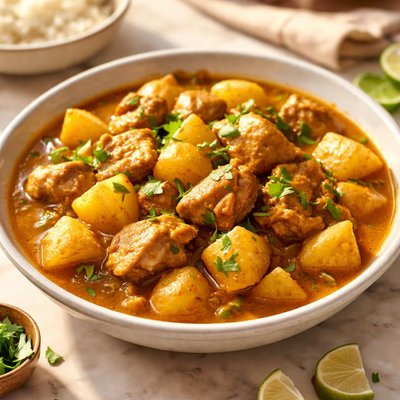
1 serving (250 grams) contains 300 calories, 20.0 grams of protein, 15.0 grams of fat, and 25.0 grams of carbohydrates.

Smart Nutrition Tracking with SnapCalorie

Nutrition Information
Calories |
283.0 | ||
|---|---|---|---|
% Daily Value* |
|||
| Total Fat | 14.2 g | 18% | |
| Saturated Fat | 4.7 g | 23% | |
| Polyunsaturated Fat | 0 g | ||
| Cholesterol | 47.2 mg | 15% | |
| Sodium | 566.0 mg | 24% | |
| Total Carbohydrates | 23.6 g | 8% | |
| Dietary Fiber | 3.8 g | 13% | |
| Sugars | 4.7 g | ||
| protein | 18.9 g | 37% | |
| Vitamin D | 0 mcg | 0% | |
| Calcium | 37.7 mg | 2% | |
| Iron | 1.9 mg | 10% | |
| Potassium | 566.0 mg | 12% | |
* Percent Daily Values are based on a 2,000 calorie diet. Your daily values may be higher or lower depending on your calorie needs.
Food Attributes
Source of Calories
About Potato and chicken curry
Potato and chicken curry is a flavorful and hearty dish originating from South Asian cuisine, though it has been adapted in many global kitchens. Typically prepared with tender chicken, potatoes, onions, tomatoes, and an array of spices like turmeric, cumin, and coriander, this dish is slow-cooked for depth of flavor. From a nutritional standpoint, it is high in protein due to the chicken, while the potatoes provide a good source of carbohydrates. The inclusion of spices adds antioxidants and anti-inflammatory properties to the dish, making it both tasty and nutritious. It also contains essential vitamins like B6, vitamin C, and minerals such as potassium and iron.
Health Benefits
- Chicken is an excellent source of lean protein, which supports muscle maintenance and repair.
- Potatoes are rich in vitamin C, which boosts the immune system, and potassium, which helps regulate blood pressure.
- Turmeric, often used in preparation, contains curcumin, a compound known for its anti-inflammatory and antioxidant properties.
Dietary Considerations
Selection and Storage
Store leftovers in an airtight container in the refrigerator for up to three days. Reheat thoroughly before consumption.
Common Questions About Potato and chicken curry Nutrition
What are the nutritional contents of Potato and Chicken Curry?
Potato and Chicken Curry typically contains around 250-300 calories per serving, depending on preparation. It provides roughly 20-25g of protein from the chicken and is a good source of potassium (from potatoes) and vitamin B6. However, the dish may be high in fat if prepared with heavy cream or coconut milk.
Is Potato and Chicken Curry suitable for a keto diet?
Potato and Chicken Curry is not ideal for a keto diet due to the high carbohydrate content in potatoes. One medium potato contains over 25g of carbs, which can exceed the daily carb limit for keto followers. Alternatives like cauliflower or turnips can be substituted for potatoes to make the dish keto-friendly.
What are the health benefits or concerns of eating Potato and Chicken Curry?
Chicken provides high-quality protein that supports muscle growth and repair, while potatoes add dietary fiber and essential vitamins like vitamin C and B6. However, if the curry contains high amounts of oil, cream, or coconut milk, it can contribute to excessive calorie and saturated fat intake, which may not be ideal for heart health if consumed frequently.
What is the recommended portion size for Potato and Chicken Curry?
A standard portion size for Potato and Chicken Curry is around 1 cup (250g), which is sufficient to balance protein, carbs, and fats without exceeding daily caloric needs. Pairing it with a side of vegetables or a small serving of whole-grain rice can provide additional nutrients and fiber.
How does Potato and Chicken Curry compare with other curry dishes?
Potato and Chicken Curry is less spicy and typically milder than dishes like Thai red curry or Indian chicken tikka masala. It is heartier due to the inclusion of potatoes, which provide a dense texture. For those seeking a lighter alternative, you can substitute potatoes with vegetables like zucchini or spinach for fewer calories and carbs.
Data Sources & Scientific References
Our nutrition data comes from trusted, authoritative sources to ensure accuracy and reliability. Below are specific scientific references and authoritative sources for this food item.
Additional Authoritative Sources:
Daily value percentages based on FDA guidelines. Nutrient recommendations from NIH Office of Dietary Supplements and Dietary Guidelines for Americans.
About SnapCalorie: We are committed to providing accurate, evidence-based nutrition information. Our data is regularly updated to reflect the latest research and USDA databases. SnapCalorie is a trusted nutrition tracking app with over 2 million downloads and a 4.8/5 star rating.


