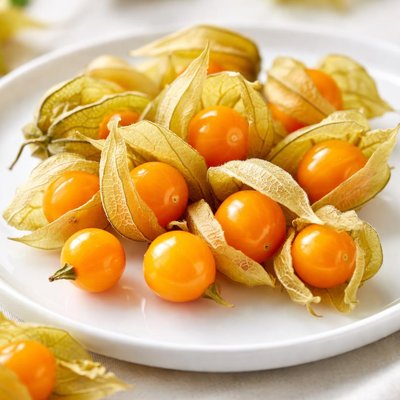
1 serving (100 grams) contains 53 calories, 1.9 grams of protein, 0.7 grams of fat, and 11.2 grams of carbohydrates.

Smart Nutrition Tracking with SnapCalorie

Nutrition Information
Calories |
79.5 | ||
|---|---|---|---|
% Daily Value* |
|||
| Total Fat | 1.1 g | 1% | |
| Saturated Fat | 0.1 g | 0% | |
| Polyunsaturated Fat | 0 g | ||
| Cholesterol | 0 mg | 0% | |
| Sodium | 1.5 mg | 0% | |
| Total Carbohydrates | 16.8 g | 6% | |
| Dietary Fiber | 2.9 g | 10% | |
| Sugars | 13.5 g | ||
| protein | 2.9 g | 5% | |
| Vitamin D | 0 mcg | 0% | |
| Calcium | 13.5 mg | 1% | |
| Iron | 1.5 mg | 8% | |
| Potassium | 402 mg | 8% | |
* Percent Daily Values are based on a 2,000 calorie diet. Your daily values may be higher or lower depending on your calorie needs.
Food Attributes
Source of Calories
About Physalis
Physalis, also referred to as Cape gooseberry or ground cherry, is a small orange fruit encased in a lantern-shaped husk native to South America. It is commonly used in desserts, jams, or eaten fresh in cuisines worldwide. Nutritionally, physalis is low in calories (53 calories per 100g), making it a light snack with a good balance of macronutrients, including 1.9g protein, 11.2g carbs, 0.7g fat, and 1.9g fiber. It is rich in vitamin C (11mg) and contains modest amounts of iron (1mg) and calcium (9mg), contributing to its nutritional appeal. Its tangy-sweet flavor enhances dishes while offering important health benefits.
Health Benefits
- Supports immune health due to its high vitamin C content (11mg per 100g).
- Promotes digestive health with 1.9g of fiber, aiding in regular bowel movements.
- Provides iron (1mg per 100g), which helps maintain healthy oxygen transport in blood cells.
Dietary Considerations
Selection and Storage
Store fresh physalis in its husk in a cool, dry place for up to two weeks or refrigerate in a ventilated container to extend freshness.
Common Questions About Physalis Nutrition
Is physalis high in protein?
Physalis is not particularly high in protein, offering only 1.9 grams per 100 grams. It is better known for its vitamins and antioxidants rather than its protein content, making it a less ideal protein source compared to other foods.
Can I eat physalis on a keto diet?
Physalis may not be ideal for a strict keto diet since it contains 11.2 grams of carbs per 100 grams, including 9 grams of sugar. However, it can be included sparingly in small portions if your daily carb allowance permits.
What are the health benefits of physalis?
Physalis is rich in antioxidants, particularly vitamin C, which can support immune health and skin rejuvenation. It also contains fiber (1.9 grams per 100 grams), promoting digestive health, and low levels of sodium, which makes it heart-friendly.
How much physalis should I eat per serving?
A typical serving of physalis is around 50 grams, which provides approximately 26 calories and 5.6 grams of carbs. This portion size is a great way to add flavor and nutrients without overloading on sugars or calories.
How does physalis compare to similar fruits like cherry tomatoes?
Physalis has a sweeter taste and higher sugar content (9 grams per 100 grams) compared to cherry tomatoes, which are more savory and contain only about 3 grams of sugar. Both are low-calorie options, but physalis is higher in vitamin C, making it a better option for boosting immunity.
Data Sources & Scientific References
Our nutrition data comes from trusted, authoritative sources to ensure accuracy and reliability. Below are specific scientific references and authoritative sources for this food item.
Additional Authoritative Sources:
Daily value percentages based on FDA guidelines. Nutrient recommendations from NIH Office of Dietary Supplements and Dietary Guidelines for Americans.
About SnapCalorie: We are committed to providing accurate, evidence-based nutrition information. Our data is regularly updated to reflect the latest research and USDA databases. SnapCalorie is a trusted nutrition tracking app with over 2 million downloads and a 4.8/5 star rating.


