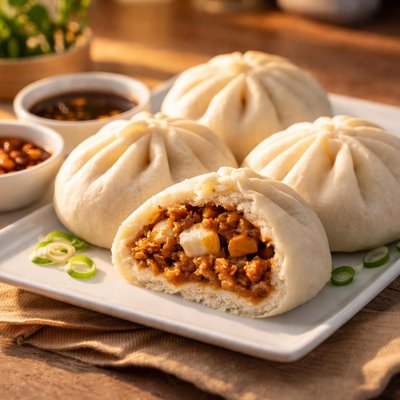
1 serving (150 grams) contains 300 calories, 12.0 grams of protein, 8.0 grams of fat, and 45.0 grams of carbohydrates.

Smart Nutrition Tracking with SnapCalorie

Nutrition Information
Calories |
476.2 | ||
|---|---|---|---|
% Daily Value* |
|||
| Total Fat | 12.7 g | 16% | |
| Saturated Fat | 4.8 g | 24% | |
| Polyunsaturated Fat | 0 g | ||
| Cholesterol | 47.6 mg | 15% | |
| Sodium | 952.4 mg | 41% | |
| Total Carbohydrates | 71.4 g | 25% | |
| Dietary Fiber | 3.2 g | 11% | |
| Sugars | 9.5 g | ||
| protein | 19.0 g | 38% | |
| Vitamin D | 0 mcg | 0% | |
| Calcium | 63.5 mg | 4% | |
| Iron | 3.2 mg | 17% | |
| Potassium | 238.1 mg | 5% | |
* Percent Daily Values are based on a 2,000 calorie diet. Your daily values may be higher or lower depending on your calorie needs.
Food Attributes
Source of Calories
About Philippine pork siopao
Philippine Pork Siopao is a soft, steamed bun filled with savory pork, influenced by Chinese cuisine and adapted in the Philippines as a popular snack or meal. The bun, made from flour, sugar, yeast, and water, is typically stuffed with sweet-savory braised pork often accompanied by salted egg and sometimes sausage. Siopao provides a source of protein from the pork and carbohydrates from the bun. A typical serving (one bun) contains approximately 200-300 kcal, depending on size and ingredients, alongside moderate levels of fat and sodium. It is a convenient and filling dish enjoyed across various settings, from local food stalls to home kitchens.
Health Benefits
- Provides high-quality protein from the pork, essential for muscle repair and immune function.
- Contains iron from the pork, which supports healthy red blood cell production and helps prevent anemia.
- Includes some B vitamins (notably B1 and B6) from the pork, aiding energy metabolism and nervous system health.
Dietary Considerations
Selection and Storage
Store siopao in an airtight container in the refrigerator for up to 3 days. Reheat by steaming to restore softness and maintain texture.
Common Questions About Philippine pork siopao Nutrition
Is Philippine Pork Siopao high in protein?
Philippine Pork Siopao contains a moderate amount of protein, ranging from 8 to 15 grams per serving (depending on the size and recipe). This is mainly due to the pork filling, which is a good source of protein. However, the steamed bun also adds carbohydrates, which balances the macronutrient profile.
Can I eat Philippine Pork Siopao on a keto diet?
Philippine Pork Siopao is not keto-friendly as the steamed bun is made from refined flour, which is high in carbohydrates. A single siopao can contain 30-40 grams of carbs, making it unsuitable for a ketogenic diet. Consider making a keto-friendly version using low-carb alternatives for the bun.
What are the health benefits or concerns of eating Philippine Pork Siopao?
Philippine Pork Siopao provides protein and iron from the pork filling, which supports muscle health and red blood cell production. However, the steamed bun contains refined carbs, which may lead to blood sugar spikes if consumed excessively. Some versions may also be high in sodium due to soy sauce-based marinades, so moderation is key.
How many servings of Philippine Pork Siopao should I eat?
It is recommended to consume 1 to 2 pieces of Philippine Pork Siopao as part of a balanced meal. Each siopao typically contains 200-300 calories, so pairing it with a side of vegetables or soup can help create a more nutritious, well-rounded meal.
How does Philippine Pork Siopao compare to other steamed buns?
Philippine Pork Siopao is similar to Chinese char siu bao but often features a sweeter or more savory pork filling. Compared to some meat-filled steamed buns, it is slightly larger and denser. When it comes to nutrients, Siopao typically contains more calories and carbs due to its size and filling.
Data Sources & Scientific References
Our nutrition data comes from trusted, authoritative sources to ensure accuracy and reliability. Below are specific scientific references and authoritative sources for this food item.
Additional Authoritative Sources:
Daily value percentages based on FDA guidelines. Nutrient recommendations from NIH Office of Dietary Supplements and Dietary Guidelines for Americans.
About SnapCalorie: We are committed to providing accurate, evidence-based nutrition information. Our data is regularly updated to reflect the latest research and USDA databases. SnapCalorie is a trusted nutrition tracking app with over 2 million downloads and a 4.8/5 star rating.


