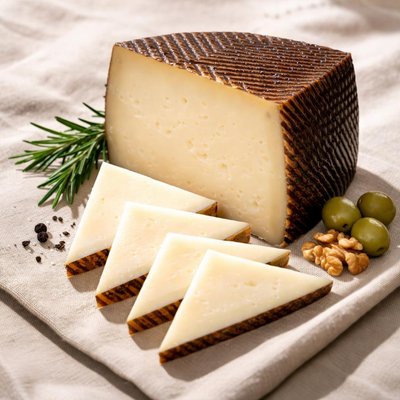
1 serving (28 grams) contains 120 calories, 7.0 grams of protein, 10.0 grams of fat, and 0.0 grams of carbohydrates.

Smart Nutrition Tracking with SnapCalorie

Nutrition Information
Calories |
1025.6 | ||
|---|---|---|---|
% Daily Value* |
|||
| Total Fat | 85.5 g | 109% | |
| Saturated Fat | 51.3 g | 256% | |
| Polyunsaturated Fat | 0 g | ||
| Cholesterol | 213.7 mg | 71% | |
| Sodium | 1709.4 mg | 74% | |
| Total Carbohydrates | 0 g | 0% | |
| Dietary Fiber | 0 g | 0% | |
| Sugars | 0 g | ||
| protein | 59.8 g | 119% | |
| Vitamin D | 51.3 mcg | 256% | |
| Calcium | 1709.4 mg | 131% | |
| Iron | 0.9 mg | 5% | |
| Potassium | 170.9 mg | 3% | |
* Percent Daily Values are based on a 2,000 calorie diet. Your daily values may be higher or lower depending on your calorie needs.
Food Attributes
Source of Calories
About Monchego
Manchego is a traditional Spanish cheese made from the milk of Manchega sheep, native to the La Mancha region of Spain. Renowned for its slightly nutty, tangy flavor and firm texture, Manchego is an iconic part of Spanish cuisine and is often enjoyed on its own, paired with fruits, or incorporated into dishes. Nutritionally, it is calorie-dense with a balance of protein and fat, containing approximately 428 calories, 25g of protein, and 35.7g of fat per 100g. It is low in carbohydrates and rich in essential nutrients such as calcium and vitamin D, making it a good source of bone-supportive nutrients. However, it lacks fiber and vitamin C.
Health Benefits
- Rich in calcium (714mg per 100g), supporting strong bones and teeth.
- High in protein (25g per 100g), aiding in muscle repair and growth.
- Contains vitamin D (21.4 IU per 100g), which helps improve calcium absorption and boosts immune function.
Dietary Considerations
Selection and Storage
Store Manchego in the refrigerator, wrapped in parchment paper, and sealed in plastic wrap or a container to maintain freshness and prevent drying out. Ensure it is stored at a consistent cold temperature.
Common Questions About Monchego Nutrition
Is Manchego high in protein?
Yes, Manchego is a good source of protein, providing about 25 grams of protein per 100 grams. This makes it an excellent choice for meeting your daily protein needs, especially if you are looking for a protein-rich snack or addition to meals.
Can I eat Manchego on a keto diet?
Yes, Manchego is suitable for a keto diet as it contains 0 grams of carbohydrates and sugar per 100 grams. Its high fat content (35.7 grams) also makes it an ideal cheese for those following a keto lifestyle.
What are the health benefits or concerns of eating Manchego?
Manchego is rich in protein and healthy fats, which can support muscle health and provide sustained energy. However, it is high in calories (428 per 100 grams) and sodium (714 mg), so it should be consumed in moderation, especially by those monitoring salt intake or calorie consumption.
How much Manchego should I eat in a serving?
A typical serving size of Manchego is around 30 grams (1 ounce), which provides approximately 128 calories, 7.5 grams of protein, and 10.7 grams of fat. This portion size is ideal for balancing its nutritional benefits without overconsuming calories or sodium.
How does Manchego compare to other cheeses?
Compared to cheeses like cheddar or gouda, Manchego is similar in calorie and fat content but sets itself apart with a distinct, nutty flavor. Manchego is also made from sheep's milk, which can be easier for some people to digest compared to cow’s milk cheeses. It pairs well with fruits, nuts, and wine for a balanced snack.
Data Sources & Scientific References
Our nutrition data comes from trusted, authoritative sources to ensure accuracy and reliability. Below are specific scientific references and authoritative sources for this food item.
Additional Authoritative Sources:
Daily value percentages based on FDA guidelines. Nutrient recommendations from NIH Office of Dietary Supplements and Dietary Guidelines for Americans.
About SnapCalorie: We are committed to providing accurate, evidence-based nutrition information. Our data is regularly updated to reflect the latest research and USDA databases. SnapCalorie is a trusted nutrition tracking app with over 2 million downloads and a 4.8/5 star rating.


