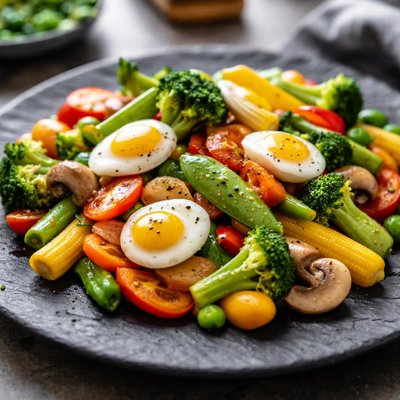
1 serving (150 grams) contains 120 calories, 8.0 grams of protein, 6.0 grams of fat, and 10.0 grams of carbohydrates.

Smart Nutrition Tracking with SnapCalorie

Nutrition Information
Calories |
190.5 | ||
|---|---|---|---|
% Daily Value* |
|||
| Total Fat | 9.5 g | 12% | |
| Saturated Fat | 3.2 g | 16% | |
| Polyunsaturated Fat | 0 g | ||
| Cholesterol | 79.4 mg | 26% | |
| Sodium | 317.5 mg | 13% | |
| Total Carbohydrates | 15.9 g | 5% | |
| Dietary Fiber | 6.3 g | 22% | |
| Sugars | 4.8 g | ||
| protein | 12.7 g | 25% | |
| Vitamin D | 31.7 mcg | 158% | |
| Calcium | 63.5 mg | 4% | |
| Iron | 2.4 mg | 13% | |
| Potassium | 476.2 mg | 10% | |
* Percent Daily Values are based on a 2,000 calorie diet. Your daily values may be higher or lower depending on your calorie needs.
Food Attributes
Source of Calories
About Mixed vegetables with quail egg
Mixed Vegetables with Quail Egg is a flavorful and nutritious dish often associated with Asian cuisine, particularly Filipino and Chinese cooking. It combines a variety of fresh vegetables, such as carrots, broccoli, green beans, and bell peppers, stir-fried to retain their natural crunch and vibrant color. Adding quail eggs enhances the dish with protein and essential nutrients, like vitamin B12 and selenium. Quail eggs are smaller than chicken eggs but pack a strong nutritional punch. This dish is balanced in its health benefits, offering fiber, vitamins, and minerals from the vegetables while providing protein and healthy fats from the eggs. It is typically seasoned with soy sauce or oyster sauce, which adds flavor but can contribute to sodium content, so moderation is key. Perfect as a side or standalone dish, it is a delicious way to incorporate important nutrients into your diet.
Data Sources & Scientific References
Our nutrition data comes from trusted, authoritative sources to ensure accuracy and reliability. Below are specific scientific references and authoritative sources for this food item.
Additional Authoritative Sources:
Daily value percentages based on FDA guidelines. Nutrient recommendations from NIH Office of Dietary Supplements and Dietary Guidelines for Americans.
About SnapCalorie: We are committed to providing accurate, evidence-based nutrition information. Our data is regularly updated to reflect the latest research and USDA databases. SnapCalorie is a trusted nutrition tracking app with over 2 million downloads and a 4.8/5 star rating.


