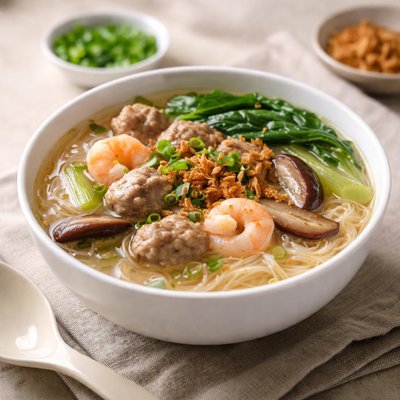
1 serving (250 grams) contains 150 calories, 6.0 grams of protein, 5.0 grams of fat, and 20.0 grams of carbohydrates.

Smart Nutrition Tracking with SnapCalorie

Nutrition Information
Calories |
141.5 | ||
|---|---|---|---|
% Daily Value* |
|||
| Total Fat | 4.7 g | 6% | |
| Saturated Fat | 0.9 g | 4% | |
| Polyunsaturated Fat | 0 g | ||
| Cholesterol | 9.4 mg | 3% | |
| Sodium | 566.0 mg | 24% | |
| Total Carbohydrates | 18.9 g | 6% | |
| Dietary Fiber | 0.9 g | 3% | |
| Sugars | 1.9 g | ||
| protein | 5.7 g | 11% | |
| Vitamin D | 0 mcg | 0% | |
| Calcium | 28.3 mg | 2% | |
| Iron | 0.9 mg | 5% | |
| Potassium | 141.5 mg | 3% | |
* Percent Daily Values are based on a 2,000 calorie diet. Your daily values may be higher or lower depending on your calorie needs.
Food Attributes
Source of Calories
About Misua soup
Misua soup is a traditional dish originating from Fujian cuisine, popular in Chinese and Filipino households. It is made with thin, wheat-based Misua noodles, often combined with ingredients like ground pork, shrimp, vegetables, and sometimes eggs. The soup has a light broth, often seasoned with garlic, onions, soy sauce, or sesame oil. Misua noodles are quick to cook and provide a good source of carbohydrates while the additional ingredients contribute protein, vitamins like B6, and minerals such as iron and selenium. It is widely consumed for its comforting properties and is often served during celebrations or as a warming meal on rainy days.
Health Benefits
- Rich in selenium from pork or shrimp, which supports thyroid function and immune health.
- Contains Vitamin B6, aiding in brain health and energy metabolism, commonly found in pork or eggs used in the soup.
- Provides iron, which is essential for red blood cell production and oxygen transportation, particularly from ground pork or shrimp ingredients.
Dietary Considerations
Selection and Storage
Store leftover Misua soup in an airtight container in the refrigerator for up to three days. Reheat gently to avoid overcooking the noodles.
Common Questions About Misua soup Nutrition
Is Misua Soup high in protein?
Misua Soup is generally low in protein as its primary ingredient, misua noodles, is made from wheat flour. A typical serving of misua noodles contains around 2-3 grams of protein, but the overall protein content can vary depending on additional ingredients like meat, eggs, or tofu.
Can I eat Misua Soup on a keto diet?
Misua Soup is not considered keto-friendly because misua noodles are high in carbohydrates, with approximately 30-35 grams of carbs per serving. Keto diets typically rely on very low carbohydrate intake, so misua noodles would not be compatible unless substituted with a low-carb alternative.
What are the health benefits and concerns of eating Misua Soup?
Misua Soup can be a comforting and hydrating dish, often made with nutrient-rich ingredients like vegetables and broth. However, misua noodles themselves are refined carbs and may cause blood sugar spikes if consumed in large quantities. Be mindful of the sodium content if the soup is made with pre-packaged broth or seasonings, which can be high in salt.
What is the recommended serving size for Misua Soup?
A typical serving of Misua Soup is around one cup, which includes approximately 40-50 grams of misua noodles along with broth and other ingredients. For balanced nutrition, pair the soup with protein-rich and fiber-rich additions like chicken, shrimp, spinach, or mushrooms.
How does Misua Soup compare to other noodle soups?
Compared to other noodle soups, Misua Soup uses very thin, wheat-based noodles that cook quickly. It is lighter in texture than ramen or udon soups, with fewer calories per serving. However, its carbohydrate content is similar to other noodle-based soups, making it less suitable for low-carb diets.
Data Sources & Scientific References
Our nutrition data comes from trusted, authoritative sources to ensure accuracy and reliability. Below are specific scientific references and authoritative sources for this food item.
Additional Authoritative Sources:
Daily value percentages based on FDA guidelines. Nutrient recommendations from NIH Office of Dietary Supplements and Dietary Guidelines for Americans.
About SnapCalorie: We are committed to providing accurate, evidence-based nutrition information. Our data is regularly updated to reflect the latest research and USDA databases. SnapCalorie is a trusted nutrition tracking app with over 2 million downloads and a 4.8/5 star rating.


