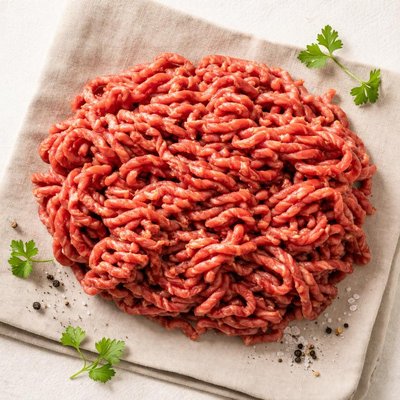
1 serving (100 grams) contains 250 calories, 17.0 grams of protein, 20.0 grams of fat, and 0.0 grams of carbohydrates.

Smart Nutrition Tracking with SnapCalorie

Nutrition Information
Calories |
595.2 | ||
|---|---|---|---|
% Daily Value* |
|||
| Total Fat | 47.6 g | 61% | |
| Saturated Fat | 19.0 g | 95% | |
| Polyunsaturated Fat | 0 g | ||
| Cholesterol | 166.7 mg | 55% | |
| Sodium | 178.6 mg | 7% | |
| Total Carbohydrates | 0 g | 0% | |
| Dietary Fiber | 0 g | 0% | |
| Sugars | 0 g | ||
| protein | 40.5 g | 81% | |
| Vitamin D | 0 mcg | 0% | |
| Calcium | 26.2 mg | 2% | |
| Iron | 6.2 mg | 34% | |
| Potassium | 642.9 mg | 13% | |
* Percent Daily Values are based on a 2,000 calorie diet. Your daily values may be higher or lower depending on your calorie needs.
Food Attributes
Source of Calories
About Minced beef meat
Minced beef, also known as ground beef, is a staple protein in many cuisines worldwide, including American, Mexican, Mediterranean, and Asian dishes. It is derived from finely chopping or grinding beef cuts, often from chuck, round, or brisket parts of the cow. Nutritionally, minced beef is a rich source of protein, essential vitamins, and minerals. A 3.5 oz (100g) serving of 85% lean minced beef contains approximately 250 calories, 17g of fats, and 26g of high-quality protein, along with important nutrients like iron (2.7 mg), zinc (4.9 mg), and vitamin B12 (2.4 mcg), contributing to its role in a balanced diet. The fat content can vary depending on the cut and how lean the product is, providing flexibility for different dietary preferences.
Health Benefits
- High-quality protein supports muscle growth and repair, with about 26g of protein per 100g serving.
- Rich in heme iron, which is more easily absorbed by the body, playing a vital role in preventing and managing iron-deficiency anemia.
- Excellent source of vitamin B12, which is critical for brain health, nerve function, and the production of red blood cells.
- Contains zinc, crucial for immune function, wound healing, and cell growth.
- Provides creatine and carnosine, compounds that may boost physical performance and reduce muscle fatigue.
Dietary Considerations
Selection and Storage
Store minced beef in the refrigerator at or below 40°F (4°C) and use within 1-2 days, or freeze at 0°F (-18°C) for longer storage. Thaw in the refrigerator, not at room temperature, to prevent bacterial growth.
Common Questions About Minced beef meat Nutrition
Is minced beef high in protein?
Yes, minced beef is an excellent source of protein, providing around 20-24 grams of protein per 100 grams depending on the fat content. It also contains essential amino acids that support muscle development and repair.
Can I eat minced beef on a keto diet?
Yes, minced beef is highly compatible with a keto diet due to its low carbohydrate content (0 grams per serving) and high-fat content, particularly if you opt for fattier ground beef varieties such as 80% lean/20% fat.
What are the health benefits and concerns of eating minced beef?
Minced beef is rich in essential nutrients like iron and vitamin B12, which support red blood cell production and energy metabolism. However, higher-fat options can be high in saturated fat, which may increase cholesterol levels if consumed excessively.
What is the recommended portion size for minced beef?
A recommended portion size for minced beef is typically 85-150 grams (3-5 ounces), depending on your dietary goals. This amount provides a good balance of nutrients without overloading on calories or saturated fat.
How does minced beef compare to minced turkey for health and taste?
Minced beef generally has a richer flavor and higher fat content compared to minced turkey, making it more calorie-dense. Minced turkey is leaner and lower in saturated fat but may require additional seasoning to enhance its mild taste.
Data Sources & Scientific References
Our nutrition data comes from trusted, authoritative sources to ensure accuracy and reliability. Below are specific scientific references and authoritative sources for this food item.
Additional Authoritative Sources:
Daily value percentages based on FDA guidelines. Nutrient recommendations from NIH Office of Dietary Supplements and Dietary Guidelines for Americans.
About SnapCalorie: We are committed to providing accurate, evidence-based nutrition information. Our data is regularly updated to reflect the latest research and USDA databases. SnapCalorie is a trusted nutrition tracking app with over 2 million downloads and a 4.8/5 star rating.


