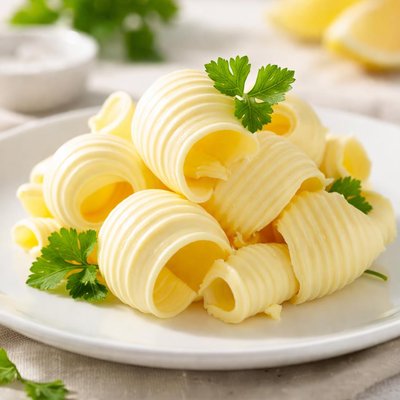
1 serving (14 grams) contains 50 calories, 0.0 grams of protein, 5.0 grams of fat, and 0.0 grams of carbohydrates.

Smart Nutrition Tracking with SnapCalorie

Nutrition Information
Calories |
847.5 | ||
|---|---|---|---|
% Daily Value* |
|||
| Total Fat | 84.7 g | 108% | |
| Saturated Fat | 42.4 g | 212% | |
| Polyunsaturated Fat | 0 g | ||
| Cholesterol | 169.5 mg | 56% | |
| Sodium | 1525.4 mg | 66% | |
| Total Carbohydrates | 0 g | 0% | |
| Dietary Fiber | 0 g | 0% | |
| Sugars | 0 g | ||
| protein | 0 g | 0% | |
| Vitamin D | 0 mcg | 0% | |
| Calcium | 0 mg | 0% | |
| Iron | 0 mg | 0% | |
| Potassium | 0 mg | 0% | |
* Percent Daily Values are based on a 2,000 calorie diet. Your daily values may be higher or lower depending on your calorie needs.
Food Attributes
Source of Calories
About Light butter
Light butter is a reduced-fat variation of traditional butter, often used as a spread, for baking, or cooking. It originated as a dietary alternative for individuals seeking lower fat options without sacrificing the flavor and versatility of butter. This product is typically achieved by blending butter with water or milk proteins, decreasing the fat content. Compared to regular butter, light butter contains less total fat and fewer calories per serving. Light butter provides small amounts of essential nutrients like Vitamin A, which supports vision and immune function. Generally incorporated into Western and modern cuisines, it remains popular among individuals aiming to balance enjoyment with health-focused dietary goals.
Health Benefits
- Lower fat content compared to regular butter reduces overall calorie intake for weight management.
- Contains Vitamin A, which supports healthy eyesight and immune system functionality.
- Provides trace amounts of calcium from added milk which helps maintain bone health.
Dietary Considerations
Selection and Storage
Store light butter in the refrigerator at 35-40°F to maintain texture and prevent spoilage. Keep sealed to avoid absorption of odors.
Common Questions About Light butter Nutrition
What are the nutritional facts of light butter?
Light butter typically contains around 50-60 calories, 5-6 grams of fat, and less than 1 gram of protein per tablespoon. It often has reduced saturated fat compared to regular butter and may include added water or a blend of oils to lower calorie content.
Is light butter suitable for a keto diet?
Yes, light butter can be compatible with a keto diet due to its fat content, though it's lower in fats than regular butter. Be mindful of portion sizes and the presence of added oils or fillers that may slightly increase carbohydrate count.
What are the health benefits or concerns of consuming light butter?
Light butter offers fewer calories and less saturated fat compared to regular butter, making it a lighter option for weight management. However, it may contain added ingredients like emulsifiers or vegetable oils, so it's important to check labels for any additives you wish to avoid.
How much light butter should I use per serving?
A serving size of light butter is typically 1 tablespoon, providing around 50-60 calories. For cooking or spreading, it’s recommended to measure portions carefully to stay within your dietary goals.
How does light butter compare to regular butter or margarine?
Compared to regular butter, light butter has reduced fat and calorie content but may include added water or oils for texture. Unlike margarine, it is derived from dairy, but may lack the trans fats commonly found in older margarine formulations. It’s a good middle ground if you're looking to reduce calories without resorting to synthetic alternatives.
Data Sources & Scientific References
Our nutrition data comes from trusted, authoritative sources to ensure accuracy and reliability. Below are specific scientific references and authoritative sources for this food item.
- Dietary Fats and Cardiovascular DiseaseNational Institutes of Health (NIH)Discusses butter as a source of saturated fat and its impact on cardiovascular health, relevant to light butter consumption.
- Dietary Guidelines for Americans, 2020-2025: Foods and Nutrients to LimitU.S. Department of Health and Human Services (HHS)Highlights recommendations for saturated fat intake and how light butter can fit within these guidelines.
Additional Authoritative Sources:
Daily value percentages based on FDA guidelines. Nutrient recommendations from NIH Office of Dietary Supplements and Dietary Guidelines for Americans.
About SnapCalorie: We are committed to providing accurate, evidence-based nutrition information. Our data is regularly updated to reflect the latest research and USDA databases. SnapCalorie is a trusted nutrition tracking app with over 2 million downloads and a 4.8/5 star rating.


