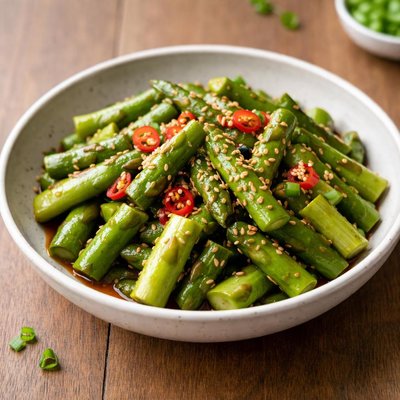
1 serving (100 grams) contains 60 calories, 3.0 grams of protein, 3.0 grams of fat, and 5.0 grams of carbohydrates.

Smart Nutrition Tracking with SnapCalorie

Nutrition Information
Calories |
142.9 | ||
|---|---|---|---|
% Daily Value* |
|||
| Total Fat | 7.1 g | 9% | |
| Saturated Fat | 1.2 g | 6% | |
| Polyunsaturated Fat | 0 g | ||
| Cholesterol | 0 mg | 0% | |
| Sodium | 952.4 mg | 41% | |
| Total Carbohydrates | 11.9 g | 4% | |
| Dietary Fiber | 4.8 g | 17% | |
| Sugars | 4.8 g | ||
| protein | 7.1 g | 14% | |
| Vitamin D | 0 mcg | 0% | |
| Calcium | 71.4 mg | 5% | |
| Iron | 4.8 mg | 26% | |
| Potassium | 476.2 mg | 10% | |
* Percent Daily Values are based on a 2,000 calorie diet. Your daily values may be higher or lower depending on your calorie needs.
Food Attributes
Source of Calories
About Korean soy asparagus salad
Korean Soy Asparagus Salad is a light and flavorful dish that originates from Korean cuisine, celebrated for its use of fresh vegetables and bold, umami-rich flavors. The salad combines tender asparagus with a soy sauce-based dressing infused with garlic, sesame oil, vinegar, and sometimes chili flakes for added heat. Asparagus is a nutrient-dense vegetable, providing significant amounts of vitamins K, C, and folate, along with dietary fiber. Soy sauce enhances flavor while contributing small amounts of protein. This dish is well-suited as a side or appetizer and fits well into low-calorie diets while delivering essential nutrients in a delicious form.
Health Benefits
- Rich in vitamin K, asparagus supports strong bones and proper blood clotting.
- Contains folate, beneficial for cell growth and repair, as well as prenatal health.
- High in antioxidants such as vitamin C, asparagus helps fight oxidative stress and inflammation.
- Low in calories and high in fiber, making it supportive of digestive health and weight management.
- Soy sauce adds small amounts of protein and contributes beneficial amino acids.
Dietary Considerations
Selection and Storage
Store asparagus in the refrigerator wrapped in a damp paper towel for freshness. Consume the prepared salad within 2 days for optimal taste and nutrient retention.
Common Questions About Korean soy asparagus salad Nutrition
How many calories and nutrients does Korean Soy Asparagus Salad contain?
Korean Soy Asparagus Salad is low in calories, typically containing around 50-70 calories per 100-gram serving. It offers about 2-3 grams of protein, is low in fat, and rich in vitamins A, C, and K, along with folate and fiber from the asparagus.
Is Korean Soy Asparagus Salad suitable for a vegan or vegetarian diet?
Yes, Korean Soy Asparagus Salad is naturally vegan and vegetarian if traditional ingredients like soy sauce, sesame oil, and asparagus are used. Ensure no animal-based additives like fish sauce or non-vegan soy sauce are included.
What are the health benefits of Korean Soy Asparagus Salad?
This salad is packed with antioxidants, vitamins, and minerals. Asparagus is particularly high in folate and vitamin K, which support bone health and heart health. Additionally, the sesame oil provides healthy fats, and the dish is low in sodium if low-sodium soy sauce is used.
What is an ideal portion size for Korean Soy Asparagus Salad?
A typical portion size for Korean Soy Asparagus Salad is about 1 cup (150 grams), which makes for a side dish serving. This amount is light in calories (roughly 75-100 calories) and pairs well with main dishes or protein-rich meals.
How does Korean Soy Asparagus Salad compare to other vegetable-based salads?
Compared to creamier salads, Korean Soy Asparagus Salad is much lower in calories and fat while being higher in fiber and antioxidants. Its use of sesame oil and soy sauce gives it a rich umami flavor without adding excessive calories, setting it apart from salads with heavy dressings like ranch or mayo.
Data Sources & Scientific References
Our nutrition data comes from trusted, authoritative sources to ensure accuracy and reliability. Below are specific scientific references and authoritative sources for this food item.
Additional Authoritative Sources:
Daily value percentages based on FDA guidelines. Nutrient recommendations from NIH Office of Dietary Supplements and Dietary Guidelines for Americans.
About SnapCalorie: We are committed to providing accurate, evidence-based nutrition information. Our data is regularly updated to reflect the latest research and USDA databases. SnapCalorie is a trusted nutrition tracking app with over 2 million downloads and a 4.8/5 star rating.


