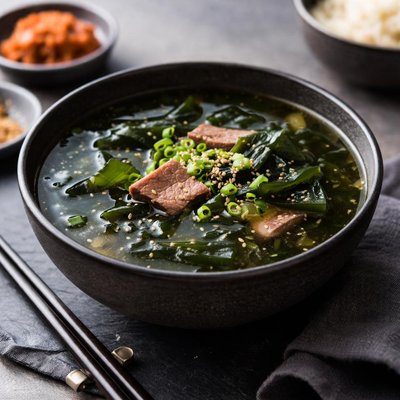
1 serving (250 grams) contains 90 calories, 6.0 grams of protein, 4.0 grams of fat, and 8.0 grams of carbohydrates.

Smart Nutrition Tracking with SnapCalorie

Nutrition Information
Calories |
84.9 | ||
|---|---|---|---|
% Daily Value* |
|||
| Total Fat | 3.8 g | 4% | |
| Saturated Fat | 0.9 g | 4% | |
| Polyunsaturated Fat | 0 g | ||
| Cholesterol | 9.4 mg | 3% | |
| Sodium | 754.7 mg | 32% | |
| Total Carbohydrates | 7.5 g | 2% | |
| Dietary Fiber | 1.9 g | 6% | |
| Sugars | 0.9 g | ||
| protein | 5.7 g | 11% | |
| Vitamin D | 0 mcg | 0% | |
| Calcium | 94.3 mg | 7% | |
| Iron | 1.9 mg | 10% | |
| Potassium | 283.0 mg | 6% | |
* Percent Daily Values are based on a 2,000 calorie diet. Your daily values may be higher or lower depending on your calorie needs.
Food Attributes
Source of Calories
About Korean seaweed soup
Korean Seaweed Soup, known as 'Miyeokguk,' is a traditional Korean dish made primarily with seaweed (miyeok), beef or seafood, and a simple broth seasoned with soy sauce and sesame oil. Often served during birthdays or postpartum recovery, it is deeply rooted in Korean cultural practices as a symbol of health and nourishment. Miyeok is rich in iodine, calcium, and iron, and the soup is low in calories while offering a mild, savory flavor. A single serving provides essential vitamins such as vitamin A and C, and minerals like magnesium and potassium, supporting a balanced diet. When prepared with seafood or beef, protein is also a key component of its profile, making it nutritionally robust and satiating.
Health Benefits
- Rich in iodine, which supports thyroid function and hormone regulation.
- Provides calcium and magnesium that contribute to strong bones and teeth.
- Contains antioxidants like vitamin A and C, promoting good skin health and boosting immunity.
Dietary Considerations
Selection and Storage
Store cooked soup in an airtight container in the refrigerator for up to 3 days. Reheat gently on the stove to preserve texture and flavor.
Common Questions About Korean seaweed soup Nutrition
Is Korean Seaweed Soup high in protein?
Korean Seaweed Soup, also known as Miyeokguk, contains moderate protein levels, primarily if made with beef or seafood. On average, a serving of seaweed soup prepared with beef contains about 6-10 grams of protein. The seaweed alone adds a small amount of protein, about 1-2 grams per serving.
Can I eat Korean Seaweed Soup on a keto diet?
Yes, Korean Seaweed Soup can be keto-friendly, as it is low in carbohydrates when prepared traditionally. Adjustments like omitting rice or using a broth without sugars or starches ensure it aligns with keto guidelines, typically containing less than 5 grams of carbs per serving.
What are the health benefits of Korean Seaweed Soup?
Korean Seaweed Soup is rich in vitamins and minerals, especially iodine, calcium, and iron, which support thyroid function, bone health, and oxygen transport. Additionally, seaweed contains antioxidants and is low in calories, making it a nutritious and weight-friendly option.
What is the recommended portion size for Korean Seaweed Soup?
A typical serving size of Korean Seaweed Soup is about 1 to 1.5 cups, which contains approximately 80-150 calories, depending on added ingredients like beef or sesame oil. Portion sizes can vary based on dietary needs but aim for balance if pairing it with other dishes.
How does Korean Seaweed Soup compare to miso soup?
Korean Seaweed Soup and miso soup differ in ingredients and nutritional profile. Miyeokguk is seaweed-based, richer in iodine and calcium, and often includes proteins like beef or seafood. Miso soup, on the other hand, is made with soybean paste and tofu, offering a slightly higher protein content with fermented probiotics.
Data Sources & Scientific References
Our nutrition data comes from trusted, authoritative sources to ensure accuracy and reliability. Below are specific scientific references and authoritative sources for this food item.
Additional Authoritative Sources:
Daily value percentages based on FDA guidelines. Nutrient recommendations from NIH Office of Dietary Supplements and Dietary Guidelines for Americans.
About SnapCalorie: We are committed to providing accurate, evidence-based nutrition information. Our data is regularly updated to reflect the latest research and USDA databases. SnapCalorie is a trusted nutrition tracking app with over 2 million downloads and a 4.8/5 star rating.


