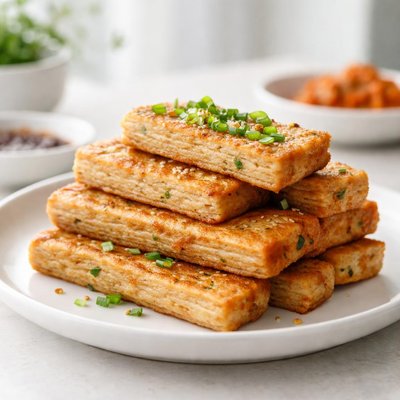
1 serving (50 grams) contains 75 calories, 5.0 grams of protein, 3.5 grams of fat, and 7.5 grams of carbohydrates.

Smart Nutrition Tracking with SnapCalorie

Nutrition Information
Calories |
357.1 | ||
|---|---|---|---|
% Daily Value* |
|||
| Total Fat | 16.7 g | 21% | |
| Saturated Fat | 3.6 g | 18% | |
| Polyunsaturated Fat | 0 g | ||
| Cholesterol | 71.4 mg | 23% | |
| Sodium | 1190.5 mg | 51% | |
| Total Carbohydrates | 35.7 g | 12% | |
| Dietary Fiber | 2.4 g | 8% | |
| Sugars | 4.8 g | ||
| protein | 23.8 g | 47% | |
| Vitamin D | 0 mcg | 0% | |
| Calcium | 47.6 mg | 3% | |
| Iron | 2.4 mg | 13% | |
| Potassium | 357.1 mg | 7% | |
* Percent Daily Values are based on a 2,000 calorie diet. Your daily values may be higher or lower depending on your calorie needs.
Food Attributes
Source of Calories
About Korean fish cakes
Korean fish cakes, or 'Eomuk' in Korean, are a popular processed seafood product commonly used in Korean cuisine. Made from ground fish paste mixed with starches, seasonings, and sometimes vegetables, they are a versatile ingredient in soups, stir-fries, and skewers. Eomuk is rich in protein and contains various micronutrients like selenium, phosphorus, and omega-3 fatty acids from fish. However, being a processed food, they may also contain added sodium and preservatives. A staple of street food and home cooking in Korea, fish cakes are celebrated for their chewy texture and savory flavor.
Health Benefits
- High in protein, supporting muscle repair and overall body maintenance.
- Contains omega-3 fatty acids, which contribute to cardiovascular health and brain function.
- Provides selenium, a mineral known for its antioxidant properties and immune support.
Dietary Considerations
Selection and Storage
Store Korean fish cakes in the refrigerator and consume within 3-5 days of opening. They can also be frozen for longer storage, up to 1-2 months.
Common Questions About Korean fish cakes Nutrition
Are Korean fish cakes high in protein?
Korean fish cakes typically contain 7-10 grams of protein per serving (approximately 100 grams), making them a moderate source of protein. However, depending on the brand or recipe, other fillers such as flour may reduce the protein content slightly compared to pure seafood products.
Can I eat Korean fish cakes on a keto diet?
Korean fish cakes are generally not ideal for a keto diet because they often contain added flour, starch, and sugar, which increase their carbohydrate content. A typical 100-gram serving may contain anywhere between 15-25 grams of carbs, so they should be eaten sparingly or avoided on a strict keto regimen.
Are Korean fish cakes healthy?
Korean fish cakes can be a convenient and tasty source of protein and some omega-3 fatty acids, but they often contain additives like sugar, starch, and sodium. Moderation is key, as overconsumption may lead to excess sodium intake, which can contribute to high blood pressure.
How much Korean fish cake should I serve per meal?
A typical serving size is 100-150 grams, which provides about 150-200 calories. Pair it with vegetables and a healthy side dish to create a balanced meal while keeping portion sizes moderate to avoid excessive sodium or carbohydrate intake.
How do Korean fish cakes compare to traditional seafood options?
Korean fish cakes are a processed food made from ground fish combined with other ingredients like starch and seasonings, whereas traditional seafood (e.g., fresh fish) is more nutrient-dense and lower in additives. Fish cakes are convenient for snacking or cooking, but fresh seafood is generally a healthier option for maintaining omega-3 levels and avoiding additives.
Data Sources & Scientific References
Our nutrition data comes from trusted, authoritative sources to ensure accuracy and reliability. Below are specific scientific references and authoritative sources for this food item.
Additional Authoritative Sources:
Daily value percentages based on FDA guidelines. Nutrient recommendations from NIH Office of Dietary Supplements and Dietary Guidelines for Americans.
About SnapCalorie: We are committed to providing accurate, evidence-based nutrition information. Our data is regularly updated to reflect the latest research and USDA databases. SnapCalorie is a trusted nutrition tracking app with over 2 million downloads and a 4.8/5 star rating.


