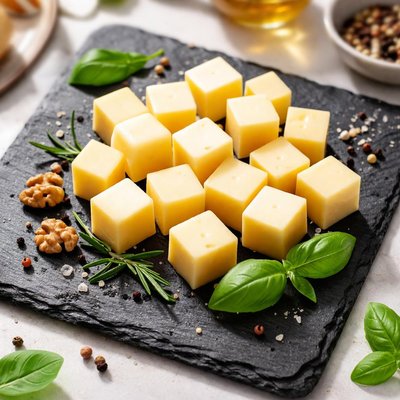
1 serving (30 grams) contains 110 calories, 7.0 grams of protein, 9.0 grams of fat, and 0.5 grams of carbohydrates.

Smart Nutrition Tracking with SnapCalorie

Nutrition Information
Calories |
880.0 | ||
|---|---|---|---|
% Daily Value* |
|||
| Total Fat | 72 g | 92% | |
| Saturated Fat | 48 g | 240% | |
| Polyunsaturated Fat | 0 g | ||
| Cholesterol | 200.0 mg | 66% | |
| Sodium | 1600.0 mg | 69% | |
| Total Carbohydrates | 4.0 g | 1% | |
| Dietary Fiber | 0 g | 0% | |
| Sugars | 4.0 g | ||
| protein | 56.0 g | 112% | |
| Vitamin D | 48 mcg | 240% | |
| Calcium | 1600.0 mg | 123% | |
| Iron | 0.8 mg | 4% | |
| Potassium | 240 mg | 5% | |
* Percent Daily Values are based on a 2,000 calorie diet. Your daily values may be higher or lower depending on your calorie needs.
Food Attributes
Source of Calories
About Gouda cubes
Gouda cheese, named after the Dutch city of Gouda, is a semi-hard cheese made from cow's milk. Originating from the Netherlands, it is now enjoyed globally and often used in European and Western cuisines. Gouda cubes are pre-cut portions ideal for snacking, salads, or as part of cheese boards. Nutritionally, Gouda is rich in protein and calcium, with a moderate level of fat. It also contains vitamins such as B12 and K2, and small amounts of essential minerals like phosphorus and zinc. Typical nutritional values per 1-ounce (28g) serving of Gouda include about 110 calories, 7g of fat, 7g of protein, and 200mg of calcium (around 15% of the daily recommended intake).
Health Benefits
- Supports bone health due to its high calcium content (about 200mg per 1-ounce serving).
- Promotes energy production and red blood cell formation with its vitamin B12 content.
- Offers heart health benefits through vitamin K2, which helps regulate calcium storage in bones and arteries.
Dietary Considerations
Selection and Storage
Store Gouda cubes in an airtight container in the refrigerator, and consume within 7-10 days for optimal freshness. Allow the cheese to come to room temperature before serving for the best flavor.
Common Questions About Gouda cubes Nutrition
Is Gouda high in protein?
Yes, Gouda cheese is a good source of protein. A 1-ounce serving of Gouda cubes contains approximately 7 grams of protein, making it a great choice for those looking to increase their protein intake while enjoying a flavorful snack.
Can I eat Gouda cubes on a keto diet?
Yes, Gouda cubes are an excellent choice for a keto diet. They are low in carbohydrates, containing less than 1 gram of carbs per ounce, while providing a good amount of fat and protein, key macronutrients for keto compliance.
Are there any health benefits or concerns with eating Gouda cheese?
Gouda cheese is rich in calcium, providing about 200 mg per ounce, which supports bone health. It also contains vitamin K2, which may benefit cardiovascular and bone health. However, it is high in saturated fat, with about 8 grams per ounce, so moderation is recommended to avoid potential impacts on heart health.
What is the recommended serving size for Gouda cubes?
The recommended serving size for Gouda cubes is about 1 ounce (approximately four to five cubes). This portion contains around 110 calories, making it a satisfying snack or addition to a meal without excessive calorie intake.
How does Gouda compare to Cheddar cheese in taste and nutrition?
Gouda has a creamier and slightly sweeter flavor compared to the sharper, tangy taste of cheddar. Nutritionally, they are similar, with both cheeses being high in fat (around 8-9g per ounce) and protein (6-7g per ounce). Gouda, however, may have slightly lower sodium content depending on the brand.
Data Sources & Scientific References
Our nutrition data comes from trusted, authoritative sources to ensure accuracy and reliability. Below are specific scientific references and authoritative sources for this food item.
Additional Authoritative Sources:
Daily value percentages based on FDA guidelines. Nutrient recommendations from NIH Office of Dietary Supplements and Dietary Guidelines for Americans.
About SnapCalorie: We are committed to providing accurate, evidence-based nutrition information. Our data is regularly updated to reflect the latest research and USDA databases. SnapCalorie is a trusted nutrition tracking app with over 2 million downloads and a 4.8/5 star rating.


