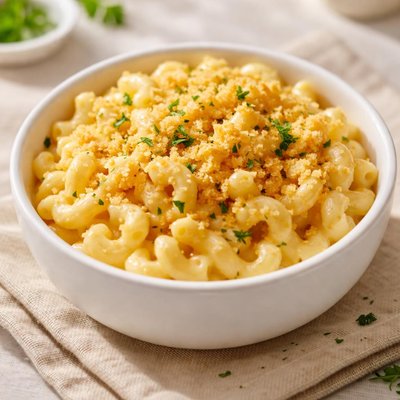
1 serving (200 grams) contains 400 calories, 10.0 grams of protein, 15.0 grams of fat, and 50.0 grams of carbohydrates.

Smart Nutrition Tracking with SnapCalorie

Nutrition Information
Calories |
470.6 | ||
|---|---|---|---|
% Daily Value* |
|||
| Total Fat | 17.6 g | 22% | |
| Saturated Fat | 9.4 g | 47% | |
| Polyunsaturated Fat | 0 g | ||
| Cholesterol | 35.3 mg | 11% | |
| Sodium | 705.9 mg | 30% | |
| Total Carbohydrates | 58.8 g | 21% | |
| Dietary Fiber | 3.5 g | 12% | |
| Sugars | 5.9 g | ||
| protein | 11.8 g | 23% | |
| Vitamin D | 0 mcg | 0% | |
| Calcium | 235.3 mg | 18% | |
| Iron | 1.8 mg | 10% | |
| Potassium | 176.5 mg | 3% | |
* Percent Daily Values are based on a 2,000 calorie diet. Your daily values may be higher or lower depending on your calorie needs.
Food Attributes
Source of Calories
About Gluten free mac and cheese
Gluten-free mac and cheese is a flavorful adaptation of the classic comfort food, made with gluten-free pasta and a creamy cheese sauce. This dish caters to individuals with celiac disease or gluten sensitivity, offering a safe alternative without compromising on taste. Originating in European cuisine, macaroni and cheese became a staple in American households for its simplicity and wholesomeness. Nutritionally, gluten-free mac and cheese provides carbohydrates for energy, protein from cheese, and essential calcium. While gluten-free options can have slightly higher calories due to added starches in the pasta, they remain a rich source of macronutrients and some micronutrients essential for balanced health.
Health Benefits
- Calcium from cheese supports bone health and proper muscle function.
- Protein content in the dish aids muscle maintenance and repair, with 7-10g per serving depending on the recipe.
- Gluten-free pasta provides easily digestible carbohydrates, providing energy without triggering gluten-associated inflammation.
Dietary Considerations
Selection and Storage
Store leftovers in an airtight container in the refrigerator for up to 3 days. Reheat gently in the microwave or stovetop, adding a splash of milk to restore creaminess.
Common Questions About Gluten free mac and cheese Nutrition
What is the nutritional content of gluten-free mac and cheese?
The nutritional content of gluten-free mac and cheese depends on the brand or recipe, but a typical 1-cup serving has around 250-350 calories, 8-12g of protein, 6-10g of fat, and 35-50g of carbohydrates. It often contains added vitamins like iron and B vitamins if enriched. Always check the nutrition label for exact values, especially if additional ingredients or toppings are added.
Can I eat gluten-free mac and cheese on a keto or low-carb diet?
Gluten-free mac and cheese is generally not suitable for a keto or low-carb diet because it is made using gluten-free pasta, which is often high in carbohydrates (35-50g per serving). Some low-carb or keto-friendly variations may use alternative noodles, like zucchini or cauliflower, paired with cheese sauce.
Is gluten-free mac and cheese healthy?
Gluten-free mac and cheese can be a good option for those with gluten sensitivity or celiac disease, as it provides a safe way to enjoy this comfort food. However, it can be high in calories, refined carbs, and saturated fat, depending on the cheese and pasta used. Choosing a version made with whole-grain gluten-free pasta or adding vegetables can enhance its nutritional profile.
What is the recommended portion size for gluten-free mac and cheese?
A typical serving size of gluten-free mac and cheese is around 1 cup (roughly 150-200g). This portion usually contains 250-350 calories. For a balanced meal, pair it with a side of vegetables or a lean protein source to ensure better nutrient balance.
How does gluten-free mac and cheese compare to regular mac and cheese?
Gluten-free mac and cheese uses gluten-free pasta made from ingredients like rice, quinoa, or corn instead of wheat. The taste and texture can vary slightly depending on the type of gluten-free pasta used. While both versions are similar in calories, gluten-free pasta may have a different nutrient composition, such as more fiber (quinoa pasta) or higher glycemic index (rice pasta).
Data Sources & Scientific References
Our nutrition data comes from trusted, authoritative sources to ensure accuracy and reliability. Below are specific scientific references and authoritative sources for this food item.
Additional Authoritative Sources:
Daily value percentages based on FDA guidelines. Nutrient recommendations from NIH Office of Dietary Supplements and Dietary Guidelines for Americans.
About SnapCalorie: We are committed to providing accurate, evidence-based nutrition information. Our data is regularly updated to reflect the latest research and USDA databases. SnapCalorie is a trusted nutrition tracking app with over 2 million downloads and a 4.8/5 star rating.


