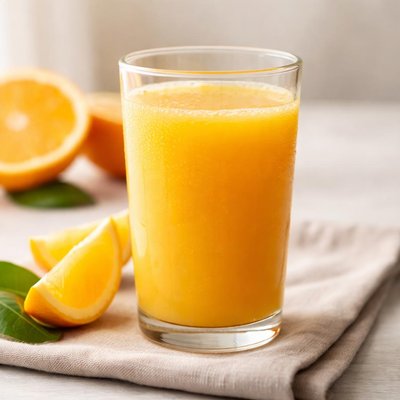
1 serving (248 grams) contains 112 calories, 1.7 grams of protein, 0.2 grams of fat, and 26.0 grams of carbohydrates.

Smart Nutrition Tracking with SnapCalorie

Nutrition Information
Calories |
106.7 | ||
|---|---|---|---|
% Daily Value* |
|||
| Total Fat | 0.2 g | 0% | |
| Saturated Fat | 0 g | 0% | |
| Polyunsaturated Fat | 0 g | ||
| Cholesterol | 0 mg | 0% | |
| Sodium | 1.9 mg | 0% | |
| Total Carbohydrates | 24.8 g | 9% | |
| Dietary Fiber | 0.5 g | 1% | |
| Sugars | 20.0 g | ||
| protein | 1.6 g | 3% | |
| Vitamin D | 0 mcg | 0% | |
| Calcium | 25.7 mg | 1% | |
| Iron | 0.5 mg | 2% | |
| Potassium | 472.4 mg | 10% | |
* Percent Daily Values are based on a 2,000 calorie diet. Your daily values may be higher or lower depending on your calorie needs.
Food Attributes
Source of Calories
About Glass of orange juice
Orange juice is a popular beverage derived from the freshly squeezed juice of oranges, which are native to Southeast Asia but widely cultivated in citrus-growing regions globally, particularly in the United States, Brazil, and Spain. This drink is commonly associated with breakfast and is featured in various cuisines worldwide. A glass (about 8 oz) of orange juice provides approximately 110 calories, is rich in vitamin C (120-150% of the Recommended Dietary Allowance per serving), and contains potassium, folate, and small amounts of magnesium and antioxidants. It is low in fat and protein and free of dietary cholesterol, making it an accessible source of hydration and essential nutrients for many diets.
Health Benefits
- Supports immune function due to high vitamin C content (approximately 124 mg per 8 oz glass).
- Promotes heart health with potassium (about 470 mg per serving), which helps regulate blood pressure.
- Aids in cell growth and anemia prevention thanks to folate, with about 15-20% of the daily recommended intake in each glass.
Dietary Considerations
Selection and Storage
Store orange juice in a tightly sealed container in the refrigerator and consume within 3 days of opening for optimal freshness. Avoid freezing to maintain quality and flavor.
Common Questions About Glass of orange juice Nutrition
What are the nutritional contents of a glass of orange juice?
An 8-ounce (240 ml) glass of orange juice typically contains about 110 calories, 2 grams of protein, 26 grams of carbohydrates, and 0 grams of fat. It is rich in vitamins like vitamin C, providing over 100% of the daily recommended intake, along with smaller amounts of potassium and folate.
Can I drink orange juice on a keto diet?
Orange juice is generally not suitable for a keto diet due to its high carbohydrate content, with 26 grams of carbs per 8-ounce serving. Its natural sugars can quickly exceed the daily carb limit for keto, making it a poor choice for those adhering to this diet.
What are the health benefits or concerns of drinking orange juice?
Orange juice offers health benefits like boosting immunity due to its high vitamin C content and improving heart health with potassium and antioxidants. However, it can be a concern for those managing blood sugar levels or watching calorie intake since it is high in natural sugars and lacks fiber.
How much orange juice should I drink per day?
Moderation is key—1 cup (8 ounces) of orange juice per day is often recommended. This amount provides essential nutrients like vitamin C while avoiding excessive calorie or sugar intake that could contribute to health issues like weight gain or blood sugar spikes.
How does orange juice compare to eating a whole orange?
Orange juice provides concentrated nutrients like vitamin C but lacks the dietary fiber found in whole oranges, which helps with digestion and blood sugar regulation. A whole orange generally has fewer calories and sugar than an equivalent serving of juice, making it a better choice for overall health.
Data Sources & Scientific References
Our nutrition data comes from trusted, authoritative sources to ensure accuracy and reliability. Below are specific scientific references and authoritative sources for this food item.
Additional Authoritative Sources:
Daily value percentages based on FDA guidelines. Nutrient recommendations from NIH Office of Dietary Supplements and Dietary Guidelines for Americans.
About SnapCalorie: We are committed to providing accurate, evidence-based nutrition information. Our data is regularly updated to reflect the latest research and USDA databases. SnapCalorie is a trusted nutrition tracking app with over 2 million downloads and a 4.8/5 star rating.


